

Why Am I So Bloated After 40? Hormones, Stress and Gut Causes
Persistent bloating after 40 isn’t automatically “just menopause.” The answer to why you’re so bloated after 40 may involve fluctuating hormones, digestion, stress, food triggers, or a health condition. Menopause is reached after 12 consecutive months without a period, according to The Menopause Society, but bloating can arise during the transition and beyond.
A tight, swollen-feeling belly can be frustrating, especially when it keeps returning. Don’t assume it’s simply part of getting older. The pattern, accompanying symptoms, and changes in your digestion all matter.
This article breaks down how menopause hormones, gut motility, stress, and everyday habits can contribute to bloating, and why persistent or painful symptoms deserve medical attention. You’ll get a clearer picture of what may be driving the discomfort, what changes can support digestion, and when it’s time to look beyond routine lifestyle factors.
Key Takeaways
- Separate short-term belly swelling from ongoing changes, and notice whether symptoms track with menstrual or menopause changes.
- Identify food patterns that may worsen gas or fluid retention, and adjust fiber gradually rather than making abrupt changes.
- Understand how stress and altered breathing can affect gut comfort, then consider simple habits that support movement and digestion.
- Persistent or painful bloating, especially alongside changes in appetite, weight, or bowel and bladder habits, deserves medical evaluation.
What is Menopause Belly Bloat?
After 40, hormone shifts, slower digestion, constipation, diet, and body-composition changes can contribute to bloating. Official menopause begins after 12 consecutive months without a period, according to The Menopause Society.
Perimenopausal Hormonal Shifts
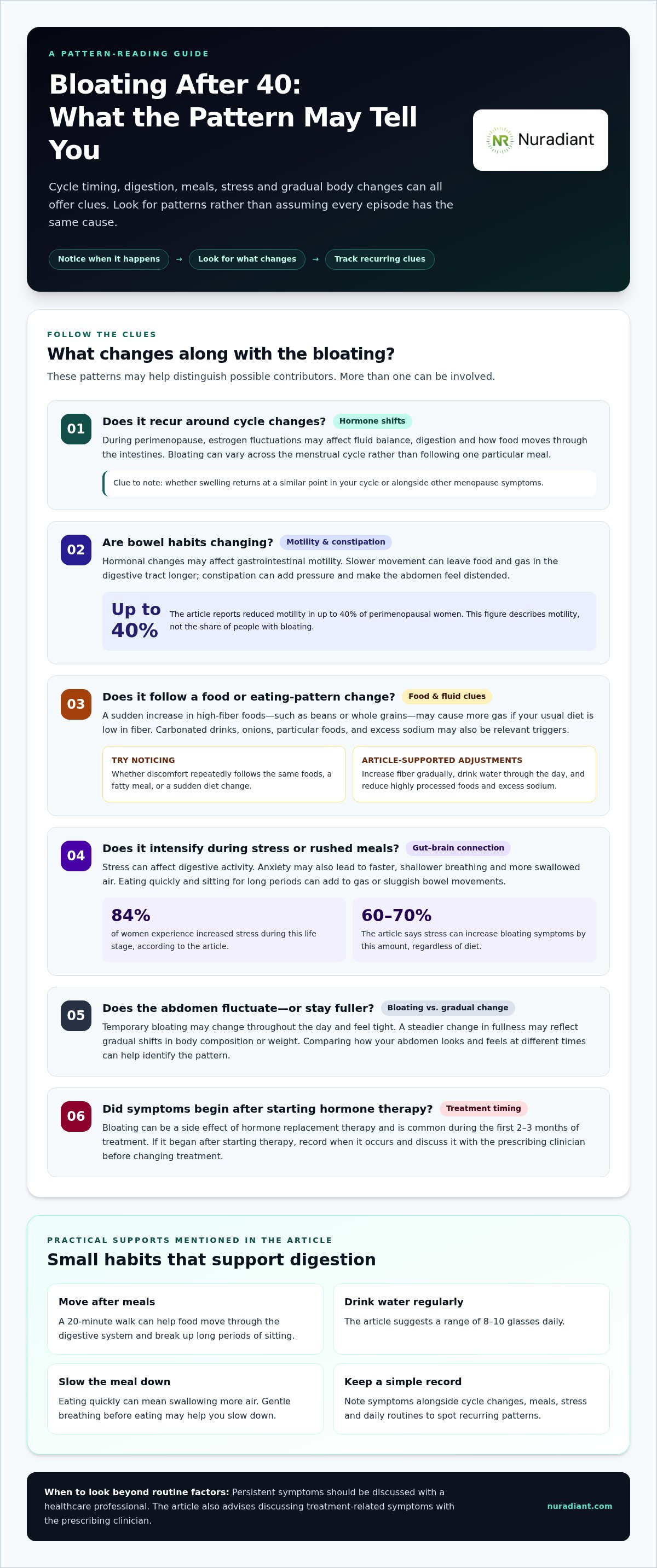
During perimenopause, estrogen levels can fluctuate and may affect fluid balance and digestion. These shifts can contribute to water retention and a swollen feeling. Hormonal changes may also affect the gut microbiome and how food moves through the intestines. Bloating may vary across the menstrual cycle rather than occurring only after a particular meal. Track when symptoms occur to see whether a pattern emerges.
Midlife Digestive Changes
Midlife digestive changes can involve shifts in gut movement and function during perimenopause and menopause. Hormonal changes may affect gastrointestinal motility, changing how food and gas move through the digestive system. Constipation can add pressure and make the abdomen feel distended. Bloating may be more frequent during perimenopause than after menopause, but persistent symptoms can have other causes. Notice changes in bowel habits as well as changes in your waistline.
Weight Gain and Body Composition
Midlife body-composition changes include shifts in muscle and fat distribution with age. Lean muscle mass may decline, while hormonal changes can shift fat accumulation toward the midsection. This gradual change can make the abdomen look fuller, but it differs from temporary bloating, which may change throughout the day. Compare how your abdomen looks and feels at different times. A fluctuating, tight feeling may suggest bloating; a steady change may reflect body composition or weight.
Food choices can also contribute. A sudden increase in high-fiber foods, such as beans or whole grains, may cause more gas if your usual diet is low in fiber. Increase fiber gradually and drink water throughout the day. Reduce highly processed foods and excess sodium, which can contribute to fluid retention. Keep a food diary to spot recurring triggers, such as carbonated drinks, onions, or particular foods that reliably precede discomfort. This can help distinguish food-related patterns from hormonal changes.
Hormonal effects on digestion and gut motility
Hormone fluctuations can influence digestive movement and fluid balance. These shifts may contribute to abdominal pressure, gas, and menopause bloating, even when meals stay consistent. That can prompt the question, “Why am I so bloated after 40?” Track symptoms alongside cycle changes and daily routines to identify useful patterns.
During perimenopause, changing estrogen levels may affect gut motility and the gut microbiome. Reduced motility reportedly affects up to 40% of perimenopausal women. Slower movement can leave food and gas in the digestive tract longer, making bloating more noticeable. Lower estrogen may also slow bile production. Bile helps digest fats, so changes may affect how the body handles a fatty meal.
Hormonal fluctuations may also contribute to fluid retention. If abdominal swelling follows a cycle or changes alongside other menopause symptoms, note the timing and your meals. This record can help show whether symptoms recur under similar conditions or seem like a one-off reaction.
Hormone replacement therapy can also cause bloating as a side effect. Bloating is common during the first 2-3 months of treatment. If symptoms began after starting therapy, record when they occur and discuss them with the prescribing clinician before changing treatment.
Stress and daily routines can intensify digestive discomfort alongside hormonal shifts. Eating quickly, swallowing air, and sitting for long periods may add to gas or sluggish bowel movements. A short walk after a meal supports movement through the digestive tract. Anxiety can also change breathing and increase the amount of air you swallow.
Probiotic foods such as yogurt, kefir, and tempeh can support gut bacteria. Probiotic supplements may also support gut health; guidance mentions products containing at least 10 billion CFUs. Fennel, peppermint, or ginger tea offers a herbal option after meals. Digestive enzymes help break down food, but they aren’t a universal fix. If you’re still asking, “Why am I so bloated after 40?”, note whether symptoms follow dairy, fatty meals, stress, or treatment changes, then discuss persistent symptoms with a healthcare professional.
Stress and the gut-brain connection
The gut and brain communicate through nerves and chemical signals, so stress can change digestive activity. Stress raises cortisol levels and can contribute to gas and bloating. During this life stage, 84% of women experience increased stress. That pressure can amplify stomach discomfort, even when meals stay consistent. Estrogen fluctuations may add another factor, but stress can affect symptoms independently of hormone changes.
Anxiety can also change breathing. Faster, shallower breaths may lead you to swallow more air, increasing pressure in the stomach and abdomen. Stress can increase bloating symptoms by 60-70%, regardless of diet. That doesn’t mean every flare has the same cause. Notice whether symptoms intensify during tense periods, rushed meals, or shallow breathing. This pattern helps separate stress-linked discomfort from a food trigger.
Hydration and movement give digestion practical support. Drink water regularly through the day, and consider the suggested range of 8-10 glasses daily. A 20-minute walk can help food move through the digestive system. Gentle activity also breaks up long periods of sitting, which can leave you feeling sluggish after meals. Build movement into a routine, such as walking after dinner or taking a short break between work tasks.
Use focused stress-management techniques, not guesswork. Try slow breathing before eating: inhale gently, then lengthen each exhale for several breaths. Meditation or yoga can create a repeatable reset, while regular exercise supports gut motility and stress regulation. Aim for at least 30 minutes of moderate-intensity exercise most days of the week. Track stress, meals, sleep, and bloating together. The gut microbiome and digestive system respond to multiple influences, so a simple log can reveal whether symptoms follow anxiety, inactivity, or a particular routine. If bloating persists or becomes severe, medical evaluation can assess other causes.
Health conditions associated with persistent bloating
Persistent bloating can stem from a health condition, not just hormonal changes or food. Seek prompt medical evaluation for sudden or painful bloating, blood in your stool, or unexplained weight loss. Pain, appetite changes, and new bowel or bladder habits also need attention.
How long bloating lasts and how it occurs matter. Bloating that persists for weeks should be reviewed, because ovarian cancer and other conditions can cause ongoing symptoms. This does not mean bloating signals cancer. It means persistent abdominal discomfort deserves a closer look, especially when several changes occur together.
To investigate chronic bloating, a clinician will review your symptom timeline, bowel habits, appetite, weight changes, medications, and hormonal therapy. They may examine you and select further tests based on your symptoms and findings. No single test explains every case; the evaluation depends on the suspected cause.
Keep a clear record before your visit. Note when bloating began, whether it is constant or comes and goes, and any related changes. Include details such as constipation, altered urination, appetite loss, or a new medication. Record whether symptoms follow meals or coincide with hormonal treatment. These details can help distinguish intestinal causes from other factors and guide the evaluation.
Don’t use probiotics or supplements to delay evaluation of persistent, painful, or sudden symptoms. They may support general gut health, but they can’t identify the cause of ongoing bloating. A clinician can consider your symptoms and medication history when recommending next steps. The priority is finding the cause, not masking discomfort.
Once concerning causes have been assessed, a gut-health routine may be a separate consideration. Explore gut health supplements as one option for general digestive support, not as a substitute for medical evaluation. Persistent symptoms need answers first.
An evaluation may include a physical examination and tests chosen to investigate the suspected cause in light of your symptoms and findings.
Nuradiant: CBD Products
Nuradiant offers CBD products for adults exploring wellness supplements as part of a broader health routine. CBD isn’t a treatment for persistent bloating, and supplements can’t diagnose its cause. If symptoms are ongoing, painful, or changing, prioritize medical evaluation before adding products to your routine.
Once health concerns have been addressed, choose support according to your separate wellness goals. Nuradiant also offers nootropics, joint health supplements, and premium gummies. Review product information carefully, especially if you take medications, and discuss possible interactions with a healthcare professional. Supplements may fit into a general wellness plan, but they don’t replace care for unexplained digestive symptoms. Visit nuradiant.com to explore the offerings.
Turn insight into a confident next step
Understanding why you’re so bloated after 40 isn’t about chasing a perfect diet or blaming every symptom on hormones. It’s about making decisions from patterns, not frustration. Bring a concise record of changes and questions to a healthcare professional, then use that conversation to decide what deserves attention first. If you’re building a broader wellness routine, choose products for goals separate from unexplained digestive symptoms. A focused plan beats changing everything at once.
Nuradiant offers men’s health supplements, CBD products, and nootropics. These are wellness products, not a diagnosis or treatment for persistent bloating. Keep medical evaluation central when symptoms are ongoing or changing, and consider supplements in the context of your health needs and medications.
Contact Nuradiant to explore its offerings and take your next step with a clear plan.
Frequently Asked Questions
Is bloating a symptom of perimenopause?
Yes, bloating can occur during perimenopause, alongside changing menstrual patterns and other symptoms. Note whether it appears at a particular point in your cycle or after a specific meal. That context helps identify patterns instead of attributing every episode to hormones. If bloating becomes persistent, painful, or comes with other concerning changes, arrange a medical evaluation rather than assuming it’s a routine transition symptom.
Is it bloat or weight gain?
Bloating often fluctuates during the day, while gradual weight gain usually doesn’t disappear overnight. Compare how your abdomen looks and feels after waking, after meals, and the following morning. Temporary tightness or distension may point to bloating; a steady change over time may reflect body composition or weight. These patterns can overlap, so track them instead of relying on how you look on one day.
How do hormonal changes in perimenopause and menopause affect bloating?
Hormonal shifts may affect fluid balance, gut movement, and how food travels through the intestines. To clarify the pattern, record your cycle, symptoms, meals, and bowel changes together. After menopause, symptoms may no longer follow a menstrual pattern. Persistent bloating still deserves attention: hormones aren’t the only possible explanation, and timing alone can’t identify the cause.
Can slower digestion or constipation cause bloating in middle age?
Yes. When stool moves slowly or bowel movements become infrequent, gas and intestinal contents can contribute to abdominal fullness. Note changes in frequency, stool consistency, and straining, not just visible swelling. A diary can show whether constipation and bloating occur together. If bowel habits change and remain altered, or discomfort becomes severe, seek medical evaluation rather than treating it as ordinary aging.
Which foods and drinks commonly cause gas and bloating?
Beans, cabbage, onions, and carbonated drinks can cause gas for some people. Large portions, eating quickly, and sudden increases in high-fiber foods may also affect comfort. Triggers vary, so avoid broad food restrictions based on one episode. Record what you ate and when symptoms followed, then look for recurring patterns. Gradual dietary changes make likely triggers easier to identify.
Can medications or supplements cause bloating after 40?
Yes, hormone replacement therapy can cause bloating, particularly during the first 2-3 months of treatment. If symptoms began after starting or changing a medicine or supplement, write down the product and timing. Don’t stop prescribed treatment on your own. Review the pattern and ingredient list with a healthcare professional, who can consider your symptoms and medication history when assessing possible causes.