

Who Should Consider Caffeine-Free Energy Supplements for Seniors?
Caffeine-free energy supplements for seniors may appeal to older adults who want to avoid caffeine, especially those managing health conditions or taking medication. Before trying a supplement, talk with a healthcare provider, particularly if you take blood thinners, heart medications, or diabetes drugs. Persistent tiredness despite lifestyle changes calls for medical attention, not a stronger push from a supplement.
Want more energy without relying on caffeine? Start by considering what may be causing low energy, then choose support that fits your health needs. Possible nutrient deficiencies and medication effects can play a role, so make informed decisions instead of guessing.
This guide explains who may benefit from caffeine alternatives, when supplements may begin to have effects, and how to think through a caffeine-free stack. You’ll also see which ingredients have evidence behind them and when to bring a healthcare provider into the decision. Build a plan around your needs, protect your health, and keep your next step grounded in facts.
Key Takeaways
- Look for caffeine alternatives if you want to avoid stimulants, but investigate ongoing fatigue instead of masking it.
- Persistent tiredness or suspected nutrient deficiencies call for a discussion with a healthcare provider before starting supplements.
- Give a supplement consistent use time before judging its effects; the ingredient and your health needs influence the timeline.
- Build a simple, targeted stack around possible nutritional gaps rather than piling on multiple products at once.
- Review ingredients, medications, and health conditions with a provider to make caffeine-free choices more safely.
1. Who should look for caffeine alternatives?
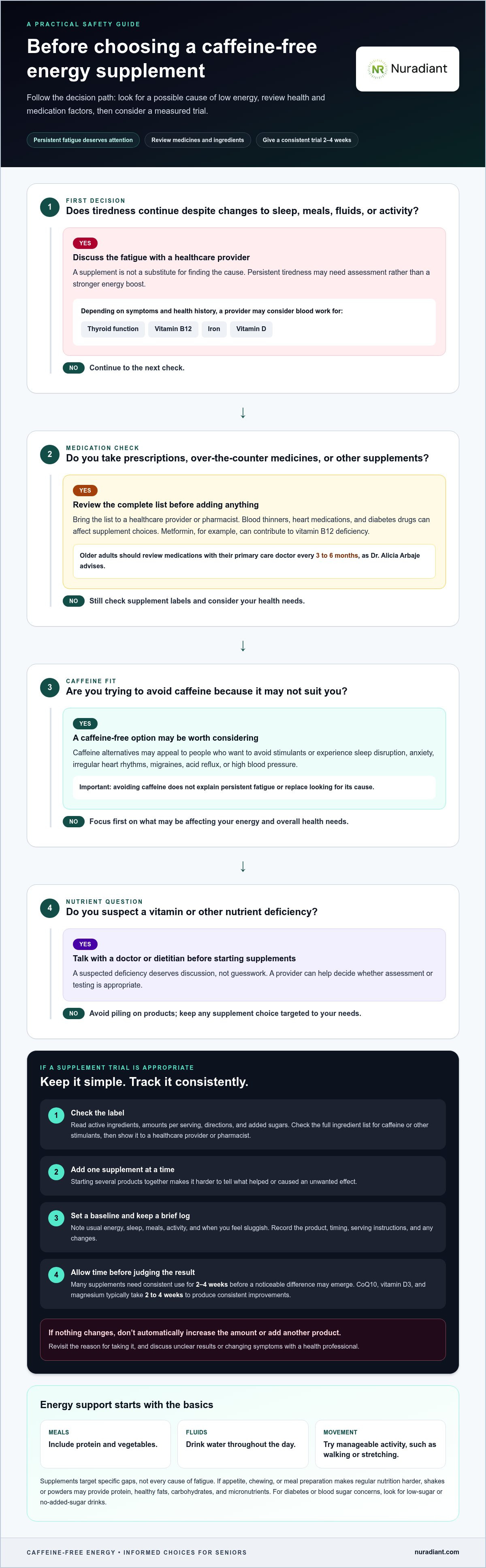
Caffeine-free energy supplements for seniors may appeal to adults who want alertness without relying on caffeine. They can also interest people who experience sleep disruption, anxiety, irregular heart rhythms, migraines, acid reflux, or high blood pressure. These conditions can make caffeine a poor fit. A caffeine alternative, however, doesn’t explain persistent fatigue or replace a search for its cause.
Start with the pattern. If tiredness continues despite changes to sleep, meals, fluids, or activity, discuss it with a healthcare provider. A 75-year-old recovering from pneumonia, for example, may need assessment rather than a quick energy boost. Suspected vitamin deficiencies also deserve discussion with a doctor or dietitian before supplements begin. A provider may consider blood work for thyroid function, vitamin B12, iron, or vitamin D, based on symptoms and health history.
Medication review matters just as much as ingredient selection. Bring a complete list of prescriptions, over-the-counter medicines, and supplements to the appointment. Blood thinners, heart medications, and diabetes drugs can affect supplement choices. Metformin, for example, can contribute to vitamin B12 deficiency. Older adults should review medications with their primary care doctor every three to six months, as Dr. Alicia Arbaje advises. This step can help identify interactions, duplicated ingredients, or a treatable cause of low energy.
Easy-to-consume shakes and powders may help when appetite, chewing, or meal preparation makes regular nutrition harder. Nutritional drinks can provide protein, healthy fats, carbohydrates, and micronutrients. Protein-based beverages can support muscle maintenance and strength, especially for adults over 60. Choose options that suit your dietary needs, and pair a drink with a meal when appropriate. For diabetes or blood sugar concerns, look for low-sugar or no-added-sugar drinks. A shake supports nutrition; it doesn’t diagnose fatigue or correct every deficiency.
What are the risks and side effects of popular caffeine-free energy supplements for older adults? Risks include interactions with medicines, overlapping ingredients across products, and effects that vary by ingredient. Review your medications and keep a clear record of what you take before adding a supplement.
What should seniors look for on supplement labels, and how can they check product quality? Read the Supplement Facts panel for active ingredients, amounts per serving, directions, and added sugars. Check the full ingredient list for caffeine or other stimulants, then show the label to a healthcare provider or pharmacist to review possible interactions.
Food-first choices can also support energy: include protein and vegetables in meals, drink water throughout the day, and use gentle movement such as walking or stretching. Supplements target specific gaps, not every cause of fatigue. The authors of the meta-analysis reported that long-term omega-3 supplementation was linked to a 64% reduced risk of Alzheimer's disease in one cohort. That finding describes one cohort, not a promise of greater energy or a reason to start omega-3 without considering your needs.
2. Supplement timelines and expected effects
Expect a measured trial, not an instant surge. Most supplements need consistent use for 2-4 weeks before a noticeable difference may emerge. Adaptogens are also described as working best with daily use for 2 to 4 weeks. These timelines help set expectations, but they don’t mean every ingredient produces the same effect. A vitamin correcting a deficiency and an adaptogen serve different roles.
CoQ10, vitamin D3, and magnesium typically take 2 to 4 weeks to produce consistent improvements. The expected change depends on why you’re taking the supplement, whether your intake was low, and whether you take it consistently. For example, a person addressing a nutrient gap may notice a different pattern from someone seeking general support. Keep the goal specific: note whether energy, exercise tolerance, or daily function changes.
Establish a baseline before adding anything. Note your usual energy levels, sleep routine, eating habits, and activity. Record when you feel sluggish, such as after lunch or during an evening walk. Then follow the label directions consistently and track any changes throughout the day. A brief log can reveal patterns you might otherwise miss, including changes in sleep or appetite.
Change one supplement at a time. Starting several vitamins, antioxidants, or herbal products together makes it harder to identify which one helped or caused an unwanted effect. Keep the same routine during the 2-4 week observation period, unless a provider recommends a change. Record the product, serving instructions, timing, and any noticeable effects. Bring that information to a health professional if the result is unclear or symptoms shift.
Pair the trial with habits that support energy. Regular meals with protein and vegetables, adequate fluids, and manageable exercise give you useful context. If eating is inconsistent, a supplement may not address the main issue. Sleep matters too: the Sleep Health Foundation recommends 7 to 9 hours each night for adults. Note sleep quality alongside supplement use, since poor rest can leave you feeling sluggish regardless of the product.
At the end of 2 to 4 weeks, review the log rather than relying on one unusually good day. Look for steady changes in the activity you chose to track, such as completing a walk with less fatigue. If nothing changes, don’t automatically increase the amount or add another product. Revisit the reason for taking it, the label directions, and possible contributing factors with a healthcare provider.
Consistency makes it easier to assess a supplement. A structured routine helps distinguish a possible benefit from normal day-to-day variation. Track sleep, meals, exercise, and energy to see how any change fits into your everyday life.
3. Building a caffeine-free supplement stack
Choose a supplement to address a specific need, not simply because the label is crowded. First consider whether low energy may relate to diet, a diagnosed deficiency, sleep, or another health concern. Then focus on one ingredient that fits your goal. A simple, consistent approach makes it easier to track energy and notice unwanted effects. Starting several products at once makes results harder to interpret.
Review the vitamins and minerals you already get from food and supplements. Check each Supplement Facts panel for overlapping ingredients, serving sizes, and daily totals. A multivitamin may already contain B vitamins or vitamin D, so adding separate products could increase your intake unnecessarily. Include prescriptions and over-the-counter medicines in the review, especially if you manage a chronic condition. Take the labels to a healthcare provider or pharmacist.
Commonly discussed dose ranges include:
- Magnesium: 200 to 400 mg daily, depending on the form.
- Vitamin D3: 1,000 to 2,000 IU daily with at least 40 mcg of vitamin K2.
- Vitamin B12: 100 to 200 mcg daily as methylcobalamin, or 500-1,000 mcg per day in another recommendation.
- CoQ10: 100-200 mg per day, taken with a meal containing fat.
- Combined EPA and DHA: 1,000-2,000 mg per day.
- Rhodiola extract: 200-400 mg per day, standardized to 3% rosavins and 1% salidroside.
These figures are reported intake recommendations, not a personal prescription. Needs vary with diet, deficiency status, product form, and medications. For example, magnesium amounts depend on the form, while a provider can assess whether vitamin D or B12 supplementation fits your health history. Don’t combine two products with the same active ingredient without calculating their total.
How much do popular caffeine-free energy supplements for seniors cost in the United States? Costs vary with the ingredient, formulation, serving size, and number of servings per container. Compare the amount per serving and total servings instead of judging a product by package size alone.
Keep the rest of your routine practical. Hydration, balanced eating, and regular movement support daily function, but supplements don’t replace meals. If a powder is easier to take, prepare it as directed and record it in your routine. Track your energy throughout the day, sleep, and exercise tolerance. This can help you assess whether one change makes a useful difference.
Make changes deliberately. Choose one product, follow its label, and keep other habits steady while you observe its effects. Assessing a supplement may take several weeks, so daily consistency gives a clearer picture than sporadic use. If symptoms worsen or a new reaction appears, stop and seek medical advice.
4. Caffeine avoidance and provider guidance
Caffeine avoidance is a targeted choice, not a universal rule for every older adult. The U.S. Food and Drug Administration says adults can safely consume up to 400 mg of caffeine per day. That figure is a general adult limit, not a personal target or an older-adult prescription. Older adults should avoid excessive caffeine unless a healthcare provider approves it, especially when health conditions or medications affect the decision.
Caffeinated products rely on a stimulant; caffeine-free options do not contain caffeine as their energy ingredient. This distinction may matter if coffee or energy drinks disrupt your sleep or worsen symptoms. Caffeine is addictive, and decaffeinated coffee is not entirely caffeine-free. Check drink and supplement labels instead of assuming “decaf” means zero caffeine. A caffeine-free product also won’t necessarily address fatigue related to a nutrient deficiency, dehydration, inadequate protein, or an underlying disease.
Discuss caffeine use with a healthcare provider if you have acid reflux or GERD, anxiety, irregular heartbeats or rhythm, high blood pressure, migraines, or insomnia. These conditions may make avoiding caffeine important. Bring a written list of coffee, tea, soft drinks, energy drinks, supplements, prescriptions, and over-the-counter medicines, including when you use each. This helps your provider assess your caffeine intake and possible medication interactions.
Talk with a provider before trying caffeine alternatives, too. Older adults with chronic conditions or regular medications should review a supplement’s active ingredients and directions with a healthcare provider or dietitian. Blood thinners, heart medications, and diabetes drugs are specific reasons to review a supplement before starting it. Ask whether persistent fatigue needs assessment, including evaluation for possible nutrient deficiencies, rather than another product.
Use a practical comparison before choosing:
- For coffee or energy drinks, record the product and serving pattern, then discuss it with your provider.
- For decaf coffee, remember that some caffeine remains and check whether it fits your plan.
- For caffeine-free supplements, inspect active ingredients and overlapping vitamins or minerals alongside your medication list.
- For low energy, note meals, hydration, protein intake, sleep, and activity as well as caffeine use.
Choose your next step based on why you’re avoiding caffeine. If insomnia is the concern, note whether coffee later in the day affects your sleep. If fatigue persists despite changes to food, hydration, and rest, ask a provider to assess possible causes. A steady decline in energy, new symptoms, or a change after starting a supplement deserves prompt attention. The aim is to reduce unwanted stimulant exposure without masking a health problem or creating avoidable ingredient conflicts.
5. Which ingredients in caffeine-free energy supplements have evidence for effectiveness and safety in seniors?
Evidence varies by ingredient and outcome. A study on fatigue, for example, doesn’t show that an ingredient prevents disease or boosts energy for every older adult. Check what researchers measured, whether the study’s purpose matches your needs, and how the ingredient fits with your medicines. Use evidence to guide a focused choice, not to justify a crowded supplement routine.
CoQ10 has research on fatigue. The authors of the 2022 meta-analysis reported that 13 randomized controlled trials included 1,126 participants and found that CoQ10 supplementation significantly reduced fatigue compared with placebo. That result supports interest in CoQ10, but it doesn’t establish a personal effect for every senior. The research measured fatigue, so keep that outcome distinct from memory, strength, or general energy.
Vitamin B12 deserves attention with age. Adults over 50 face increased risk of B12 deficiency because stomach acid production may decline. B12 may also be suitable for adults over 60. Metformin is one medication that can contribute to B12 deficiency, making the reason for supplementation important. Ask a healthcare provider whether diet, symptoms, medication history, or testing supports taking B12 before adding it.
Creatine monohydrate is the most studied form of creatine, with a suggested intake of 3-5 g per day in the reviewed material. Its relevance may depend on goals involving muscle function and physical activity, rather than an immediate alertness effect. Discuss its fit with a provider, especially when chronic conditions or medications shape your supplement choices. Don’t treat a suggested amount as a personal prescription.
Other ingredients have distinct evidence and uses:
- Vitamin D3 may be considered when levels are low; the brief lists 1,000-2,000 IU daily with at least 40 mcg of vitamin K2.
- Rhodiola is an adaptogen, with 200-400 mg per day suggested for standardized extract containing 3% rosavins and 1% salidroside.
- Saffron extract has a suggested daily dose of 30 mg in the reviewed material.
Omega-3 evidence needs careful interpretation. A meta-analysis reported that each 0.1 g/day increase in DHA or EPA intake was associated with an 8-9.9% lower risk of cognitive decline. That finding concerns cognitive decline, not fatigue or immediate energy. Select ingredients by the outcome you want to address, then compare the label’s form and amount with that goal.
Before choosing a product, match one ingredient to one need and review the label with a healthcare provider or pharmacist. Explore general health supplements as one category to consider when comparing supplement options.
Nuradiant: CBD Products
Nuradiant offers CBD products for readers exploring options beyond caffeine. Its catalog also includes nootropics, joint health supplements, and premium gummies. These categories have different purposes, so choose according to your goals rather than treating them as interchangeable energy aids. Review each product’s ingredients and directions before adding it to your routine.
If a provider has helped you identify an appropriate supplement approach, explore Nuradiant’s offerings as a next step. Keep your medication list and current supplements in view when comparing ingredients, especially if you manage a chronic condition. A targeted choice beats stacking products without a clear reason. Visit Nuradiant’s supplement options to explore the available categories.
Take Your Next Step With a Clear Plan
Set a goal before choosing a product. Daytime alertness, support for an identified nutrient gap, and easier movement are different aims. A clear goal helps you avoid building a routine around ingredients that don’t address your needs. When considering caffeine-free energy supplements for seniors, start with a focused plan based on your health priorities.
Bring your plan to a healthcare provider, especially if fatigue continues or you take medication. If you’re exploring products, Nuradiant offers men’s health supplements, CBD products, and nootropics. These categories serve different purposes, so compare ingredients and directions with your chosen goal rather than treating them as interchangeable energy solutions.
Contact Nuradiant to explore supplement options and identify products that fit your interests. Keep the approach simple, stay consistent with your plan, and adjust based on informed feedback. You can take a proactive step toward supporting your energy without relying on caffeine alone.
Frequently Asked Questions
Who should look for caffeine alternatives?
Adults who want to avoid caffeine, or whose health makes stimulant use a concern, may consider alternatives. Insomnia, anxiety, reflux, migraines, high blood pressure, and irregular heart rhythms are reasons to discuss caffeine with a healthcare provider. Alternatives aren’t automatically risk-free: supplements can interact with medicines or duplicate nutrients in a multivitamin. List your drinks and supplements, then review their ingredients alongside your health conditions and prescriptions.
What caffeine-free supplements may help boost energy in older adults?
CoQ10, vitamin B12, vitamin D, magnesium, and creatine may suit different needs, but they don’t work like caffeine. B12 or vitamin D may be relevant when low levels are identified, while CoQ10 has been studied for fatigue. Choose caffeine-free energy supplements for seniors by matching an ingredient to a specific goal, not stacking products by reputation. Note which daily activity you want to support, and consider how food, sleep, and movement affect it.
Can energy supplements interact with common medications taken by seniors?
Yes. Supplements can interact with prescriptions or duplicate active ingredients, so review them before use if you take blood thinners, heart medicines, or diabetes drugs. Bring product containers or clear photos of labels, along with lists of prescriptions, over-the-counter medicines, and current supplements, to a clinician or pharmacist. Include when you take each item. Don’t stop or change prescribed medicine to make room for a supplement.
When should an older adult see a doctor for persistent fatigue instead of taking supplements?
Arrange a medical evaluation if fatigue persists despite reasonable changes to sleep, meals, hydration, and activity. Ongoing tiredness can have an underlying cause, and adding products instead of seeking assessment may delay identifying it. Tell the clinician when the fatigue began, what affects it, and how it disrupts daily tasks. Those details can help guide a medication review, examination, or targeted testing.