

Vitamins for Age Spots and Wrinkles: How Nutrients Help
Age spots and wrinkles are not solved by a single capsule. Vitamins C and E are among the best vitamins for age spots and wrinkles to consider: vitamin C supports collagen formation, and both provide antioxidant support against environmental stress. Think of them as nutritional support, not a quick fix. Protecting your skin from further sun exposure still matters.
What you eat can shape how your body functions, so choose nutrients for a clear reason and build them into a consistent approach rather than chasing miracle claims. This guide explains vitamin C’s role in collagen formation, what vitamin E may contribute to skin exposed to the sun, and how antioxidant-rich foods such as colorful peppers and sweet potatoes can round out your diet. It also covers where supplements fit, why more is not automatically better, and how to set realistic expectations. No single nutrient erases years of exposure, but informed choices can support your nutritional needs while keeping the basics in view.
Key Takeaways
- See how vitamin C supports collagen, then learn how to make it part of a skin-supportive routine.
- Understand vitamin E’s antioxidant role and why sun protection remains central to managing visible sun damage.
- Choose antioxidant-rich foods that help build a nutrient-dense diet for skin health.
- Learn how environmental stressors can affect skin vitamin C and what practical steps may support your approach.
1. Vitamin C and collagen production
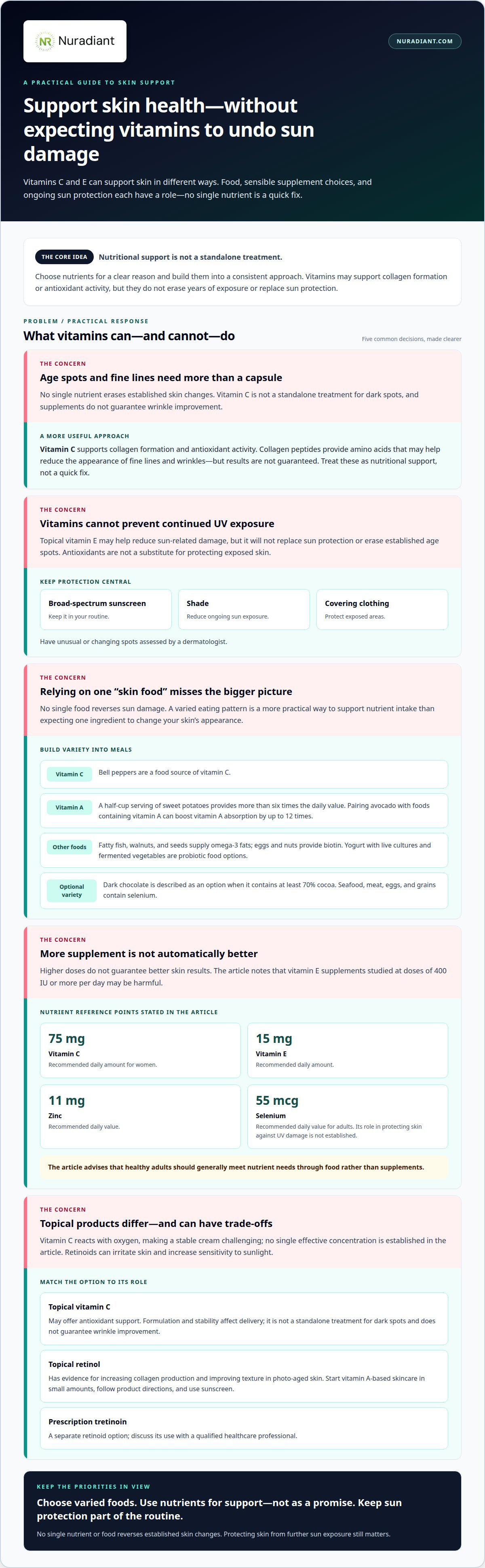
Among the best vitamins for age spots and wrinkles, vitamin C stands out for its role in collagen formation and antioxidant activity. Collagen provides structural support for skin, while collagen peptides supply amino acids that may help reduce the appearance of fine lines and wrinkles. Vitamin C supports skin, but it isn’t a standalone treatment for dark spots. The National Institutes of Health Office of Dietary Supplements gives a recommended daily amount of 75 mg for women.
Other nutrients matter too. The National Institutes of Health Office of Dietary Supplements gives a recommended daily amount of 15 mg daily for vitamin E and a recommended daily value of 11 milligrams daily for zinc. It also notes that vitamin E supplements studied at doses of 400 IU or more per day may be harmful. Choosing the best vitamins for age spots and wrinkles means focusing on useful nutrient support, not assuming higher doses deliver better skin results.
Build dietary support with food examples: eggs and nuts provide biotin, while fatty fish, walnuts, and seeds supply omega-3 fats. Yogurt with live cultures and fermented vegetables are probiotic food options. Fruits and vegetables add variety, including vitamin C-rich bell peppers. Collagen peptides are available in supplements, and gelatin-rich foods provide collagen-related amino acids. These choices support nutrient intake, but they don’t erase sun exposure or reverse established skin changes.
Topical vitamin C may offer antioxidant support, but its formulation and stability affect how well it is delivered. Because vitamin C reacts with oxygen, making a stable cream can be challenging; no single concentration is established here. Oral supplements can support nutrient intake, while collagen peptides provide amino acids, but neither guarantees changes in wrinkles. Keep sunscreen, shade, and protective clothing in your routine. Have unusual or changing spots assessed by a dermatologist.
Topical vitamin C may offer antioxidant support, but it is not a standalone treatment for dark spots and does not guarantee wrinkle improvement. Formulation and stability affect delivery, and no single effective concentration is established.
2. Vitamin E and visible signs of sun damage
Vitamin E acts as an antioxidant, helping the body manage free radicals linked with environmental stress. Applied to skin, vitamin E may reduce sun-related damage. It can also support healthy skin by helping limit inflammation. However, a topical product won’t replace sun protection or erase established age spots. Use it as one part of a broader routine, not the whole strategy.
Vitamin A, often used in skincare as retinoids, supports cell growth and renewal. Topical retinol has been found to increase collagen production and improve texture in photo-aged skin, reducing the appearance of fine lines and wrinkles. Retinoids can irritate skin and increase sensitivity to sunlight. Start vitamin A-based skincare in small amounts, then follow product directions and use sunscreen. That practical addition matters when targeting visible damage.
Vitamins C and E provide antioxidant support in different ways. Vitamin C supports collagen formation, while topical vitamin E may help limit sun-related skin damage. Neither replaces sunscreen. Protect your skin with broad-spectrum sunscreen, shade, and clothing that covers exposed areas. These steps reduce ongoing UV exposure rather than relying on vitamins to undo it.
Selenium supports tissue elasticity and helps protect cells from oxidative damage. The National Institutes of Health Office of Dietary Supplements lists 55 micrograms as the recommended daily value for adults. Selenium is found in foods such as seafood, meat, eggs, and grains. Research is still needed to establish whether selenium protects skin against UV damage, so don’t treat it as a proven sun-defense strategy.
How do vitamin C serums compare with retinol and prescription tretinoin for photoaging? Vitamin C serums provide antioxidant support, while topical retinol has evidence for improving photo-aged skin texture and fine lines. Prescription tretinoin is a separate retinoid option; discuss its use with a qualified healthcare professional. For a broader supplement routine, explore general health supplements alongside sunscreen and targeted skincare.
3. Dietary sources of antioxidants
Healthy adults should generally meet nutrient needs through food rather than supplements. Build a routine around varied meals and antioxidant-rich produce. These nutrients support dietary quality, but no single ingredient erases fine lines or replaces sun protection. Keep the goal practical: choose foods you enjoy, then include them consistently. A balanced plate also delivers nutrients beyond those linked with skin, supporting overall health and strength.
Sweet potatoes are a concentrated source of vitamin A. A half-cup serving provides more than six times the daily value. Serve them roasted alongside a meal or mashed as a simple side. Vitamin A supports skin cell renewal, but sweet potatoes are not a targeted treatment for age spots. Enjoy them as part of varied nutrition, not as a shortcut to changing your skin’s appearance.
Pairing foods can also shape nutrient absorption. Eating avocado with foods containing vitamin A can boost vitamin A absorption by up to 12 times. Try avocado alongside a meal featuring sweet potato or another vitamin A-rich food. This combination makes a useful dietary habit without requiring a supplement routine. It also adds variety, rather than relying on one ingredient to deliver every nutrient.
Dark chocolate is another option, provided it contains at least 70% cocoa to maximize the stated benefits. Treat it as an addition to a balanced eating pattern, not a replacement for fruit and vegetables. Salmon can also anchor a meal, while colorful produce adds variety across the week. No single food prevents cancer or reverses sun damage, so keep food choices in perspective.
Put the plan into action: rotate different fruits and vegetables, include sweet potatoes, and pair vitamin A foods with avocado. Choose dark chocolate with at least 70% cocoa when adding it to meals. These steps make antioxidant foods easier to sustain. Food supports nutrient intake; it doesn’t replace sunscreen or guarantee fewer wrinkles. Consistency matters more than chasing one supposed skin “superfood.”
4. Vitamin C and environmental stressors
Vitamin C supports skin antioxidant defenses, but environmental stress can reduce the vitamin available in skin. Even minimal ultraviolet exposure can decrease skin vitamin C levels by 30 percent. That makes daily protection more than a cosmetic step. Sunscreen, shade, and protective clothing limit direct exposure, while eating vitamin C-rich foods supports dietary intake.
City air adds another challenge. Exposure to ozone from pollution can decrease vitamin C levels in skin by 55 percent. Those changes matter because vitamin C supports collagen formation and helps the skin manage oxidative stress. A practical routine pairs sun protection with foods such as citrus fruits, tomatoes, and bell peppers. Each choice supports skin health through a different route.
Topical vitamin C may sound simple, but formulation matters. Because vitamin C reacts with oxygen, creating a stable skin cream can be challenging. Packaging and formula stability affect how well a product preserves the ingredient. Follow the product directions, store it as instructed, and stop using it if it irritates your skin.
Oral vitamin C supplements are another way to support nutrient intake. The research described here suggests oral vitamin C may support the skin alongside sunscreen, but this is not a reason to skip sun protection. A tablet does not block UV exposure. Combine dietary vitamin C with a consistent skincare routine and physical protection for a more complete approach.
Make the steps easy to repeat. Add a vitamin C food to breakfast, such as strawberries or orange slices. Apply sunscreen before outdoor activities, then reapply according to its label. Use shade and clothing to protect exposed skin during time outside. If supplements fit your routine, explore general health supplements as one part of a wider nutrition plan. These habits support skin appearance without asking one product to do everything.
Nuradiant: CBD Products
Nuradiant offers CBD products as part of its broader wellness range, separate from the vitamin and nutrition strategies discussed above. If you are considering wellness products alongside a skin-supportive routine, browse the available categories and choose according to your goals. CBD products do not replace vitamin C, vitamin E, sunscreen, or professional assessment of changing skin spots.
Nuradiant’s wider selection also includes nootropics, joint health supplements, and premium gummies. Choose each product for a clear purpose, and do not treat supplements as direct fixes for age spots or wrinkles. For skin support, prioritize a balanced diet and sun protection, and follow product directions.
Visit nuradiant.com to explore Nuradiant’s offerings, or contact Nuradiant with questions.
Build a Skin-Support Routine You Can Sustain
Choosing the best vitamins for age spots and wrinkles is only one part of a longer-term approach. Turn useful information into habits you can maintain: make thoughtful food choices, protect your skin from the sun consistently, and avoid adding supplements without a clear reason. A simple routine you follow is more useful than a complicated plan you abandon.
Pay attention to changes in your skin. If a spot looks unusual or changes over time, make professional skin care your next step. For broader wellness products that may complement your routine, consider which options align with your goals and read directions carefully.
Nuradiant offers wellness products including daily nutritional support, CBD products, and nootropics. These products aren’t treatments for age spots or wrinkles, but they may fit other wellness priorities. Contact Nuradiant to discuss its wellness offerings, and keep moving forward with a plan grounded in informed choices.
Frequently Asked Questions
What are the best vitamins for skin?
Vitamins C, E, and A are among the nutrients most relevant to skin support. Vitamin C supports collagen formation, vitamin E provides antioxidant support, and vitamin A-based skincare supports cell renewal. For a practical starting point, assess your diet and skincare routine separately. A nutrient-rich eating pattern supports overall intake, while topical products are applied directly to the skin.
Can vitamin A retinoids reduce wrinkles and age spots, and what are the risks?
Topical retinol may improve the appearance of fine lines and sun-exposed skin, but it is not a guaranteed way to fade age spots. Vitamin A-based skincare can irritate skin and increase sensitivity to sunlight. Use a small amount, follow product directions, and protect your skin from the sun. If irritation develops, pause use and seek professional guidance before restarting.
How effective is vitamin E for age spots and wrinkles, and can it cause skin reactions?
Vitamin E may help limit sun-related skin damage, but that does not establish it as a reliable way to erase age spots or wrinkles. Topical products can cause skin reactions. If you notice itching, redness, swelling, or discomfort after applying vitamin E, stop using it and seek medical advice. Try new skincare products cautiously, especially if your skin is sensitive.