

Natural Ways to Boost Energy After 60 With Daily Habits
The best foods for energy after 60 are the basics done consistently: protein-rich foods, fruits and vegetables, whole grains, and enough fluids. Pair them with steady sleep and daily movement, and you have practical natural ways to boost energy after 60. There’s no single food that can replace the whole routine.
You may already know that food matters. The harder question is how sleep changes, nutrient needs, and everyday habits affect your energy. Low energy isn’t a reason to accept less from yourself; it’s a signal to look at the factors you can improve.
This article covers sleep routines, age-related changes, and key nutrients, then looks at how scent may offer a quick sensory reset. You’ll find practical steps for building a routine that supports steadier energy, along with guidance on when ongoing fatigue warrants medical attention.
Key Takeaways
- Anchor your sleep and wake times, then build a wind-down routine that supports more restorative nights.
- Notice how hydration, meals, and daily habits affect your energy, and act on fatigue that persists.
- Learn which nutrients support normal energy production and why more supplements aren’t automatically better.
- Explore scent as a brief sensory reset, while keeping expectations realistic about its role in energy.
1. Consistent sleep schedules and bedtime routines
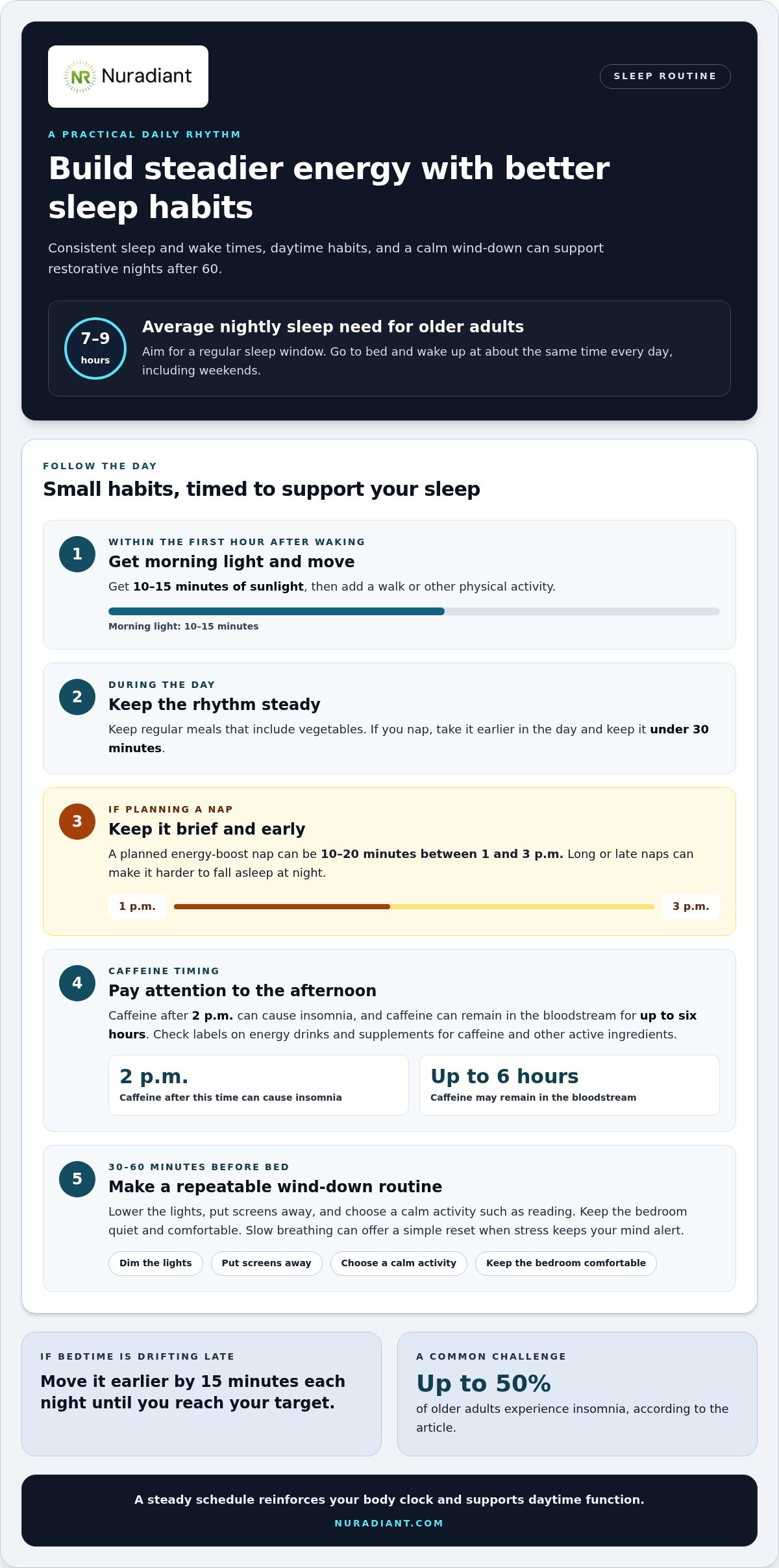
Lock in a regular sleep window. Older adults need an average of 7 to 9 hours of sleep per night, according to the National Institute on Aging. Go to bed and wake up at about the same time daily, including weekends. A steady schedule reinforces your body clock and supports daytime function.
Build a repeatable wind-down routine. For 30–60 minutes before bed, lower the lights, put screens away, and choose a calm activity such as reading. Keep the bedroom quiet and comfortable. If your bedtime is drifting late, move it earlier by 15 minutes each night until you reach your target.
Caffeine can undermine that routine. Harvard Health advises that caffeine after 2 p.m. can cause insomnia, and caffeine can remain in the bloodstream for up to six hours. For adults over 60, caffeine isn’t automatically off-limits, but timing matters. Energy drinks and supplements vary, so read labels for caffeine and other active ingredients rather than stacking stimulant sources.
Insomnia is common among older adults, with as many as 50% experiencing it. A short daytime nap may help, but keep it under 30 minutes and take it earlier in the day. For a planned energy boost, try a 10–20-minute nap between 1 and 3 p.m. Long or late naps can make it harder to fall asleep at night.
Use daytime habits to support nighttime sleep. Get 10–15 minutes of sunlight within the first hour after waking, then add a walk or other physical activity. Stress can keep your mind alert, so use a simple reset such as slow breathing before bed. Regular meals with vegetables and limiting late caffeine can also help protect sleep quality and boost your energy.
2. What Causes Energy Levels To Decline After 60?
Fatigue after 60 can have several sources, not simply age. In a 2025 meta-analysis, 3 out of 5 adults over 60 described themselves as easily fatigued after normal activities. Age-related fatigue is also associated with physical decline, higher mortality risk, and conditions that interfere with daily tasks. Mitochondria use energy from food to produce ATP, the chemical energy cells need to function.
Hydration is a practical factor to address. A lack of fluids can cause fatigue as an early sign, and physical performance can drop at 2% dehydration. The National Academy of Medicine recommends about 9 cups of fluids daily for women over 51 and 13 cups for men. Needs can shift with activity, heat, health conditions, and medications. Try drinking water regularly rather than waiting until thirst becomes intense.
Medication effects can also reduce energy. Medicines for high blood pressure, diabetes, heart problems, depression, and allergies may cause fatigue. Metformin, used for diabetes, can contribute to vitamin B12 deficiency. Review medications with a primary care doctor every three to six months; never stop or change a dose on your own. Gentle activity can help break up sedentary periods: try a three-minute walk for every 30 minutes of sitting.
Stress, depression, anxiety, grief, poor nutrition, alcohol, and disrupted sleep can all drain energy. About 74% of seniors with chronic diseases experience fatigue. Track sleep, fluid intake, meals, activity, and energy levels to spot patterns that could help explain a dip or increase.
Contact a primary care physician if extreme fatigue persists despite lifestyle changes, or makes everyday tasks difficult. A medical assessment can consider health conditions, hydration, nutrition, and medication effects. If a clinician identifies a nutrient need, explore Nuradiant’s medical-grade supplement line as a next step alongside that care.
3. Which Vitamins And Minerals Are Essential For Energy Production?
Cells use nutrients from food to produce adenosine triphosphate, or ATP, their chemical energy. Varied meals with protein, fruits, vegetables, whole grains, and healthy fats provide materials for this process. Protein also supports muscle, helping preserve strength and function as you age. Include protein sources throughout the day, such as eggs, beans, yogurt, fish, or poultry.
Adults should consume 2.4 micrograms (mcg) of vitamin B12 daily, according to the National Institutes of Health Office of Dietary Supplements. The National Institutes of Health Office of Dietary Supplements recommends about 600 international units (IU) of vitamin D daily. B12 occurs naturally in animal foods and is added to some nondairy milks. Aging skin is less efficient at converting sunlight into vitamin D, so a varied diet and a clinician-guided assessment can help clarify needs.
Can vitamin B12, iron, or vitamin D deficiencies cause fatigue in older adults? Yes, low levels of these nutrients can contribute to fatigue, and testing can help identify a deficiency. If energy-related nutrient levels are already normal, taking more isn’t expected to help. Fatigue lasting multiple weeks is a reason to contact a health care provider.
Build meals around fiber-rich beans, grains, nuts, fruits, and vegetables. Choose healthy fats such as olive oil, avocado, and omega-3-rich fish. These choices add nutritional variety; they don’t replace assessment of a suspected deficiency or disease.
Movement matters, too. Physical activity challenges muscles and supports the systems that use cellular energy. If you’ve been inactive, start with a few minutes of comfortable movement at a time, repeating it during the day and increasing gradually. Before beginning a strenuous exercise routine, discuss your plans with your healthcare team.
4. Using scent for a quick energy boost
A familiar aroma can act as a sensory cue to pause, reset, and refocus. Try noticing fresh orange peel before a task, or the scent of peppermint tea before a walk. Scent may shift how alert or engaged you feel, but it doesn’t replace sleep, nutrition, or movement. Among the natural ways to boost energy after 60, it works best as a small prompt, not a standalone solution.
Keep the experiment simple: choose an aroma you enjoy, use it during a low-energy moment, and notice whether your focus changes. Citrus, coffee, and mint are familiar options. At another time, try a short walk or a glass of water instead. Comparing these different cues can help you identify what works for you, rather than assuming every aroma has the same effect.
Use a scent as a cue for action. Pair the aroma of a favorite tea with standing up, stretching, and starting a manageable task. If you already exercise, let the smell of freshly peeled lemon remind you to put on your walking shoes. Movement engages muscles and supports physical function; the aroma simply marks the transition.
Keep the routine comfortable. Choose a scent you enjoy, avoid applying concentrated fragrance directly to your skin, and stop if it causes discomfort. Be considerate of others in your space, particularly anyone who prefers unscented rooms. Let your preferences and surroundings guide how and where you use aromatic products.
Treat scent as one of the natural ways to boost energy after 60 by using it as a brief attention cue within a broader routine. Notice which aroma and activity help you feel ready to act. For broader wellness support, explore supplement options as one part of your routine, not a replacement for movement, balanced nutrition, or restorative sleep.
Nuradiant: CBD Products
Nuradiant offers CBD products for readers exploring wellness options alongside the daily habits covered here. CBD is not a direct energy booster or a substitute for sleep, hydration, balanced nutrition, or medical care. Consider it a separate wellness interest, not a fix for persistent fatigue.
Nuradiant also offers nootropics, joint health supplements, and premium gummies. These are distinct product categories, so choose based on your broader wellness priorities rather than expecting one product to address every concern. If fatigue continues or disrupts daily life, prioritize medical evaluation instead of relying on supplements.
To explore Nuradiant’s offerings, visit nuradiant.com.
Make Your Next Move Count
Lasting change starts with observation, not guesswork. Choose one daily habit to strengthen, then notice how your focus and stamina respond across ordinary tasks. Keep the adjustment manageable enough to repeat. That’s how natural ways to boost energy after 60 become part of your routine instead of a short-lived burst of motivation.
If you’re considering supplements, make it a deliberate choice. Nuradiant offers men’s health supplements, CBD products, and nootropics. These are distinct options, not substitutes for addressing persistent fatigue or building consistent habits. Consider your broader wellness priorities and how a supplement fits before adding it to your routine.
Ready to explore those options? Contact Nuradiant to learn more. Keep your focus on the habits you can sustain, make informed choices, and take the next step at your own pace. Small, consistent actions put you in control of the routine you build.
Frequently Asked Questions
What Are The Best Energy Foods For Seniors Over The Age Of 60?
Choose meals that combine protein, fiber-rich carbohydrates, and healthy fats. For example, pair Greek yogurt with oats, berries, and nuts, or serve beans with vegetables and whole-grain toast. These combinations provide varied nutrients and can make meals more satisfying. If your appetite fluctuates, prepare easy options ahead, such as hummus with vegetables or fruit with nut butter.
What Causes Energy Levels To Decline After 60?
Low energy can have several overlapping causes, including disrupted sleep, low fluid intake, stress, limited activity, medication effects, or an underlying health condition. Look for patterns by noting when fatigue starts, what you ate, how you slept, and what medicines you took. Share these notes with your doctor, especially if fatigue is new, worsening, or interfering with everyday tasks.
What else gives you a quick boost of energy?
A brief change of scene can help you reset. Step outside, take a short walk, or open a window and focus on a pleasant scent, such as fresh citrus. Choose one action and notice how alert you feel afterward. If fatigue keeps returning despite these quick resets, treat the pattern as useful information instead of relying on temporary boosts.
What is the number one food that gives you energy?
There isn’t one food that works as a universal energy winner. A protein-rich breakfast, such as eggs with whole-grain toast or yogurt with fruit and oats, is a practical starting point. Pairing protein with fiber-rich carbohydrates makes a more balanced meal than relying on a sweet snack alone. Your appetite, preferences, and overall diet shape the best choice.
Which Vitamins And Minerals Are Essential For Energy Production?
Vitamin B12, vitamin D, iron, and magnesium each have roles in normal body function, and low levels can contribute to fatigue. Food sources include fish, eggs, dairy, beans, leafy vegetables, and fortified foods. A nutrient deficiency is different from simply wanting more energy: testing helps identify what’s low. If results are normal, taking extra nutrients isn’t expected to help.
Why am I so tired?
Persistent tiredness can stem from sleep problems, dehydration, emotional strain, nutrition, medication effects, or medical conditions. Consider whether it began after a health change, a new medicine, or a shift in routine. Contact a healthcare provider if fatigue lasts, worsens, or makes usual tasks difficult. Bring a list of symptoms, medicines, and recent changes to support a focused discussion.