

Natural metabolism boosters for men over 40: food, hormones, and habits
There’s no single food or spice that flips your metabolism into high gear. Metabolism is how your body uses energy, including the energy it needs at rest for functions such as breathing and keeping your heart beating. The most practical natural metabolism boosters for men over 40 are consistent habits: strength training, balanced meals, quality sleep, and regular movement.
You may already feel the shift: the same routine doesn’t always deliver the same results, and a quick fix can look tempting. But tea, coffee, chili peppers, and supplements aren’t magic switches. Their effects vary, and the bigger gains come from building habits you can sustain.
This guide breaks down what metabolism means, how hormones, sleep, and stress fit in, and which foods and spices may offer modest support. You’ll also see where to focus first, so you can make informed choices without chasing hype.
Key Takeaways
- Green tea may support fat metabolism, but its effects are mixed. Treat it as a small addition, not a replacement for consistent habits.
- Protect sleep and manage stress to support appetite and hormone balance. Build a steady routine rather than relying on quick fixes.
- Anchor meals with protein, healthy fats, and fiber-rich carbohydrates to support fullness and make nutrition more consistent.
- Use foods such as chili peppers, coffee, and leafy greens for modest support, while keeping expectations realistic about their impact on fat loss.
1. Green tea and green tea extract
Green tea can be part of a metabolism-focused routine, but it won’t transform energy use on its own. Research on green tea and oolong tea suggests they may affect how the body breaks down fats. Findings remain mixed, so treat either drink as a small support, not a shortcut to burning fat or fewer calories.
Green tea contains catechins, plant compounds often mentioned in metabolism claims. Green tea extract concentrates compounds found in tea, but research on its effects on fat metabolism is inconclusive. A practical choice is to drink brewed tea if you enjoy it, rather than assuming an extract will boost your metabolism.
Oolong tea is another beverage option, but it cannot replace habits that influence daily energy use. Strength training helps build lean muscle, which requires energy, and regular physical activity matters too. Keep movement consistent and adjust its intensity to your fitness level instead of chasing a stimulant-driven effect.
Green tea extract and other products marketed as metabolism boosters claim to increase calorie or fat burning, but most lack strong scientific evidence. Research on green tea extract is inconclusive, so a label promising faster burning is not proof of a meaningful effect.
What are the risks and side effects of metabolism-boosting supplements for men over 40? These products may be unsafe or cause unpleasant side effects. The evidence provided doesn’t establish specific risks for each ingredient, so don’t assume a “natural” label means a supplement is harmless.
Pair tea with satisfying foods rather than a restrictive plan. Leafy greens add volume and can help you feel full. Add spinach or other greens to a meal with protein to support satiety and make balanced eating easier to maintain while you build muscle and stay active.
2. Hormones, thyroid function, sleep, and stress
Metabolism isn’t controlled by food alone. Testosterone levels in men decline about 1% per year starting around age 30. In the 40s and 50s, lower testosterone can be associated with reduced muscle mass, more belly fat, mood changes, fatigue, and lower libido. Thyroid function also matters because thyroid hormones help regulate how the body uses energy. Persistent unexplained weight gain deserves attention, not guesswork.
Sleep shapes appetite as well as recovery. Adults are advised to get 7 to 9 hours of quality sleep per night. Adequate rest can help keep ghrelin and leptin, hormones involved in hunger and fullness, balanced. That may help limit overeating and make weight management more consistent. Sleep restriction for four nights or longer may slightly reduce the body’s ability to metabolize fat.
Build a routine that supports both sleep and stress control. Keep a regular bedtime, get daylight with a morning walk, and avoid caffeine after mid-afternoon. Deep breathing or meditation can create a practical pause during a high-pressure day. Stress can affect hormones, including cortisol, and contribute to eating patterns that work against your goals.
How can men over 40 safely lose weight while preserving muscle? Choose gradual, sustainable changes in eating and physical activity instead of extreme calorie restriction, which can slow metabolism and contribute to muscle loss. Include resistance exercise and strength training 2-4 times per week to support muscle mass while managing weight.
When should a man over 40 consult a doctor about unexplained weight gain or slow metabolism? Seek medical evaluation when weight gain is persistent and unexplained, especially alongside fatigue, mood changes, or reduced muscle mass. A clinician can assess thyroid function, hormone levels, medications, and other health factors that may affect metabolism.
3. Protein, healthy fats, and fiber-rich carbohydrates
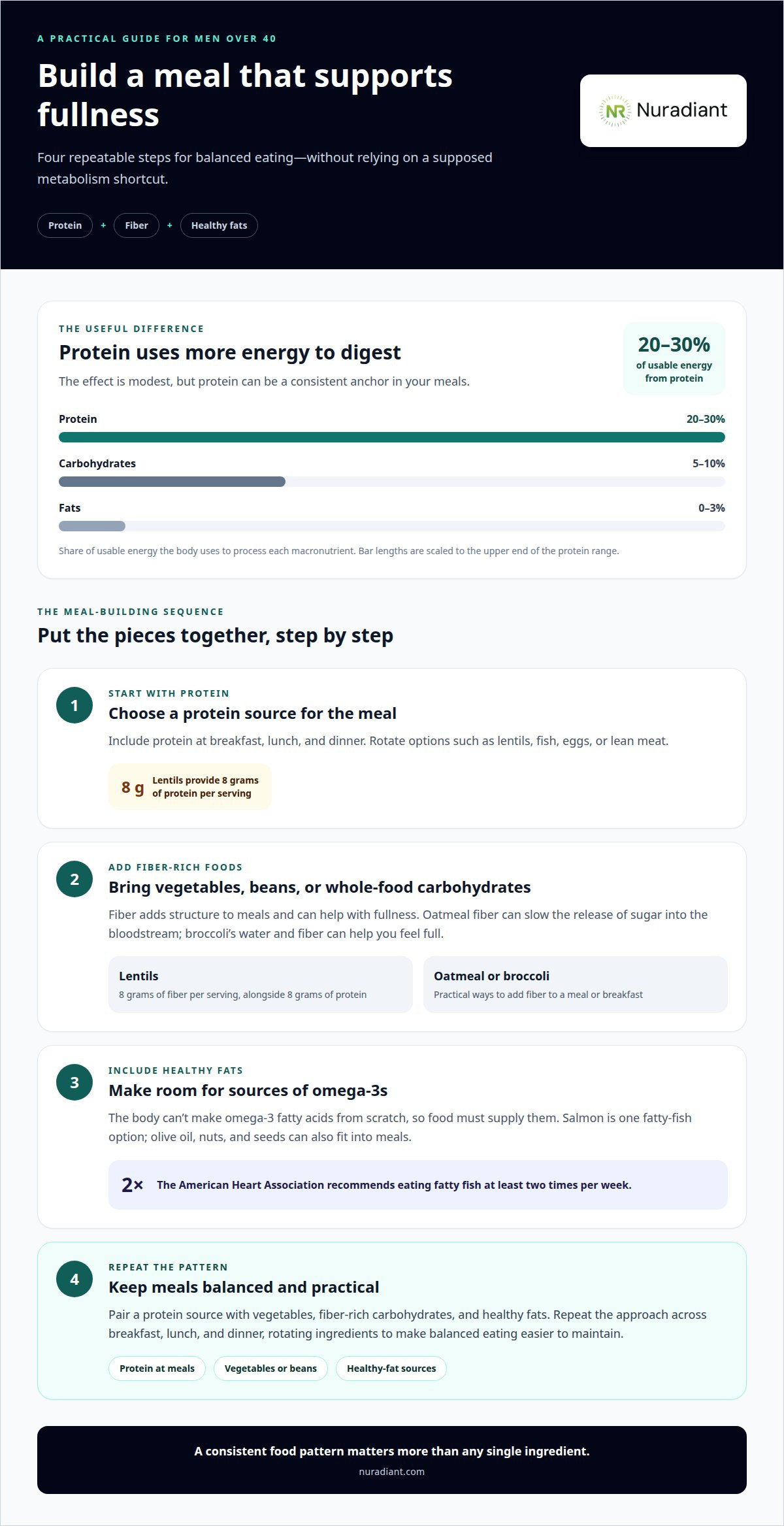
Build meals around whole foods, not a supposed metabolism shortcut. Protein takes slightly more energy to digest than carbohydrates or fat, so the body burns more energy processing it. Dietary protein uses 20-30% of its usable energy for metabolism, compared with 5-10% for carbohydrates and 0-3% for fats. These effects are modest, but protein at every meal gives your eating routine a consistent anchor.
Choose a protein source, then add vegetables, fiber-rich carbohydrates, and healthy fats. Lentils offer a plant-based example, providing 8 grams each of protein and fiber. Their combination can make a meal more filling and support appetite management. Beans and other legumes also bring protein and fiber to the plate, making them useful whole-food options.
Fiber adds structure to meals. Oatmeal’s fiber can slow the release of sugar into the bloodstream, while broccoli’s water and fiber content can help you feel full. Try oatmeal at breakfast or broccoli alongside a protein-rich main dish. A serving built this way can help you stay satisfied without relying on caffeine to carry you through the day.
Healthy fats matter, too. The body can’t make omega-3 fatty acids from scratch, so food must supply them. The American Heart Association recommends eating fatty fish at least two times per week. Salmon is one example; pair it with vegetables and a fiber-rich carbohydrate for a balanced meal. Olive oil, nuts, and seeds can also fit into meals, though the overall food pattern matters more than any single ingredient.
Keep it practical: include protein at breakfast, lunch, and dinner, then rotate sources such as lentils, fish, eggs, or lean meat. Add vegetables or beans for fiber. This approach supports fullness and makes balanced eating easier to repeat, without expecting one food to dramatically boost metabolism.
4. Foods and spices that may support metabolism and fat loss
Think small effects, not a metabolic overhaul. Capsaicin gives chili peppers their heat, raises internal temperature, and temporarily increases calorie burning. At acceptable doses, the estimated increase is around 10 calories per meal. For an average-weight male, that could add up to about 1 pound of weight loss over 6.5 years. Add peppers for flavor, not as your main fat-loss strategy.
Coffee may temporarily raise metabolic rate, but the effect has limits. One study followed 126 overweight adults for 24 weeks, comparing four cups of regular coffee daily with four cups of a coffee-like substitute. Drinking coffee was associated with shedding almost 4% of body fat. That finding doesn’t make coffee a stand-alone weight-loss plan, and caffeine can disrupt sleep when consumed late.
Choose foods that strengthen the whole pattern. A long-term study tracking more than 100,000 men and women across multiple four-year intervals found flavonoid-rich foods were associated with less weight gain. These compounds occur in foods such as berries, apples, and tea. Extra-virgin olive oil also fits balanced meals: a study of more than 16,000 adults linked regular consumption with lower body mass index and waist circumference than sporadic consumption.
The key point is simple: no spice or food resets hormones, erases stress, or replaces strength training. Use chili peppers, coffee, fruit, and olive oil to make nutritious meals enjoyable and repeatable. Be cautious about supplements marketed to accelerate fat loss: most metabolism-boosting supplements lack strong scientific evidence and may cause unpleasant side effects.
Build your next meal around whole foods, then keep physical activity and sleep consistent. For support with sustainable weight-management goals, explore weight-management support.
Nuradiant: CBD Products
Nuradiant offers supplements and wellness products, including CBD products, nootropics, joint health supplements, and premium gummies. These may be options to explore alongside the nutrition, movement, and sleep habits covered here, but they are not substitutes for those fundamentals or guaranteed metabolism boosters.
Consider a supplement when it fits a specific goal within your broader wellness routine, such as supporting joint health while staying active. Review the product information and ingredients before choosing. If unexplained weight changes or other health concerns are driving your search, prioritize appropriate medical care rather than relying on a supplement.
Explore Nuradiant’s website to review its supplement and wellness offerings.
Make Your Next Move Count
Progress comes from choices you can repeat, not from chasing a perfect plan. Pick one practical change, make it part of your routine, and notice how it fits your energy, appetite, and training. Then build from there. A steady approach gives you a stronger foundation than relying on one ingredient or supplement.
Choosing natural metabolism boosters for men over 40 means looking beyond quick fixes and considering what supports your wider health goals. If supplements are part of your plan, Nuradiant offers men’s health supplements, CBD products, and nootropics to explore alongside consistent habits.
For a conversation about your options, contact Nuradiant to discuss your options. Keep your next step focused, realistic, and aligned with the performance you want to sustain. You can build momentum one deliberate choice at a time.
Frequently Asked Questions
What Exactly is Metabolism?
Metabolism describes the processes your body uses to turn food and stored energy into usable fuel. It involves more than exercise or fat burning: your body uses energy for essential functions at rest, as well as for digestion and movement. Energy needs differ between people, which helps explain why the same meals and routines can produce different results.
What are some ways that I can help boost my metabolism?
The most useful natural metabolism boosters for men over 40 are consistent habits, not a single miracle food. Build regular movement into your day, break up long sitting periods with brief walks, and drink water throughout the day. Strength training can also support lean muscle. Track your routine and choose changes you can keep repeating.
Why Is It So Hard to Lose Weight After 40?
Weight loss can become more challenging when your energy needs, body composition, or daily activity change. Genetics also influence resting energy needs. As you lose weight, your body requires less energy, so a plan that worked at a higher weight may need adjustment. Review your eating and movement patterns instead of blaming a single food.
Do I burn energy if I’m not being active?
Yes. Your body uses energy even when you’re sitting still or sleeping, supporting essential functions such as breathing and keeping your heart beating. This resting energy use continues without planned exercise, although the amount varies between people. Body size and genetics are among the factors that influence how much energy your body needs at rest.
Does dieting affect metabolism?
It can. Extreme calorie restriction may slow metabolism and contribute to muscle loss, so severe cuts can work against sustainable progress. Eating late at night does not automatically slow metabolism; overall food choices and calorie balance across the day matter more. Choose a manageable eating pattern you can maintain instead of repeatedly restricting heavily.
First, Why Is This Happening?
Changes in weight and energy use can reflect several influences, including age, body composition, genetics, eating habits, and activity. The National Institutes of Health states that metabolism slows by about 5% every 10 years after age 40. For men over 40, natural metabolism boosters for men over 40 are best understood as supportive habits, not a way to override every factor.