

Mood Support Supplements for Women Over 50: How to Choose
More ingredients don’t mean better mood support. The best mood support supplements for women over 50 depend on your needs, diet, health history, and medications, and no supplement is automatically safe for everyone. If you take prescription medicine, speak with a qualified healthcare professional before adding a supplement.
It’s smart to question what’s in the bottle before taking it. Ingredients such as omega-3s, vitamin D, magnesium, and B vitamins may be relevant to mood support, but they aren’t interchangeable, and some need extra care. The ingredient, dose, and possible interactions matter.
This guide breaks down mood-support ingredients, explains how vitamin D relates to seasonal affective disorder, and covers lifestyle habits that can complement a thoughtful routine. You’ll also get practical safety questions to consider before choosing a supplement, so you can make an informed decision rather than relying on bold promises or guesswork.
Key Takeaways
- Compare ingredient amounts on the Supplement Facts panel, and consider how each ingredient fits your diet, health history, and medications.
- Understand how vitamin D may relate to seasonal mood changes, and why testing can help guide decisions about supplementation.
- Build a stronger foundation with practical habits, including regular movement, balanced food choices, and mindful caffeine use.
- Learn which ingredients may support mood and which safety questions deserve attention before adding a supplement.
1. What Are the Best Supplements to Improve and Support Mood?
Omega-3 fatty acids support brain function and cell growth, making them relevant to emotional wellness. They’re found mainly in fish oil and algae, as well as nuts and seeds. Fatty fish, including salmon and mackerel, provides a food-first option. Eating it two to three times per week may provide enough omega-3s without supplements. Fish oil is one option, not a guaranteed fix for low mood or anxiety.
Omega-6 fatty acids also have roles in the body. Safflower, grapeseed, and sunflower oils contain them. Rather than treating omega-6 as the enemy, consider your overall eating pattern and the sources of both fatty acids. Omega-3 supplements are best absorbed with a meal containing fat. A 2022 systematic review of nine randomized trials found modest memory and learning improvements among people taking omega-3s. That finding relates to cognitive function, not proof of a mood benefit.
Check nutrients alongside omega-3s. According to the National Institutes of Health, women age 51 and older are recommended to get 1,200 milligrams of calcium per day. According to the National Institutes of Health, adults should get an average of 2.4 micrograms (mcg) of vitamin B12 daily. These nutrients support broader health, but they aren’t interchangeable mood treatments.
Choose products with a clear Supplement Facts panel and specific ingredient amounts. Look for independent quality seals such as USP Verified or NSF, and check what each seal covers. Before adding a supplement, review medications, possible side effects, and health conditions with a qualified healthcare professional. Avoid stacking products simply because their ingredients sound different.
When should mood changes prompt medical evaluation? Seek help if they persist, worsen, or disrupt sleep and daily functioning. Thoughts of self-harm require immediate support. Discuss stress, anxiety, medication effects, and other health factors rather than trying to manage every change with supplements alone.
2. Vitamin D and seasonal affective disorder
Seasonal affective disorder (SAD) involves mood symptoms that follow a seasonal pattern. Vitamin D deserves attention, but a supplement isn’t a stand-alone treatment for depression. About 40 percent of American adults don’t get enough vitamin D. A blood test can help establish whether deficiency is a concern, and laboratory work can guide dosing. Vitamin D is best taken with a meal containing fat, which supports absorption.
Age matters. According to the National Institutes of Health, the recommended vitamin D intake is 600 international units (IU) daily through age 70. According to the National Institutes of Health, the recommended vitamin D intake for people over age 70 who are deficient is 800 IU daily. These are recommended intake amounts, not personal supplement doses or daily upper limits. Separate those concepts, and base supplement decisions on lab results, age, diet, and total intake.
B vitamins also support essential processes. B vitamins are often taken in the morning with food; taking them at night may feel activating and disrupt sleep. Vitamin B6 supports nervous system function, while B vitamins help the body convert food into usable energy. That role doesn’t mean a supplement will reliably improve energy, focus, or mood when deficiency isn’t present. Review the Supplement Facts panel to see the amount of each B vitamin.
Vitamin B12 deserves particular attention as people age. The National Institutes of Health recommends an average of 2.4 micrograms (mcg) of vitamin B12 daily for adults. An estimated 3 to 43 percent of older adults have a B12 deficiency. Low B12 may contribute to symptoms that overlap with depression, including fatigue and changes in concentration, so nutrition is one factor to assess rather than a diagnosis. Persistent low mood or depression calls for a full evaluation, not a supplement-only strategy.
For women over 50, compare your intake with the recommended amounts, then use lab results and health context to guide choices. A recommended daily intake is not the same as a safe upper limit; don’t treat one as the other.
3. Lifestyle habits that complement supplements
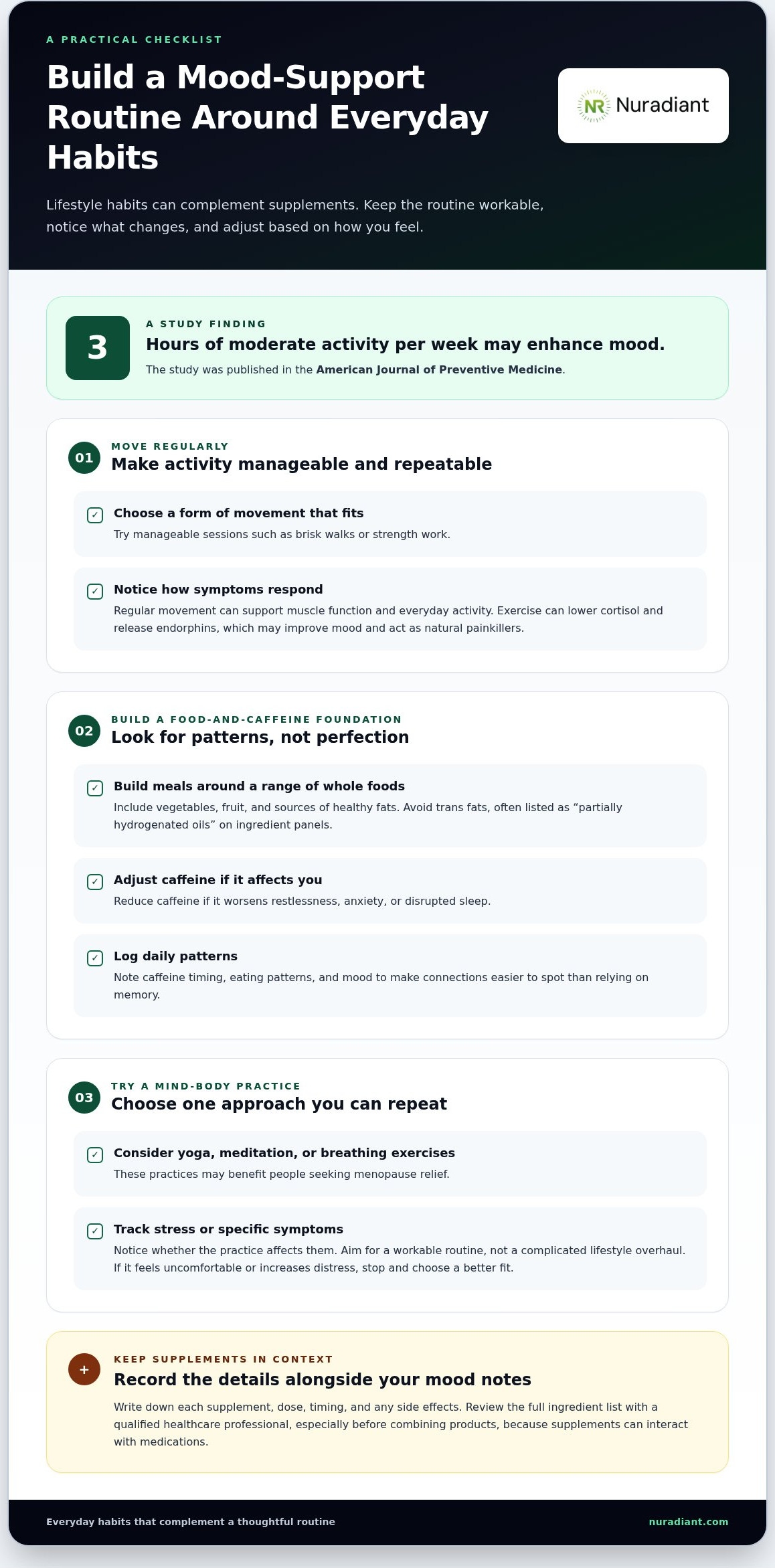
Start with movement, not another bottle. Exercise can lower cortisol and release endorphins, which may improve mood and act as natural painkillers. A study published in the American Journal of Preventive Medicine found that three hours of moderate activity per week may enhance mood. Break activity into manageable sessions, such as brisk walks or strength work, and track how symptoms respond. Regular movement can also support muscle function and everyday activity.
Food choices provide a foundation. Avoid trans fats, often listed as “partially hydrogenated oils” on ingredient panels. Build meals around a range of whole foods, including vegetables, fruit, and sources of healthy fats. Reduce caffeine if it worsens restlessness, anxiety, or disrupted sleep. Try logging caffeine timing, eating patterns, and mood each day. This makes patterns easier to spot than relying on memory during a stressful week.
Mind-body approaches may complement menopause care. Practices such as yoga, meditation, or breathing exercises may benefit people seeking menopause relief. Choose one approach you can repeat consistently, then note whether it affects stress or specific symptoms. Aim for a workable routine, not a complicated lifestyle overhaul. If a practice feels uncomfortable or increases distress, stop and choose a better fit.
Keep supplements within a broader routine, rather than making them its center. Magnesium is often taken in the evening, but timing doesn’t replace checking whether it suits your needs. Supplements can interact with medications, so review the full ingredient list with a qualified healthcare professional, especially before combining products. Record each supplement, dose, timing, and any side effects alongside your mood notes. This helps clarify what changed and when, and distinguish a routine shift from an ingredient effect. Consistent tracking can make your next health discussion more useful.
4. Mood-support supplement ingredients
Ingredient names aren’t enough. Choosing mood support supplements for women over 50 starts with comparing the amount per serving, intended use, and possible effects. Match ingredients to your symptoms and medications. Magnesium glycinate is commonly used for sleep and muscle tension. It may help when tension or disrupted rest is part of the picture, but it isn’t a universal mood remedy. Choose based on a specific need, not a crowded label.
Herbs and amino acids call for extra scrutiny. St. John’s wort is often marketed for mood, but an analysis of 37 clinical trials found minimal to no benefit for more severe depression. It can also interact with medications, so discuss it with a qualified healthcare professional before use. 5-HTP is involved in serotonin and melatonin production; 150 to 300 milligrams daily is a studied amount, not a personal recommendation. Don’t combine mood products without reviewing their ingredients and potential interactions.
SAMe has a different evidence profile. An analysis of 28 studies found statistically significant improvement in depression symptoms compared with placebo. That result doesn’t establish it as the right choice for every adult, or resolve questions about individual safety. Turmeric or curcumin may help some people with other concerns: experts suggest 500 milligrams twice a day, and noticeable benefits may take up to 12 weeks. Those findings concern pain and function, not a proven mood effect.
Phytoestrogens occur naturally in soy and some fruits and vegetables. They act similarly to the hormone estrogen, but they aren’t estrogen replacements. Keep the distinction clear, especially when choosing ingredients for menopause-related concerns. Calcium supports broader health, including bone strength, but shouldn’t be treated as a mood supplement. For mood support supplements for women over 50, prioritize evidence, dose, and medication interactions over bold label claims. Explore women’s health supplements to consider options aligned with your wellness goals.
Nuradiant: CBD Products
Nuradiant offers CBD products for readers exploring options as part of a thoughtful wellness routine. CBD isn’t a proven treatment for depression or a substitute for prescribed care. Keep your goals clear: consider your needs, review ingredients, and discuss how a product may fit with medications and other supplements.
For readers also exploring focus or everyday wellness, Nuradiant offers nootropics, joint health supplements, and premium gummies. These categories serve different purposes, so match a choice to a specific priority instead of expecting one product to address every concern. If mood symptoms persist or worsen, seek medical evaluation rather than relying on supplements alone.
Explore Nuradiant’s offerings or visit nuradiant.com to learn more.
Choose Your Next Step With Purpose
The right next move is a clear one: decide what you want to address, then choose products with ingredients and amounts you can evaluate. For mood support supplements for women over 50, avoid building a routine around a trend or a bold label. Keep your goals specific, and involve a qualified healthcare professional when mood changes persist or affect daily life.
Nuradiant offers CBD products and nootropics alongside men’s health supplements. These are distinct product categories, not substitutes for mental health care or individualized medical advice. Let your priorities guide what you explore, while keeping safety and suitability central to your decision.
Ready to take a considered next step? Explore Nuradiant’s offerings and choose a direction that aligns with your wellness goals. Progress starts with informed choices, made one step at a time.
Frequently Asked Questions
Are supplements safe to use?
Some supplements may be appropriate for some people, but safety depends on ingredients, dose, health conditions, and medications. Read the full Supplement Facts panel, including serving size and any ingredients that overlap with products you already take. Keep a written list of supplements and prescriptions, and update it when anything changes. St. John’s wort, for example, can interact with medications, so ingredient-specific risks matter.
What Are the Best Supplements to Improve and Support Mood?
There’s no single best supplement for everyone; the useful choice depends on a clear need and credible evidence. Omega-3s are one option to consider, while magnesium may be relevant when sleep or muscle tension is a concern. B12 is important to assess if deficiency is possible. Compare active ingredients and amounts, and don’t assume a multivitamin alone addresses persistent mood symptoms.
What Are the First Steps in Dealing with Moodiness?
Start by recording when mood changes occur and what else changes at the same time. Note sleep, meals, caffeine, stress, symptoms, and any new medication or supplement. Look for patterns across ordinary days rather than judging by one difficult moment. If low mood persists, worsens, or disrupts daily activities, arrange a medical evaluation instead of adding products at random.
Which supplements may support mood in women over 50, and what evidence supports them?
Omega-3s, vitamin D, and B12 are worth considering when diet or deficiency makes them relevant; magnesium is often used for sleep and muscle tension. Evidence differs by ingredient and outcome. A review of nine randomized omega-3 trials found modest memory and learning improvements, which supports a cognitive finding, not proof that omega-3s improve mood. Match evidence to the benefit you’re seeking.
Can omega-3 supplements help mood in women over 50, and what dose has been studied?
Omega-3s may be relevant to mood, but the cited evidence doesn’t establish one proven dose for every woman. A suggested daily amount is about one gram; one expert recommends 2,000 to 4,000 milligrams or more for mood concerns. These figures describe different recommendations, not a personal dosing plan. Review the EPA and DHA amounts on the label, not just total fish oil.
Does vitamin D deficiency affect mood after age 50, and should levels be tested before supplementing?
Low vitamin D can be a relevant health concern, but mood changes alone can’t diagnose a deficiency or seasonal affective disorder. Laboratory testing can help guide vitamin D dosing, especially before taking more than routine dietary amounts. Share the result with a qualified healthcare professional, along with details of medications and other supplements, so the plan takes total intake and individual health context into account.