

Memory supplements for seniors: what may help memory and attention
The best memory supplement may be the one that corrects a nutrient deficiency, not a generic “brain booster.” Yes, low levels of vitamin B12, vitamin D, or zinc may contribute to problems with memory and thinking, and correcting them may help. That makes memory supplements for seniors most relevant when they address a real nutritional gap; B vitamins are unlikely to boost brain health when a person isn’t deficient.
It’s reasonable to look for ways to protect focus and recall as you age. But choosing a supplement takes more than trusting a bold label or stacking ingredients. This article explains how age-related changes in nutrient absorption can matter, why B12 deserves attention, and what the evidence says about supplements linked to memory and attention. You’ll also see where popular options show promise, where findings remain uncertain, and why a targeted approach beats taking more without a clear reason.
Key Takeaways
- Memory and attention concerns can sometimes relate to nutrient deficiencies; identifying the cause matters more than taking supplements at random.
- Age-related changes in nutrient absorption can affect nutritional status, so consider your diet and health factors when assessing possible gaps.
- Low vitamin B12 may contribute to cognitive problems, making it worth discussing symptoms and nutrient status with a healthcare professional.
- Evidence for brain-health supplements varies. Learn which options have some support and which remain uncertain before adding one to your routine.
Can vitamin deficiencies cause brain fog or memory loss?
Yes. Low vitamin B12, vitamin D, or zinc levels may affect memory and thinking. Correcting a deficiency may improve these skills, but taking extra nutrients without a deficiency isn’t a proven shortcut to better brain function. Brain fog can have more than one cause, so persistent changes deserve attention beyond a supplement bottle.
Omega-3 fatty acids may support learning, memory, and blood flow to the brain. Yet large studies haven’t proved omega-3 supplements prevent dementia. Higher fish intake has been associated with lower cognitive-decline risk, while fish oil supplements haven’t shown the same effect. Salmon, mackerel, and walnuts provide food sources to consider as part of a brain-health diet.
Over-the-counter blends such as Neuriva and Prevagen are marketed for cognitive health, but a familiar name does not prove a product works. The FDA does not approve supplements before they are marketed, and manufacturers generally do not have to prove effectiveness for claims that do not concern disease. The Global Council on Brain Health does not recommend dietary supplements to prevent, slow, reverse, or stop cognitive decline.
People take brain supplements hoping to support memory, mental sharpness, or attention. There is no standard price: ingredients, formula, and serving size all affect cost. Insurance coverage depends on the plan and how it classifies the product, so review your policy for the supplement in question.
Side effects and medication interactions depend on the ingredients and dose. Supplements can interact with prescription medicines, including blood thinners, so do not assume that a “natural” label means low risk. The potential interaction depends on the specific formula and medication combination.
To assess safety and evidence, read the full ingredient label, compare the claims with study findings, and bring the label and your medication list to a pharmacist or clinician. Seek medical evaluation if memory problems are new, worsening, or interfering with daily tasks. Supplements should not replace investigating these changes.
Age-related changes in nutrient absorption
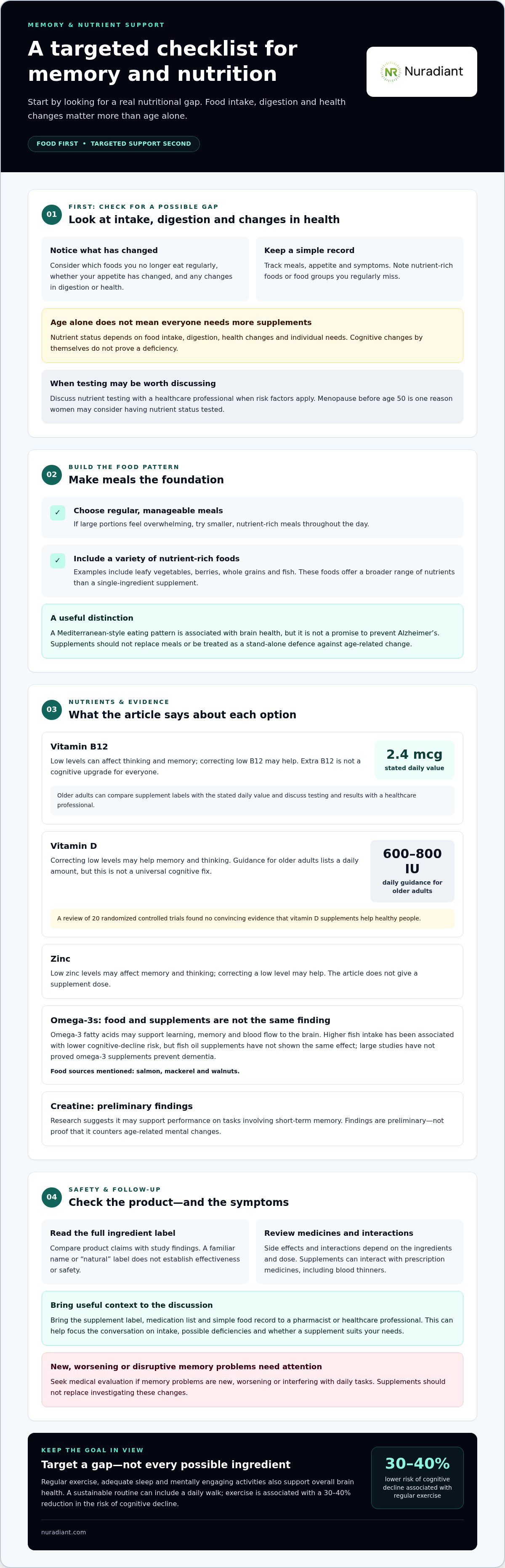
Myth: Age alone means every older adult needs more supplements. In reality, nutrient status depends on food intake, digestion, health changes, and individual needs. A supplement may fill a gap, but it cannot correct an unbalanced eating pattern on its own. If your diet has changed, start by identifying which foods you no longer eat regularly.
Absorption and intake aren’t the same thing. A nutrient may be present in a meal, yet a person’s overall status can still be affected by eating less or by changes in digestion. Don’t assume a cognitive decline means a deficiency, either. Track meals, appetite, and symptoms, then discuss nutrient testing when risk factors apply. Menopause before age 50 is one reason women may consider having nutrient status tested.
Build a balanced eating pattern with regular meals. If large portions feel overwhelming, choose smaller, nutrient-rich meals throughout the day. Include foods such as leafy vegetables, berries, whole grains, and fish. They provide a broader range of nutrients than a single-ingredient supplement and fit a Mediterranean-style eating pattern associated with brain health.
This eating pattern is a practical nutrition strategy, not a promise to prevent Alzheimer’s. Researchers continue to study how diet relates to cognitive health, but supplements should not replace meals or be treated as a stand-alone defence against age-related change. Keep a simple food record and note which nutrient-rich foods you regularly miss.
Use supplements to address identified nutritional gaps, rather than combining ingredients without a clear reason. Start by listing your usual meals and noting any food groups you skip. Bring the record to a healthcare professional when discussing testing. This helps focus the conversation on your intake, possible deficiencies, and whether a supplement suits your needs. Food first, targeted support second.
Vitamin B12 and cognitive impairment
Vitamin B12 supports normal nerve function, and low levels can affect thinking and memory. Correcting low B12 may improve memory and thinking skills, but extra B12 isn’t a cognitive upgrade for everyone. Older adults can compare supplement labels with the stated daily value of 2.4 mcg, then discuss testing and results with a healthcare professional. This step targets a possible deficiency rather than treating every lapse as disease.
Vitamin D and zinc also matter when levels are low. Correcting low levels of either nutrient may improve memory and thinking skills. Guidance for older adults lists 600 to 800 IU of vitamin D daily, but supplements shouldn’t be treated as a universal fix for cognitive health. A review of 20 randomized controlled trials found no convincing evidence that vitamin D supplements help healthy people. The distinction is clear: deficiency and general cognitive decline aren’t the same problem.
Creatine has a different evidence profile. Research suggests it may support performance on tasks involving short-term memory, but the findings are preliminary. This is an emerging area of study, not a proven way to counter age-related mental changes. Before considering creatine or other brain health supplements, think about your goal, current intake, and medications. A product label alone cannot tell you whether a formula suits your situation.
Lifestyle still has a strong role in cognitive longevity. Regular exercise can reduce the risk of cognitive decline by 30 to 40 percent. Build a routine you can sustain, such as a daily walk, and pair it with adequate sleep and mentally engaging activities. These habits support overall brain health; they don’t replace evaluation of new symptoms or treatment for a diagnosed disease. Track changes in memory and daily function, then share concrete examples with a healthcare professional. That gives the conversation a practical focus: what changed, when it began, and whether B12, vitamin D, zinc, or another factor deserves attention.
Supplements that may support memory and attention
Myth: A brain supplement can reliably prevent dementia. The evidence doesn’t support that promise. In the Gingko Evaluation of Memory study, more than 3,000 older adults took 120 milligrams of ginkgo twice daily or a placebo. After almost six years, ginkgo hadn’t lowered the overall rate of dementia. A study dose isn’t a personal recommendation; it shows why marketing claims need comparison with actual results.
One multivitamin finding is more encouraging, but still specific. In the COSMOS trial, adults aged 60 and older who took a multivitamin for about two years scored better on episodic memory than those taking an inactive pill. The reported effect was roughly equal to slowing cognitive aging by about two years. This result doesn’t establish that every formula improves attention or prevents dementia.
Omega-3 fatty acids illustrate another evidence gap. Studies associate higher fish intake with lower cognitive-decline risk, but fish oil supplements haven’t shown the same effect. Omega-3 supplements may support learning, memory, and blood flow to the brain, yet large studies haven’t proved they prevent dementia. For dietary sources, consider salmon, mackerel, or walnuts instead of assuming a capsule delivers the same outcome.
Other popular ingredients have limits, too. A review of 14 CDP-choline studies doesn’t settle whether it prevents memory problems in healthy people. Research on ginseng hasn’t found convincing protection for mental skills. Curcumin and L-theanine have been studied in small groups: 40 people in a UCLA curcumin study and 30 in a 2019 L-theanine study. Small trials can suggest questions, not establish broad benefits.
Use a clear filter: match the ingredient to a specific goal, look for human studies measuring that outcome, and distinguish memory findings from claims about dementia prevention. The evidence calls for scrutiny, not supplement stacking. Review a product’s ingredients alongside your current medications before adding it to your routine.
Nuradiant: CBD Products
Nuradiant offers CBD products alongside nootropics, joint health supplements, and premium gummies for adults exploring supplement options. These categories serve different purposes, so choose according to your goal rather than assuming a CBD product or nootropic will improve memory. Neither replaces investigating a nutrient deficiency or evaluating persistent cognitive changes.
Use this guide to set a clear standard: identify the need, review the ingredients, and consider how a product fits your routine. If you have questions about medication interactions or worsening memory, speak with a healthcare professional before adding a supplement.
Explore Nuradiant’s offerings at nuradiant.com.
Make your next step deliberate
Turn your interest in memory supplements for seniors into a clear decision, not another open-ended search. Decide what you want to support, note what you already take, and choose products with ingredients and claims you can assess. This gives you a stronger basis for comparing options and discussing them with a healthcare professional, especially if you take medication or have changing symptoms.
Nuradiant offers men’s health supplements, CBD products, and nootropics for adults exploring different supplement categories. These options are not interchangeable, so focus on your priorities and assess each product on its own terms. A steady, informed approach is more useful than chasing every new claim. Keep your goals specific, your choices considered, and your expectations grounded in the available evidence.
Contact Nuradiant to discuss your options, then take your next step with confidence.
Frequently Asked Questions
Myth vs Fact: Can Supplements Sharpen the Mind as You Age?
Fact: Some supplements may help address a nutrient gap, but taking one does not automatically sharpen thinking with age. Evidence for broad cognitive benefits is limited, and results depend on the nutrient and a person’s status. For example, a multivitamin study found an episodic-memory benefit, but that result does not prove every formula improves focus or prevents dementia.
What’s the evidence?
Evidence varies by ingredient and outcome. When considering memory supplements for seniors, check whether studies measured the benefit you want in people similar to you. A study of episodic memory does not establish improved attention, and neither finding proves dementia prevention. Be cautious of bold claims based on small studies, combinations of several ingredients, or research that does not distinguish everyday memory from diagnosed cognitive disease.
Which Nutrients Support The Brain?
Vitamin B12, vitamin D, zinc, and omega-3 fatty acids are nutrients relevant to brain function. Their role depends on dietary intake and whether a person has low levels. Food examples include fish for omega-3s, and varied meals with vegetables, whole grains, and nutrient-rich protein sources. A supplement label can help identify ingredients, but it can’t show whether you need them.
Which memory supplements have clinical evidence for older adults?
Clinical findings for memory supplements for seniors include a daily multivitamin in the COSMOS trial, where adults 60 and older showed an episodic-memory benefit. That doesn’t establish equal effects across all products or cognitive abilities. Evidence for ginkgo hasn’t shown dementia prevention, while creatine findings for short-term memory remain preliminary. Compare the tested ingredient and measured outcome, not just a product’s “brain health” label.
Do omega-3 supplements improve memory in seniors without dementia?
Omega-3 supplements may support learning and memory, but large studies haven’t proved they prevent dementia. That prevention question differs from whether an individual notices a change in memory. Consider dietary sources such as salmon, mackerel, or walnuts, and review supplement use alongside your medications. Fish intake and fish oil supplements shouldn’t be treated as interchangeable evidence.
Can ginkgo biloba prevent or treat memory loss in older adults?
There is no convincing evidence that ginkgo biloba prevents or treats memory loss. In the Ginkgo Evaluation of Memory study, the supplement did not lower the overall rate of dementia. That finding concerns prevention, not every possible cause of memory problems. Do not use ginkgo instead of seeking evaluation if memory changes interfere with daily tasks or continue to worsen.