

How to Reduce Bloating During Perimenopause With Movement
Movement can help gas move through the digestive tract, not just burn energy. Learning how to reduce bloating during perimenopause can start with regular, gentle activity such as walking, yoga, or Pilates. A short walk after dinner is a practical first step.
When your abdomen suddenly feels fuller, tighter, or different from usual, it’s easy to assume you’ve gained weight. The sensation is real, but bloating and gradual weight gain aren’t the same thing. Telling them apart helps you choose what to do next.
This guide explains what menopause belly bloat is, how stress and movement may affect digestion, and how to distinguish temporary bloating from weight changes. You’ll also learn which symptoms warrant medical attention, so you can take focused action instead of guessing.
Key Takeaways
- Learn how changing body composition and digestive symptoms can contribute to a fuller-feeling abdomen, and why bloating isn’t automatically weight gain.
- Spot how stress, anxiety, and swallowed air may add to digestive discomfort, then identify habits that could be contributing.
- Use hydration and practical constipation strategies to support more regular digestion.
- Build movement into your routine: walking, yoga, or Pilates may help gas move through the digestive tract.
- Recognize when persistent bloating or symptoms such as abdominal pain, blood in the stool, or marked weight change warrant medical advice.
1. What is Menopause Belly Bloat?
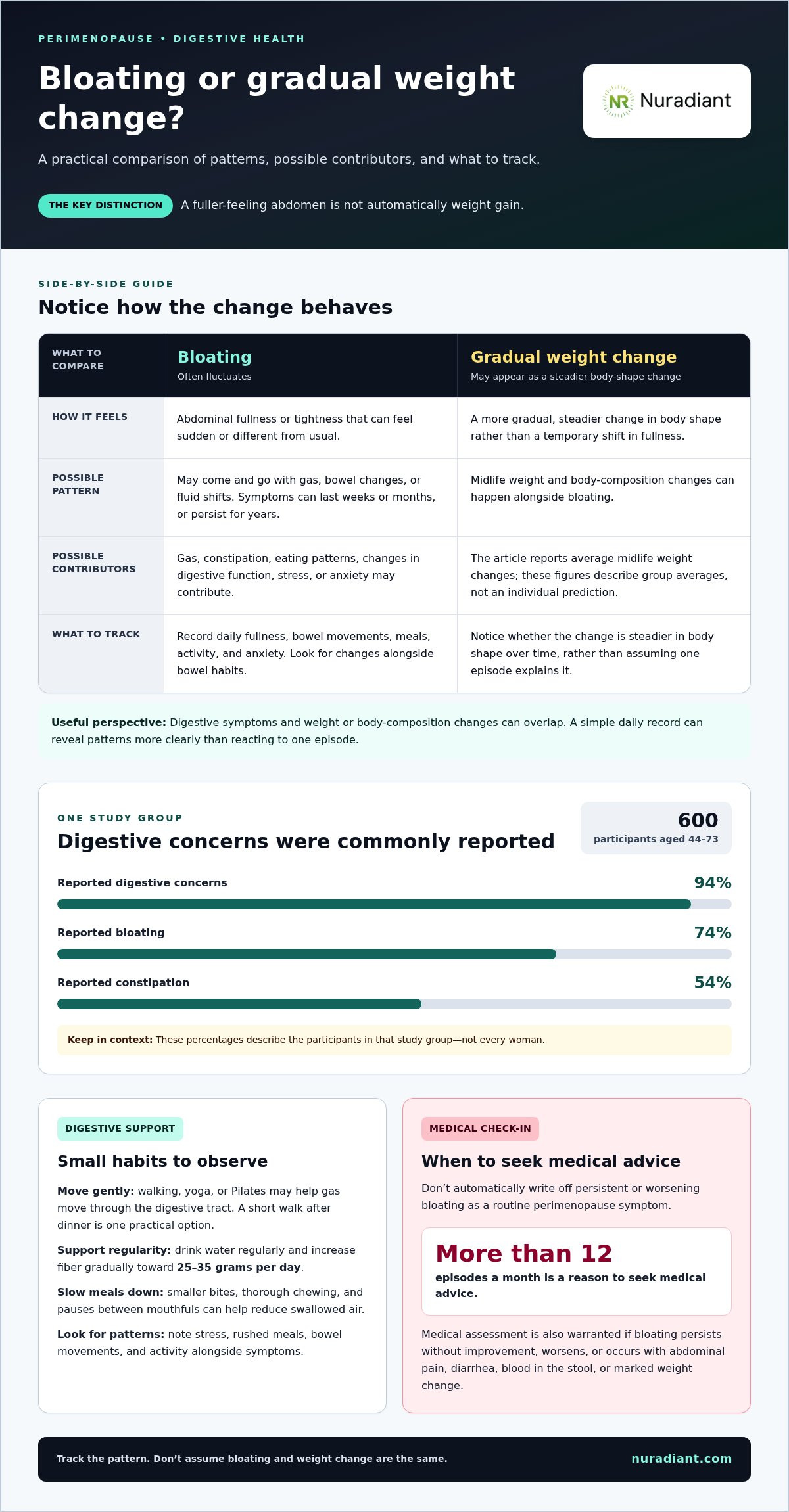
Menopause belly bloat is abdominal fullness or tightness that can fluctuate with gas, bowel changes, or fluid shifts. Digestive complaints may peak in women’s 40s, when many are in perimenopause. In a study of 600 peri- and menopausal participants aged 44–73, 94% reported digestive concerns, 74% reported bloating, and 54% reported constipation. Those figures describe that study group, not every woman.
What causes bloating during perimenopause? Possible contributors include gas, constipation, eating patterns, and changes in digestive function. Stress and anxiety may also affect symptoms, so don’t automatically attribute bloating to hormones. An analysis of the Seattle Midlife Women’s Health Study did not find hormones to be the cause of perimenopause-related constipation.
How do hormone changes in perimenopause affect digestion and water retention? Hormone levels change during this transition, but digestive symptoms and water retention aren’t interchangeable explanations for a fuller abdomen. University of Washington research reported bloating in 14% of perimenopausal women and 38% of postmenopausal women. Track whether fullness changes alongside bowel habits or appears as a steadier change in body shape.
Perimenopause is often described as the 3-4 year period before menopause, though it can last two to 10 years. Women enter perimenopause at an average age of 47 and reach menopause at an average age of 51; menopause is defined after 12 consecutive months without a menstrual period. Midlife weight and body-composition changes can occur alongside bloating. Women gain an average of 1.5 pounds per year in midlife, while one cited study found an average gain of 12 pounds within eight years of reaching menopause. Age-related metabolism slowing is especially relevant after age 60.
Do probiotics, fiber, or supplements help with perimenopause bloating, and what are the risks? Fiber can support digestion, but increasing it too quickly may add gas; increase it gradually toward 25–35 grams per day. Probiotic effects are strain-specific, so a probiotic isn’t a universal fix. A poorly matched approach may leave symptoms unchanged, while a sudden fiber increase can worsen gas.
How long does perimenopause bloating last, and how can you track it? Symptoms may come and go for weeks or months, or persist for years. Keep a simple daily record of abdominal fullness, bowel movements, meals, activity, and anxiety. Patterns can help distinguish temporary bloating from gradual weight change.
2. Stress, anxiety, and swallowed air
Stress can affect how your gut feels and how regularly it moves. During perimenopause, constipation symptoms may become more severe; stressors, tension, anxiety, and elevated cortisol are more closely linked to increased constipation than hormones. Slower bowel movements can leave stool and gas in the digestive tract, adding pressure and abdominal fullness.
Swallowed air can add to discomfort. Eating quickly during a tense lunch, talking while chewing, chewing gum, or drinking through a straw can increase the air you swallow. If you notice burping or pressure after a rushed meal, slow down: sit, take smaller bites, chew thoroughly, and pause between mouthfuls.
Stress may also make you more aware of bodily sensations. A normal amount of gas can feel more intrusive when you’re tense, while anxiety may encourage shallow, rapid breathing and hurried eating. Track the context as well as the symptom: note whether bloating follows a stressful meeting, a fast meal, or a difficult bowel movement. The pattern gives you practical information to act on.
Build a short reset into moments of tension. Pause to breathe before eating, relax your jaw and shoulders, and put your phone aside during the meal. These steps can help counter rushed eating and excess air intake. A calm, seated meal also makes it easier to notice whether a particular food or habit repeatedly precedes symptoms.
Movement can support digestion and stress management. A gentle walk, yoga session, or Pilates practice adds low-intensity activity instead of more sitting. Choose a pace you can maintain, and observe whether movement changes gas, bowel regularity, or tension. Aim for consistency, not a punishing workout that adds pressure to an already stressful day.
Use a simple routine to spot possible triggers. In a daily note, record when symptoms occur, how quickly you ate, your stress level, bowel movements, and activity. Compare entries over time instead of reacting to one episode. If constipation and bloating repeatedly follow high-stress days, try slower meals, regular movement, and deliberate breaks. That’s more focused than adding a supplement or probiotics without first identifying a likely cause.
A gut health supplement can be one part of a broader routine, not a substitute for addressing stress, eating habits, or persistent symptoms. Explore gut health supplements as a focused option alongside practical daily habits.
3. When Should You Consult a Doctor?
Don’t write off daily bloating as a routine perimenopause symptom. Seek medical advice if it occurs more than 12 times a month, persists without improvement, or worsens. Bloating alongside abdominal pain, diarrhea, blood in the stool, or marked weight change also deserves medical assessment. These signs matter even when constipation or a recent lifestyle change seems like an obvious explanation.
Constipation can trap stool and gas, increasing pressure and abdominal fullness. During perimenopause, stress, tension, anxiety, and elevated cortisol are associated with more severe constipation symptoms. Also review practical factors such as fluid intake, changes in fiber, movement, and whether you regularly ignore the urge to use the toilet. Track these details rather than assuming one cause explains every episode.
Hydration and fiber are useful parts of a constipation routine. A general target is 25–35 grams of fiber per day, and increasing it gradually can support digestion while limiting excess gas. Drink water regularly; the page recommends at least eight eight-ounce glasses per day to support hydration. Your routine should account for the foods you eat and how your bowel habits respond, not just a single daily total.
Use these steps to make bathroom habits more deliberate:
- Respond when you feel the urge instead of repeatedly postponing a bowel movement.
- Allow yourself a relaxed toilet visit after a meal, when gastrointestinal motility increases.
- If you’ve been sitting on the toilet for more than 5 minutes, get up and try other tactics.
- Record bowel movements, water intake, fiber changes, and bloating in a daily log.
Your record gives you concrete details to describe if symptoms continue. Note whether constipation follows a sudden increase in fiber, a stressful day, or a change in routine. Gradual adjustments are more informative than changing several habits at once. For example, increase fiber step by step while tracking stool patterns and abdominal discomfort.
Persistent or worsening bloating needs investigation, not endless self-treatment. Record when symptoms began, how often they occur, and whether they come with pain, diarrhea, blood in the stool, or marked weight change. Bring these notes when seeking medical advice. Hydration and lifestyle changes can support bowel regularity, but they shouldn’t delay assessment when warning signs appear.
4. Physical activity and digestion
Movement can help gas pass through the digestive tract. Staying in one position may leave you feeling more pressure, while walking or changing position may help gas move through or leave the gut. For perimenopause-related digestive symptoms, try breaking up long periods of sitting and notice whether movement eases the discomfort.
Research from the Autonomous University of Barcelona found that even mild physical activity can improve intestinal gas clearance and reduce bloating symptoms. This supports starting with manageable movement rather than forcing an intense workout. Try an easy walk around your home or a gentle yoga sequence, then observe whether abdominal tightness changes.
Use the post-meal window. Gastrointestinal motility increases after eating, so the urge to have a bowel movement may be easier to act on then. A 10-minute walk after dinner may aid digestion, help with gas and bloating, and improve sleep. Keep the pace comfortable enough to continue walking without turning the meal into a training session.
Choose an activity you can repeat. Walking, yoga, and Pilates can help keep the digestive system moving. For example, take a walk after dinner one day and try gentle yoga another day. Compare your symptoms and energy afterward. The aim is to find a routine that fits your lifestyle and encourages movement without aggravating discomfort.
Changing position may also help. If sitting at a desk increases pressure, stand, stretch, or take a brief walk. If lying down feels better, change position and see whether gas shifts. Don’t treat any one posture as a cure. Use each change as a practical test, and record which positions ease fullness or help gas pass.
Match your effort to the symptom. If bloating is mild, a short walk may help offset prolonged sitting. If you feel uncomfortable during a workout, ease the intensity and choose gentle movement. A symptom log can help you compare activity, meal timing, and digestive changes, showing whether a routine supports digestion or coincides with worse discomfort.
Consistency matters more than one hard session. Add movement to existing habits, such as walking after dinner or standing between desk tasks. If constipation comes with persistent or worsening bloating, movement shouldn’t replace medical assessment. Use activity to support digestive function, and pay attention to symptoms that continue despite changes in routine.
5. Bloating versus weight gain
A changing stomach doesn’t automatically mean weight gain. Bloating often shifts during the day: your waistband may feel tighter after eating, then loosen as gas passes or digestion progresses. Body weight and composition usually change more gradually. Compare how your abdomen feels in the morning and evening instead of judging from one uncomfortable moment.
Midlife weight change is also real. Women gain an average of 1.5 pounds per year in midlife. That gradual trend differs from a sudden, fluctuating feeling of fullness. Both can occur together, so don’t treat every change in your waistline as one problem. Look for the pattern: does the stomach expand and settle, or does your overall fit change consistently?
Estrogen changes are part of the menopause transition, but that alone doesn’t prove estrogen causes bloating or weight gain. Hormone therapy may have side effects, and its symptoms can overlap with ordinary digestive changes. If bloating begins after starting or changing therapy, record the timing and symptoms. Discuss that sequence with a healthcare professional rather than stopping treatment on your own.
Use a consistent tracking method. For several weeks, note when abdominal fullness appears, whether it follows eating, and how long it lasts. Add bowel changes, activity, and clothing fit. Weighing yourself at different times can reflect short-term fluctuations, so compare readings under similar conditions if you track weight. The aim is to identify a trend, not react to one measurement.
Meal patterns can help explain temporary changes. For example, a tight waistband after a large meal that eases later suggests a different pattern from clothing that becomes steadily snugger over time. Certain foods, constipation, or swallowed air can cause bloating. A food and symptom log can reveal whether the same meals repeatedly precede stomach discomfort.
Use the distinction to choose your next step. For fluctuating fullness, review meal timing, bowel habits, and movement before making major weight-loss changes. For a gradual weight trend, assess eating habits and activity over time rather than expecting a quick fix. Persistent bloating, worsening symptoms, abdominal pain, blood in the stool, or marked weight change calls for medical advice.
The key point: a temporary change in abdominal size and a sustained change in body weight are different signals. Track them separately, including symptom timing and changes in clothing fit. This evidence can help you avoid treating menopause bloating as a weight problem or overlooking a lasting change by labeling it bloating.
Nuradiant: CBD Products
Nuradiant offers CBD products as part of its wellness range, but they are not a proven treatment for perimenopause bloating. The practical foundation remains the habits covered above: track symptoms, stay active, and seek medical advice for persistent or concerning changes. Consider a supplement only as a separate part of your wellness routine, not as a replacement for those steps or medical care.
If you’re exploring CBD products, consider what you want from a wellness product and keep expectations grounded. Nuradiant also offers nootropics, joint health supplements, and premium gummies. These products don’t replace movement, hydration, or assessment of ongoing digestive symptoms.
Visit nuradiant.com to explore Nuradiant’s CBD Products.
Build a Routine You Can Measure
Make your next step a focused experiment, not another round of guesswork. Choose one habit, such as a short walk after dinner, and note how your digestion feels afterward. Keep the routine steady long enough to spot a pattern. If symptoms persist or change, use your notes to guide a conversation with a healthcare professional.
Learning how to reduce bloating during perimenopause means separating practical habits from product claims. Nuradiant offers CBD products and nootropics, but neither should be treated as a proven bloating remedy. Its men’s health supplements are part of its range, not a targeted solution for perimenopause symptoms.
If you want to explore Nuradiant’s offerings, visit Nuradiant. Keep your approach disciplined: track what changes, focus on habits that support your routine, and seek medical advice when symptoms call for it. You can take the next step with clarity and purpose.
Frequently Asked Questions
What is Menopause Belly Bloat?
Menopause belly bloat is a feeling of abdominal fullness or pressure during the menopause transition. It can fluctuate, unlike a gradual change in body shape or weight. For example, a waistband may feel tighter after a meal and more comfortable later. Bloating and midlife weight changes can happen at the same time, so note when fullness appears and whether it settles.
What is Perimenopausal Bloating?
Perimenopausal bloating is abdominal fullness or distension experienced during the transition leading up to menopause. Perimenopause can last two to 10 years, and menopause is reached after 12 consecutive months without a menstrual period. Symptoms may come and go, or persist. A simple record of symptom timing, meals, and bowel habits can help you see whether the pattern is occasional or ongoing.
When Should You Consult a Doctor?
Seek medical advice for persistent or worsening bloating, or if it occurs alongside abdominal pain, diarrhea, blood in the stool, or marked weight change. Daily symptoms also deserve attention. Record when discomfort starts, what else occurs, and whether it affects eating or daily activities. These details help you describe the pattern clearly and distinguish a passing episode from a change that needs investigation.
What foods and drinks can worsen perimenopause bloating?
Milk may worsen bloating, especially if you have difficulty digesting lactose. Large meals may also feel less comfortable than smaller portions. Instead of removing several foods at once, keep a meal and symptom log and look for recurring patterns. If dairy seems connected, try a lactose-free period, then reintroduce dairy and note whether symptoms return. This helps identify a possible trigger without assuming every food causes bloating.
Which dietary changes can help reduce bloating during perimenopause?
A practical plan for how to reduce bloating during perimenopause can begin with gradual fiber increases, adequate water, and smaller meals. Whole grains provide fiber, but adding a large amount suddenly may increase gas. Change one habit at a time and record the effect. If dairy appears to trigger symptoms, try lactose-free choices before reintroducing it. Aim for a sustainable eating pattern, not a restrictive list of forbidden foods.
Can exercise, sleep, or stress management relieve perimenopause bloating?
Yes, gentle activity and stress-management habits may support comfort and digestion. A short walk after dinner may help move gas, while walking, yoga, or Pilates offer practical ways to add regular movement. A walk may also support sleep. Pair a calm meal with an easy post-meal walk, then track symptoms and sleep quality. If an activity worsens discomfort, adjust the intensity and choose a gentler option.
Can hormone therapy or other medications reduce bloating during perimenopause?
Hormone therapy isn’t a universal remedy for bloating, and symptoms can have several causes. Research from the Affiliated Hospital of Zunyi Medical University of China reported a relationship between bloating risk and estrogen dose and duration of use. If symptoms begin or change after starting a medication or therapy, record the timing and discuss it with a healthcare professional. Don’t change prescribed treatment without medical guidance.
When should bloating during perimenopause be evaluated by a doctor?
Arrange medical evaluation when bloating occurs more than 12 times a month, doesn’t improve, or gets worse. Promptly raise symptoms that include blood in the stool, abdominal pain, diarrhea, or marked weight change. A useful preparation is to record symptom frequency, bowel changes, and any recent medication or eating-pattern changes. That timeline helps a clinician assess what’s happening rather than relying on a single snapshot.