

How to Lose Belly Fat After Menopause With Exercise
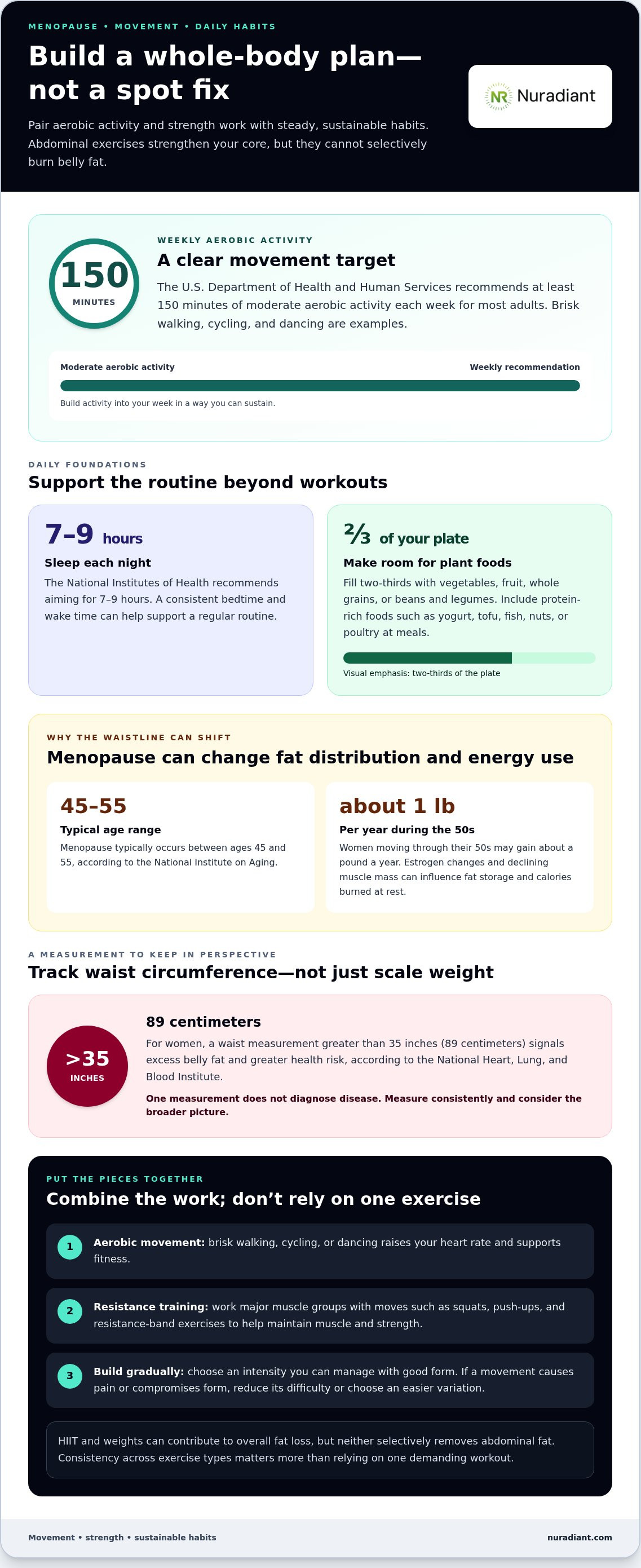
Menopause can change where your body stores fat, but it doesn’t put belly-fat loss out of reach. To understand how to lose belly fat after menopause, combine regular aerobic activity and strength training with reduced calorie intake; abdominal exercises alone can’t selectively burn belly fat. The U.S. Department of Health and Human Services recommends at least 150 minutes of moderate aerobic activity each week for most adults.
If your waistline has changed despite sticking with familiar workouts, there’s a reason: shifts in estrogen and muscle mass can influence fat storage and the calories your body burns at rest. The answer isn’t endless crunches or crash diets. This guide explains why belly fat shifts after menopause, how cardio and resistance exercise can support fat loss and muscle, and why visceral fat matters differently from the subcutaneous fat just beneath your skin. You’ll get a clear, evidence-led picture of what exercise can do and why a steady, whole-body approach matters.
Key Takeaways
- Menopause typically occurs between ages 45 and 55, according to the National Institute on Aging; changing fat distribution during this transition can make the waistline shift.
- Track waist measurement as one health signal: for women, a measurement greater than 35 inches (89 centimeters) signals excess belly fat and greater health risk, according to the National Heart, Lung, and Blood Institute.
- Distinguish the fat you can pinch beneath the skin from deeper visceral fat around the organs; understanding the difference helps clarify why abdominal fat matters for health.
- Build a well-rounded exercise routine rather than relying on core moves alone, and focus on sustainable habits that support strength and overall fat loss.
Why does belly fat increase during menopause?
Menopause typically occurs between ages 45 and 55, according to the National Institute on Aging. As hormones shift, fat distribution and metabolism can change, influencing where the body stores energy.
Hormonal Changes and Abdominal Fat Distribution
Oestrogen changes during menopause are associated with a shift toward storing more fat around the abdomen instead of the hips and thighs. Muscle mass can also decline, reducing the calories the body burns at rest. Women moving through their 50s may gain about a pound a year. These shifts help explain why familiar exercise and eating habits may no longer maintain the same weight.
To support fat loss, pair regular activity with a practical approach to meals: fill two-thirds of your plate with vegetables, fruit, whole grains, or beans and legumes. Include protein-rich foods such as yogurt, tofu, fish, nuts, or poultry at meals. This can help support muscle while making room for fiber-rich foods. Reducing sugary drinks can also help limit extra calories.
Sleep, Stress, and Alcohol
Sleep, stress, and alcohol can affect habits that shape weight, including food choices, activity, and recovery. The National Institutes of Health recommends aiming for 7-9 hours of sleep per night. Set a consistent bedtime and wake time, and switch off screens an hour before bed. Track alcohol alongside meals; replacing alcoholic or sugary drinks with water can support a more controlled calorie intake.
The safest approach is gradual, steady weight loss rather than a crash diet. The pace depends on food intake, activity, and how well you preserve muscle while you lose weight.
Weight-loss medications may suit some people, depending on their health history, current medicines, and goals. Risks can include side effects and interactions. Costs vary with the medication and insurance coverage, so discuss potential benefits and risks with a qualified prescriber.
Strength training, cardio, core exercise, and HIIT
Exercise works best as a whole-body strategy, not as a shortcut for belly fat. Combine aerobic movement with resistance training to support fitness, muscle, and energy use.
Strength Training and Muscle Maintenance
Strength training challenges muscles against resistance and can help maintain muscle mass and strength. Muscle supports movement and contributes to the calories your body uses. Work major muscle groups with exercises such as squats, push-ups, and resistance-band movements. Start with controlled form and increase resistance as exercises become manageable. A consistent routine gives your muscles regular opportunities to adapt.
Aerobic Activity and Strength Training
Aerobic activity raises your heart rate through movements such as brisk walking, cycling, or dancing. The U.S. Department of Health and Human Services recommends most adults get at least 150 minutes of moderate aerobic activity a week. Pair that activity with strength training, rather than treating either as a substitute for the other. Together, they support a broader lifestyle approach to fitness and weight management.
HIIT and Strength Training for Belly Fat
High-intensity interval training alternates harder efforts with easier recovery periods. It can make aerobic exercise more challenging, while strength sessions focus on muscle. Choose an intensity you can manage with good form and build gradually. HIIT and weights can contribute to overall fat loss, but neither selectively removes abdominal fat. Core exercises strengthen abdominal muscles; they don’t determine where fat comes off first.
Make your routine sustainable: walk briskly on some days and schedule resistance work for major muscle groups. Squats and planks can strengthen your body, while walking builds aerobic capacity. If a movement causes pain or compromises your form, reduce its difficulty or choose an easier variation. Consistency across exercise types matters more than relying on one demanding workout.
Health risks associated with visceral fat
Visceral fat sits deep in the abdomen, surrounding internal organs. Unlike fat just beneath the skin, it is linked with health concerns beyond weight or appearance. Knowing the difference can help you consider abdominal fat alongside fitness, eating habits, and other health factors.
Greater visceral fat is associated with increased risks of heart disease, type 2 diabetes, breast cancer, and dementia. It’s also linked with increased menopausal symptoms, including hot flushes. These associations make waist changes worth attention, but one measurement alone doesn’t diagnose disease. Consider the broader picture, including weight gain, sleep, activity, and changes in overall health.
For women, a waist measurement greater than 35 inches (89 centimeters) signals excess belly fat and a greater risk of health concerns, according to the National Heart, Lung, and Blood Institute. Measure consistently at the waist rather than relying only on scale weight. A stable scale reading can miss changes in fat distribution, while waist circumference helps track one aspect of abdominal health.
Food choices can support weight loss without extreme restrictions. Choose minimally processed fat sources such as nuts and fish, and include fresh produce in meals. Limit foods high in added sugar, salt, and trans fats. For example, replace a sugary drink with water and add vegetables or beans to a meal. Specific, manageable choices can make an eating pattern easier to maintain.
Regular physical activity and steady eating habits support weight management. Focus on consistency, not intensity alone. Brisk walking and strength exercises can support fitness and muscle. Poor sleep can disrupt routines and influence food choices, so make sleep part of your plan. Track waist measurements over time alongside how clothes fit and how activity feels. Aim for meaningful progress in your habits, rather than chasing a single number or expecting weight loss to target only your abdomen.
Visceral versus subcutaneous belly fat
Abdominal fat includes tissue beneath the skin and fat stored deeper inside the abdomen. Their locations and health associations differ, so appearance alone cannot reveal the full picture.
Where Visceral and Subcutaneous Fat Are Found
Subcutaneous fat sits just beneath the skin; it’s the softer tissue you can usually pinch. Visceral fat lies deeper, around abdominal organs, and isn’t measured by pinching the waist. About 90% of body fat in most people is subcutaneous, while about 10% is visceral. Those proportions describe body fat overall, not a personal diagnosis.
Changes in estrogen can influence where fat is stored, shifting distribution toward the abdomen during menopause. A growing waist can reflect changes in either type of fat, or both. It cannot show how much visceral fat surrounds organs. A healthcare professional can assess abdominal health using the broader picture, rather than appearance alone.
Visceral Fat and Insulin Resistance
Insulin resistance describes a reduced response to insulin, the hormone that helps regulate blood glucose. Visceral fat matters because abdominal fat is linked with type 2 diabetes, a condition involving blood-sugar regulation. That relationship doesn’t mean waist shape alone identifies insulin resistance or its causes. It does make the distinction relevant beyond clothing fit.
Focus on habits that support overall body composition: combine strength training with aerobic activity and build meals around minimally processed foods. Diet and exercise work together, but neither can direct fat loss to one exact area. Track waist changes alongside strength, energy, and fitness instead of judging progress from a single mirror check. These measures provide more context than appearance alone.
Supplements don’t replace movement or eating habits. For complementary wellness support, explore women’s health supplements.
Nuradiant: CBD Products
Nuradiant offers CBD products as part of a broader range of wellness supplements, not as a substitute for exercise, balanced eating, or evidence-based weight management. If you’re building consistent habits after menopause and exploring complementary wellness products, browse the options that fit your general wellness interests. The catalog also includes nootropics, joint health supplements, and premium gummies.
Keep the goal clear: these products aren’t a shortcut for reducing abdominal fat, and this section makes no promise about weight-loss results. Sustainable progress still rests on the fundamentals covered here, including regular activity, strength work, and eating patterns you can maintain. For product information and to explore Nuradiant’s offerings, contact Nuradiant directly.
Build Your Next Stronger Habit
Progress starts with a plan you can repeat, not a punishing routine you abandon. Choose a manageable activity, build it into your week, and adjust as your strength and capacity develop. A steady approach gives you room to notice what supports your energy and what gets in the way. That’s a stronger foundation for how to lose belly fat after menopause than chasing a quick fix.
Keep supplements in their proper role: they don’t replace exercise, balanced eating, or medical care. Nuradiant offers men’s health supplements, CBD products, and nootropics as part of its broader range. Explore these options for general wellness support, not as a promise of targeted fat loss.
Take the next step at your pace. Contact Nuradiant to discuss your options, then keep building habits that support the capable, active life you want.
Frequently Asked Questions
What causes weight gain in midlife?
Midlife weight gain can reflect changing hormones, declining muscle mass, and shifts in daily activity. As muscle decreases, the body may use fewer calories at rest, while familiar eating patterns continue. For example, a less active routine combined with unchanged portions can gradually affect weight. Focus on practical adjustments, such as regular movement and balanced meals, rather than blaming one food or hormone alone.
What shrinks belly fat the fastest?
No exercise or food can rapidly target fat from the belly alone. A consistent calorie deficit, created through eating habits and physical activity, supports overall fat loss. Avoid crash diets, which can be difficult to sustain and don’t build lasting routines. Set up meals and activity in ways you can repeat, then track habits and waist changes rather than expecting quick, localized results.
Can Hormone Therapy Help Control Weight Gain?
Menopausal hormone therapy may help reduce belly fat, but it isn’t a weight-loss treatment. Its potential benefits and risks matter: hormone therapy carries a small increased risk of breast cancer, heart attack, and stroke. It may also reduce the risk of some chronic diseases, including heart disease and type 2 diabetes. Discuss your health history and treatment goals with a qualified healthcare professional before making decisions.
What drink burns the most belly fat?
No drink selectively burns belly fat. Water or unsweetened green tea can replace sugary drinks and support weight management as part of broader lifestyle changes. For example, swap sweetened soda at lunch for water rather than adding a so-called fat-burning drink to your usual routine. Alcohol can also add calories, so consider how often and how much you drink when reviewing your habits.
What is the best way to lose belly fat after 50?
A practical plan for how to lose belly fat after menopause combines sustainable eating changes with regular aerobic activity and strength training. Keep meals balanced, plan movement around your schedule, and make gradual adjustments you can maintain. For example, prepare a protein-rich breakfast and schedule a walk after work. Don’t judge success by abdominal exercises alone: they strengthen core muscles but don’t determine where fat loss occurs.
Why does belly fat increase after menopause?
After menopause, lower estrogen is associated with a shift toward storing more fat around the abdomen rather than the hips and thighs. Muscle mass may also decline, reducing calories burned at rest. Understanding these changes can help shape how to lose belly fat after menopause: consider portions, everyday movement, and strength-building habits together instead of assuming one factor explains every change in your waistline.