

How to Increase Skin Elasticity After Menopause by Understanding Sagging
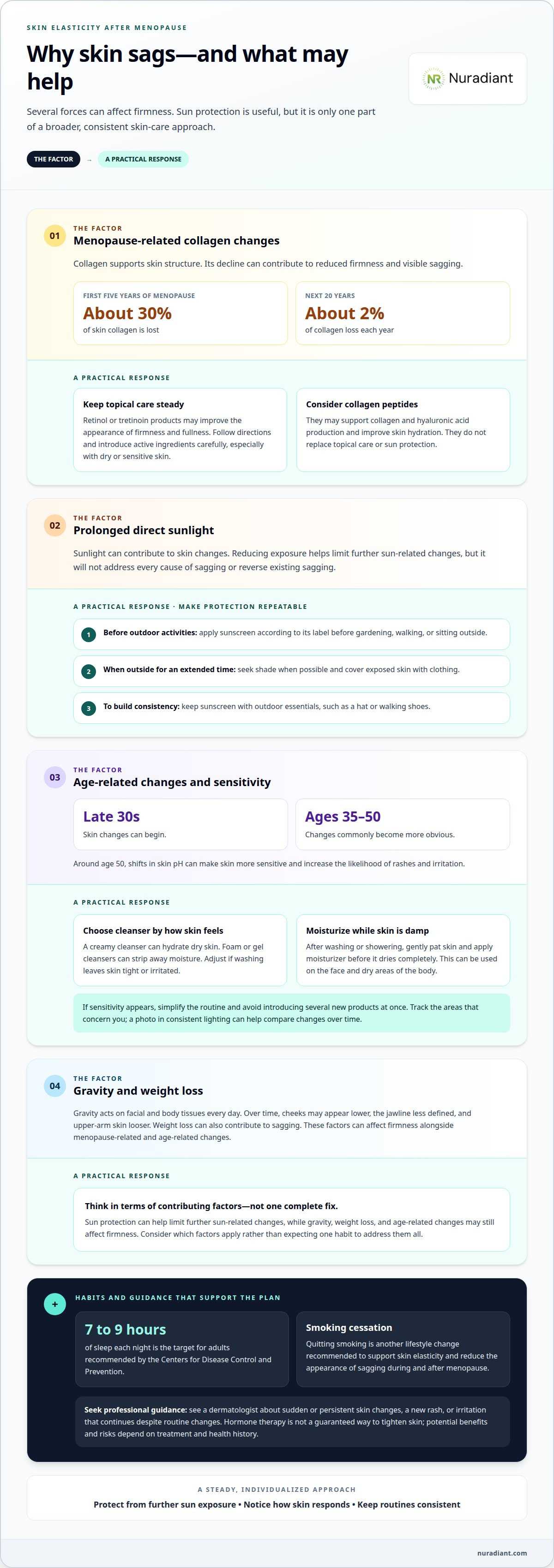
Sun protection matters, but it isn’t the whole strategy. To understand how to increase skin elasticity after menopause, start by limiting prolonged direct sunlight and using sunscreen to reduce sun exposure. Skin collagen declines about 30% during the first five years of menopause, then about 2% every year for the next 20 years.
Sunlight can contribute to skin changes, so reducing exposure is a practical step. But sagging has several possible causes. Age-related changes, gravity, and weight loss can also affect how skin looks and feels. A useful plan starts by identifying which factors may be involved.
This article explains why skin may lose firmness after menopause and what sun protection can and can’t do. It also covers how age-related changes, gravity, and weight loss can contribute to sagging, helping you make informed choices about supporting your skin’s elasticity.
Key Takeaways
- Identify the different forces behind sagging, including menopause-related collagen changes, sun exposure, gravity, and weight loss.
- Reduce prolonged direct sunlight and use sunscreen to help limit further sun-related skin changes.
- Expect skin changes to evolve with age; shifts in skin pH can also make skin more sensitive and prone to irritation.
- Support skin health with consistent habits, including aiming for 7 to 9 hours of sleep each night, as recommended by the Centers for Disease Control and Prevention.
1. What Causes Sagging Skin After Menopause?
Women lose about 30% of their skin collagen during the first five years of menopause. After that, collagen loss continues at about 2% every year for the next 20 years. Collagen supports skin structure, so its decline can contribute to reduced firmness and visible sagging.
Menopause is defined as the point reached one year after a person’s last period. Hormonal changes during the transition can affect skin thickness, moisture, and elasticity. Changes may appear on the face, neck, or body, and vary from person to person.
A practical approach to how to increase skin elasticity after menopause starts with consistent care. Retinol or tretinoin products may help improve the appearance of firmness and fullness. Follow the product directions and introduce active ingredients carefully, especially if your skin is dry or sensitive. A steady routine is more useful than frequently switching products.
If you’re considering how to increase skin elasticity after menopause, collagen peptides are another option. They may support collagen and hyaluronic acid production and improve skin hydration. They don’t replace topical care or sun protection, so consider them one part of a broader routine.
Daily habits count, too. Adults should aim for 7 to 9 hours of sleep each night, according to the Centers for Disease Control and Prevention. A regular sleep schedule can make that target easier to pursue.
Hormone therapy is not a guaranteed way to tighten skin. Potential benefits and risks depend on the treatment and a person’s health history, factors clinicians consider when discussing options.
Skin-tightening procedures can carry risks, and costs depend on the procedure, treatment area, and number of sessions. A dermatologist can explain what to expect from a specific treatment.
See a dermatologist about sudden or persistent skin changes, a new rash, or irritation that continues despite changes to your routine. Results take time: topical products require consistent use, while procedure timelines depend on the method and treatment area.
2. Can Limiting Sun Exposure Prevent Sagging Skin?
Limiting prolonged direct sunlight and using sunscreen can help reduce exposure, an important part of protecting skin from further changes. These steps won’t address every cause of sagging, so treat them as a consistent habit, not a complete solution. A plan for how to increase skin elasticity after menopause should account for sun exposure alongside other factors.
Build sun protection into activities you already do. Before gardening, walking, or sitting outdoors, apply sunscreen according to its label. If you’ll be outside for an extended time, seek shade when possible and cover exposed skin with clothing. These steps reduce direct sunlight without requiring you to avoid outdoor activities.
Consistency matters. Keep sunscreen with outdoor essentials, such as a hat or walking shoes, to make it easier to remember before heading out. Follow the product directions, and build application into your routine. Planning ahead is more reliable than applying sunscreen only after spending a long time outdoors.
Quitting smoking is another lifestyle change recommended to support skin elasticity and reduce the appearance of sagging during and after menopause. If you smoke, consider cessation as part of a broader plan, not a substitute for sun protection. Each addresses a different habit.
When considering how to increase skin elasticity after menopause, think of sun protection as a way to limit further exposure, not reverse existing sagging. For example, apply sunscreen before a regular morning walk and choose shade for an outdoor break. These are manageable actions to repeat alongside other skin-care habits. Gravity, weight loss, and age-related changes can still affect firmness.
3. Age-related facial and body changes
Skin changes can begin in a person’s late 30s, with more obvious changes commonly occurring from ages 35 to 50. That shift can affect the face and body differently. You might notice less firmness along the jaw, looser skin on the upper arms, or a change in how skin feels across the abdomen. Track the areas that concern you rather than judging change from one glance. A photo taken in consistent lighting can help you compare the same area over time.
Around age 50, changes in skin pH can make skin more sensitive and increase the likelihood of rashes and irritation. A cleanser that once felt comfortable may now leave your face tight or irritated. Notice how your skin responds after washing, and adjust the routine if discomfort appears. A creamy cleanser can hydrate dry skin, whereas foam or gel cleansers can strip away moisture. Choose based on how your skin feels, not simply on what you used in earlier years.
Hydration is another practical step. Apply moisturizer while your skin is still damp to help boost hydration. After washing your face or showering, gently pat your skin, then apply moisturizer before it dries completely. This sequence works for facial skin and dry areas of the body. Keep the routine consistent, and notice whether a product feels comfortable or causes irritation.
Use these age-related changes to guide care, not to chase a single ideal appearance. If your face becomes sensitive, simplify the routine and avoid adding several new products at once. If your upper arms or abdomen feel dry, apply moisturizer there after bathing, too. Around age 50, pay close attention to new irritation or rashes and note where they appear. These observations help you distinguish a change in texture from a reaction that needs professional assessment. A steady routine supports comfort while you monitor how your skin changes.
4. Gravity and weight loss as contributors to sagging
Gravity acts on facial and body tissues every day. Over time, cheeks may appear lower, the jawline less defined, and upper-arm skin looser. Gravity is not the only factor, but it helps explain why sagging can look different from one area to another. The face, neck, abdomen, and arms each have distinct underlying structures and contours.
Weight loss can change the shape beneath the skin. As the body loses fat volume, areas that were previously fuller may look less supported, especially if the skin doesn’t retract to match the change. For example, someone may notice looser skin around the abdomen or upper arms after losing weight. The visible effect depends on the area and how the skin adapts.
Distinguish skin laxity from lost volume. A hollow-looking cheek and a loose fold on the upper arm are different concerns. One involves reduced fullness; the other involves excess or less-firm skin. Identifying the specific change helps set a realistic goal. Skin care can support hydration and texture, but it can’t replace volume or remove loose skin.
If weight loss is your goal, focus on the overall plan rather than expecting skin to tighten as your weight changes. Notice how clothing fits and how your abdomen or arms look over time. Don’t treat a single photo as proof of progress: posture, lighting, and camera angle can change how folds appear. Consistent conditions make comparisons more useful.
Keep the takeaway clear: gravity contributes to gradual downward changes, while weight loss can reveal looseness by reducing underlying volume. Neither cause is addressed by sunscreen alone. If weight management is part of your plan, explore weight loss and detox options as a separate consideration, not as a skin-tightening treatment.
Nuradiant: CBD Products
Nuradiant offers CBD products as part of a broader wellness range, alongside nootropics, joint health supplements, and premium gummies. These products are separate from the measures discussed for supporting skin elasticity. They don’t replace sun protection, skin care, or professional assessment of changing skin.
Explore Nuradiant when you’re considering these product categories as part of a wider wellness routine. Choose based on the area of wellness you want to focus on, while keeping your skin-care plan grounded in the practical measures covered above. For sagging, consider whether collagen loss, sun exposure, gravity, or weight loss may be involved instead of expecting one supplement category to address every cause.
For information about Nuradiant’s offerings, contact Nuradiant directly.
Choose Your Next Step with Purpose
Skin care works best as a deliberate routine, not a race to change your appearance. If you’re deciding how to increase skin elasticity after menopause, choose one manageable action and stick with it. Notice how your skin responds, then adjust your routine based on comfort and priorities. This keeps the focus on informed choices rather than quick fixes.
Keep your goal realistic: supporting skin health is different from reversing every visible change. If you want to explore broader wellness products alongside your routine, review Nuradiant’s range and decide whether those categories fit your needs. They are not a substitute for skin care or medical guidance about a skin concern.
Explore Nuradiant’s wellness offerings and take your next step with confidence.
Frequently Asked Questions
Can Limiting Sun Exposure Prevent Sagging Skin?
Limiting prolonged direct sunlight and using sunscreen can help reduce further sun-related skin changes. Make protection part of your outdoor routine: apply sunscreen before a walk or gardening, and seek shade when spending extended time outside. These steps address sun exposure, not every cause of sagging. Pair them with skin-care habits that support hydration and comfort.
What Causes Sagging Skin After Menopause?
Sagging can reflect several factors, including collagen loss, age-related skin changes, gravity, and reduced underlying volume after weight loss. These can affect different areas in different ways. For example, a change in cheek fullness differs from loose skin on the upper arm. Identifying the area and type of change helps clarify which skin-care or treatment options may be relevant.
What is the best skincare for sagging skin postmenopause?
Build a routine around gentle cleansing, hydration, and consistent sun protection. A creamy cleanser may suit dry skin better than a foaming or gel cleanser, while moisturizer applied to damp skin helps boost hydration. Retinol or tretinoin products may improve the appearance of firmness and fullness, but consistency matters. Introduce them carefully if your skin is sensitive.
How does menopause affect skin elasticity and collagen?
Menopause-related collagen loss can reduce the structural support that helps skin feel firm and resilient. Skin may also become drier or more sensitive, changing how it responds to products and daily care. Adjusting a routine to your skin’s current condition matters: notice irritation after cleansing, and focus on hydration before adding multiple active ingredients.
What treatments improve skin elasticity after menopause?
Options include topical retinol or tretinoin, collagen peptide supplements, and in-office treatments. Radiofrequency treatment promotes collagen remodeling in deeper skin layers to improve the appearance of sagging areas. Injectable fillers can restore facial volume and improve the appearance of wrinkles, though results are typically temporary and may require repeat visits. The right approach depends on whether the main concern is skin laxity, volume, or texture.
Do topical retinoids or peptides help menopausal skin elasticity?
Retinol or tretinoin products may help improve the appearance of firmness and fullness, and regular use is important. Collagen peptides may support collagen and hyaluronic acid production and improve skin hydration. They serve different roles: retinoids are topical products, while collagen peptides are taken as supplements. Keep your routine manageable, especially if your skin is prone to dryness or irritation.