

How to Improve Deep Sleep After 50 With Better Sleep Routines
Better sleep after 50 starts with a steady schedule, a calmer bedtime routine, and enough time in bed: older adults still need 7 to 9 hours of sleep each night, according to the National Institute on Aging. To understand how to improve deep sleep after 50, look beyond age alone. Health conditions, medications, and daily habits can all shape the quality of your rest.
Waking during the night can make it seem as though your sleep is getting worse. Rather than chasing a perfect night or forcing an unsuitable routine, look for what is disrupting rest and make practical changes that support your sleep rhythm.
This guide covers how aging can affect deep and REM sleep, how health conditions and medications may interfere, and how consistent sleep and wake times, fewer screens, and a calming wind-down can help. It also explains what you can adjust and when persistent sleep problems merit medical attention.
Key Takeaways
- Build a consistent sleep schedule and a calming wind-down routine to support your body’s natural sleep rhythm.
- Understand how age-related changes can affect deep sleep, and why nighttime waking isn’t always something you can solve with bedtime habits alone.
- Recognize when health conditions or medication effects may be disrupting rest, and know which symptoms warrant a conversation with a healthcare provider.
- See how deep and REM sleep serve different functions, then consider whether targeted supplements fit alongside healthy sleep habits.
Regular sleep schedules and bedtime routines
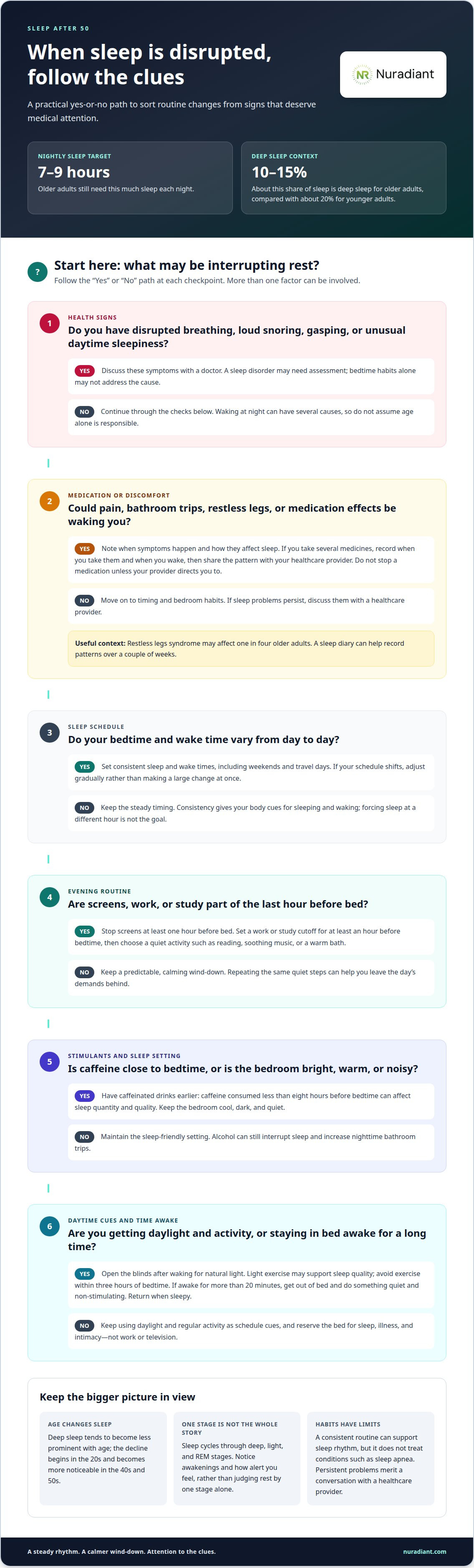
Consistent sleep and wake times, a quiet wind-down, and fewer evening stimulants can support deeper rest after 50. Keep these habits steady; they help protect sleep rhythm without treating conditions such as sleep apnea.
Consistent Sleep and Wake Times
A regular sleep schedule means going to bed and getting up at the same time each day, including weekends and travel days. Consistent timing gives your body cues for sleeping and waking. If travel or a late night disrupts your schedule, shift bedtime and wake time gradually instead of making a large change at once. Consistency matters more than trying to force sleep at a different hour.
Relaxing Pre-Bed Habits
A relaxing bedtime routine uses quiet activities to help you wind down. Read a book, listen to soothing music, or take a warm bath. Stop using screens at least one hour before bed, since blue light can interfere with melatonin production. Set a clear cutoff for work or study, too, and avoid both for at least an hour before bedtime. A predictable sequence can make it easier to leave the day’s demands behind.
Bedtime Routines and Sleep Hygiene
Sleep hygiene is the set of habits and surroundings that support a dependable night’s rest. Reserve your bed for sleep, illness, and intimacy, rather than working or watching television. If you’re awake for more than 20 minutes, get out of bed and do something quiet and non-stimulating. Return when you feel sleepy. This breaks the link between bed and frustration over not falling asleep.
Caffeine and alcohol can disrupt sleep even when the rest of your routine is solid. Caffeine consumed less than eight hours before bedtime can affect sleep quantity and quality, so have coffee and other caffeinated drinks earlier. Alcohol may interrupt sleep and increase nighttime bathroom trips. Keep your bedroom cool, dark, and quiet, and repeat the same wind-down steps each night. If a sleep disorder keeps disrupting rest, bedtime habits alone may not address the cause.
Why do older adults have trouble sleeping at night?
There’s no single deep-sleep quota for every adult over 50. Older adults spend about 10-15% of sleep in deep sleep; the National Institute on Aging says adults still need 7 to 9 hours each night.
Age changes sleep architecture, but waking can also reflect activity, light exposure, or health factors. Separate these influences before blaming age alone.
Age-Related Changes in Deep Sleep
Deep sleep is the restorative stage that tends to become less prominent with age. Its decline begins in a person’s 20s and becomes more noticeable in their 40s and 50s. Older adults spend about 10-15% of sleep in deep sleep, compared with about 20% for younger adults. This shift can make sleep feel lighter, even when total time asleep seems adequate.
Shifts in Deep and REM Sleep
Sleep architecture describes how the brain cycles through deep, light, and REM sleep overnight. Age can change the balance and timing of these stages, so one number cannot capture sleep quality. Babies have longer REM periods than older people, illustrating how REM patterns vary throughout life. Notice how often you wake and how alert you feel, rather than judging rest by one sleep stage alone.
Lifestyle, Activity, and Daylight
Daylight and physical activity provide cues that help regulate your sleep schedule. Morning light can slow or halt melatonin production and help keep your circadian rhythm in check. Open the blinds after waking to let in natural light. Light exercise may also support sleep quality; the National Institute on Aging advises avoiding exercise within three hours of bedtime. These daytime signals can matter if you have trouble falling asleep.
Melatonin and Hormonal Changes
Melatonin is a hormone that helps signal sleep timing. Light exposure affects this signal, but age-related sleep changes can have several contributing factors. Track patterns such as early waking, difficulty falling asleep, or persistent tiredness. If you experience disrupted breathing, loud snoring, or ongoing sleep problems, discuss them with a doctor rather than assuming hormones are the cause.
Chronic health conditions and medications that affect sleep
Pain, breathing problems, and medication effects can disrupt sleep after 50. A doctor may recommend a polysomnogram to help diagnose a sleep disorder; continuous-positive-airway-pressure devices may treat sleep apnea. For restless legs, describe the symptoms and their timing so a clinician can assess them.
Health Conditions and Sleep Disruption
Chronic conditions can make it harder to fall asleep or stay asleep. Pain or discomfort may wake you, while bladder or prostate changes can increase bathroom trips. Sleep apnea can disrupt breathing during sleep. Loud snoring, gasping, or unusual daytime sleepiness warrant a conversation with a doctor. Restless legs syndrome may affect one in four older adults. Note when restless sensations occur and how they affect sleep. A sleep diary can help you record patterns over a couple of weeks.
Medication Effects on Sleep
Medication-related sleep disruption happens when a drug changes alertness, sleep stages, or the ability to stay asleep. Tranquilizers, sleeping pills, muscle relaxers, and antidepressants can change sleep architecture and cause drowsiness or insomnia. If you take several medications, note when you take them and when you wake during the night, then share the pattern with your healthcare provider. Don’t stop a medication unless your healthcare provider directs you to. Both the underlying condition and the medicine’s effects matter.
Sleep Medication and Supplement Safety
Sleep medicines may help with insomnia in the short term, but they carry risks and shouldn’t be used long term. Melatonin supplements are described as safe for short-term use and may help people fall asleep more quickly or manage jet lag. Supplements and medications can affect people differently, so discuss persistent sleep problems or possible medication interference with a healthcare provider. Poor sleep lasting more than a month also merits medical attention. Address the cause, not just the urge to sleep.
Deep sleep and REM sleep benefits
Deep sleep supports body repair and the immune system. REM sleep is a distinct stage in the nightly pattern, but neither stage should be treated as the sole measure of a good night. Understanding how to improve deep sleep after 50 starts with looking at the complete cycle, not chasing one number from a sleep tracker.
The brain moves through four stages during sleep, and one complete cycle takes about 90 minutes. REM and non-REM sleep usually occur in three to five cycles each night. One general estimate places deep sleep and REM sleep at about 25% of total sleep each. For someone sleeping eight hours, that estimate suggests about two hours in each stage. These figures describe a broad pattern, not a required personal target.
Deep sleep helps the body repair itself and supports immune function. Age can change the balance of sleep stages, so an older adult’s sleep pattern may differ from the broad estimate. Don’t take a lower deep-sleep estimate on its own as proof that your sleep is failing. Consider your overall rest, interruptions, and how you feel during the day.
REM is another component of the cycle, not a replacement for deep sleep. To decide how to improve deep sleep after 50, focus on whether sleep is repeatedly interrupted and whether you wake feeling rested. Loud snoring, gasping, or persistent waking are useful details to record and share with a healthcare provider. A diary can help show when problems occur and how they affect mornings.
Use stage information as context, not a performance score. Track your sleep pattern and recurring symptoms, then act on what the trend shows. For broader wellness support, explore brain health supplements.
Nuradiant
Nuradiant offers wellness products for adults building a more intentional health routine. If you’re considering broader wellness support alongside healthy sleep habits, explore its CBD Products, Nootropics, Joint Health Supplements, or Premium Gummies. These products can be part of a health-focused routine, but they are not a diagnosis or treatment for insomnia, sleep apnea, or other sleep disorders.
Choose based on your wider wellness priorities, not a promise of deeper sleep. If a health condition or medication may be disrupting your rest, speak with a healthcare provider before adding a supplement. Keep the basics consistent: track your sleep pattern, protect your schedule, and address persistent symptoms directly.
Contact Nuradiant to learn more about its wellness offerings.
Make Your Next Step Consistent
Better rest isn’t a one-night challenge. Treat your routine as a system you can refine: choose a steady bedtime, notice how you feel in the morning, and make changes manageable enough to maintain. The aim isn’t to control every sleep stage. It’s to create conditions that support recovery while recognizing when a problem needs more than a routine adjustment.
As you consider how to improve deep sleep after 50, keep the focus on informed choices, not quick fixes. Supplements aren’t substitutes for medical care, and persistent symptoms deserve attention from a healthcare professional. If you’re exploring wellness products alongside your habits, keep that distinction clear and choose based on your broader health priorities.
For information about Nuradiant’s wellness offerings, contact Nuradiant. Keep moving forward with steady habits, practical decisions, and a clear view of what your body needs.
Frequently Asked Questions
What is the best treatment for insomnia in older adults?
Cognitive behavioral therapy can help manage insomnia, while treatment choices depend on what is disrupting sleep. Start by distinguishing difficulty falling asleep from repeated waking or waking too early. Record those patterns along with daytime tiredness, and discuss persistent symptoms with a healthcare provider. This helps target the problem instead of relying on sleep medication as the only solution.
How does aging affect deep sleep and sleep cycles?
Aging can reduce the proportion of sleep spent in deep sleep and change the balance of sleep stages. That shift doesn’t mean older adults should aim for a particular deep-sleep score. Sleep trackers estimate sleep stages; they don’t diagnose sleep disorders. Look at the broader pattern, including time asleep, repeated interruptions, and how you feel after waking.
What bedtime routine helps older adults sleep more deeply?
Choose a short sequence that signals the end of the day, then repeat it consistently. For example, put away tomorrow’s work, lower the lights, and do a quiet activity before bed. Keep a notepad nearby if unfinished tasks keep your mind active. Write down the next step, then leave the task until morning rather than returning to work in bed.
How do exercise and daylight exposure affect deep sleep after 50?
Daytime movement and natural light help reinforce your sleep-wake timing. When practical, combine a comfortable walk with morning outdoor light, or spend time near a bright window. The National Institute on Aging advises avoiding exercise within three hours of bedtime. If pain or limited mobility affects your activity, choose movement suited to your abilities and health needs.
Which foods, caffeine, and alcohol affect deep sleep in older adults?
Caffeine can interfere with rest, so consider when you drink coffee, tea, or caffeinated soda, not just how much. Alcohol may fragment sleep and prompt nighttime bathroom trips. A large or heavy dinner close to bedtime can also make it uncomfortable to settle down. Choose a modest evening meal and notice whether particular foods or drinks coincide with disrupted nights.
Can medications or supplements improve deep sleep after 50, and what are the risks?
Some sleep medicines may help with insomnia in the short term, but long-term use carries risks. Medicines can also affect alertness or sleep patterns, so don’t stop a prescribed drug without direction from your healthcare provider. Before adding a supplement, share your current medicines and supplements with a healthcare professional. They can review your routine and possible contributors to poor sleep.