

Energy supplements for women over 40: options for fatigue and menopause
More supplements don’t automatically mean more energy. There’s no single best option for every woman: energy supplements for women over 40 should match a nutrient gap or a specific health goal. For adults, the recommended dietary allowance for vitamin D is 600-800 IU per day, according to the NIH Office of Dietary Supplements.
Fatigue can make a multivitamin or a targeted vitamin seem like an obvious fix. But taking more won’t necessarily boost energy if you’re not low in that nutrient, and excess amounts can be harmful. The smarter move is to understand what each supplement can and can’t do.
This guide explains how B vitamins, vitamin D, magnesium, and multivitamins may relate to energy and perimenopause. You’ll also learn how iron needs can change with menstrual status, what to consider before adding a supplement, and how to make safety part of your plan. The goal is a clearer, more informed next step.
Key Takeaways
- Match supplements to a likely nutrient gap or health goal; more vitamins don’t automatically mean more energy.
- Compare your B12 intake with the recommended 2.4 mcg per day, according to the NIH Office of Dietary Supplements.
- Consider how sleep, stress, and food sources factor into magnesium intake during perimenopause.
- Base iron use on menstrual status and blood test results; unnecessary iron can cause harm.
- Use a multivitamin as nutritional coverage, not as a substitute for targeted support when a specific deficiency is present.
1. What is the best vitamin for tiredness and fatigue?
No single vitamin fixes fatigue for every woman. The best-supported approach is correcting a nutrient deficiency: B12 or vitamin D may help when levels are low, while extra vitamins don’t reliably boost energy without a deficiency. Energy supplements for women over 40 work best as targeted support, not a substitute for finding the cause.
Vitamin B12 deserves attention when fatigue occurs alongside low intake or absorption problems. Women who eat little or no meat, and people with celiac disease or Crohn’s disease, may face higher deficiency risk. Age-related digestive changes can also reduce B12 absorption. According to the NIH Office of Dietary Supplements, women should aim for 2.4 mcg of vitamin B12 per day through food or supplements.
B12 supports red blood cell formation, and B12 deficiency can cause anemia. Changes in concentration alongside fatigue can be a reason to discuss B12 status during a health evaluation, but they don’t prove a deficiency. A clinician can interpret symptoms alongside relevant testing rather than treating cognition changes with supplements alone.
B-complex supplements contain all eight B vitamins. B vitamins help break down food into usable energy and support red blood cell formation; B6 or B12 deficiency can cause anemia. Folate also belongs to the B-vitamin group, while magnesium participates in energy production. These nutrients have distinct roles, so a broad formula won’t necessarily address a specific shortfall.
Vitamin D intake matters for bone health and muscle function. The recommended dietary allowance for adults is 600-800 international units per day, according to the NIH Office of Dietary Supplements. Food sources include fatty fish, egg yolks, and fortified foods such as milk or cereal. A food-first check can show whether these sources appear regularly in your meals.
Vitamin D3 is a form used in supplements. Low vitamin D levels have been linked with poorer lower-body function, particularly in women, making muscle function one reason to take low levels seriously. Bone health is another reason to avoid guessing at a dose: total intake from food and supplements both matter.
Get persistent or worsening fatigue evaluated, especially when it disrupts daily activities or appears alongside other concerning changes. A healthcare professional can consider causes such as anemia, nutrient absorption problems, or an underlying condition. Iron deficiency anemia can be identified through a blood test, so don’t start taking iron simply because you feel tired.
2. Magnesium and perimenopause symptoms
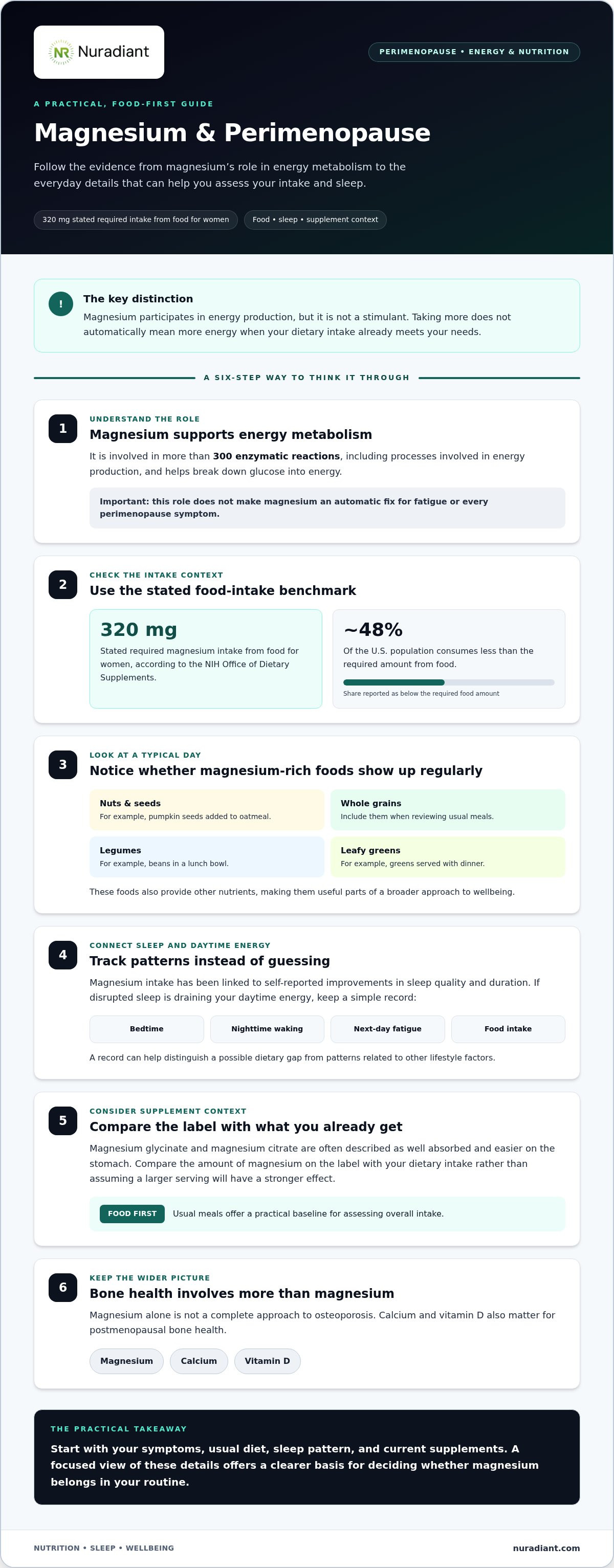
Magnesium supports energy metabolism through more than 300 enzymatic reactions, including processes involved in energy production. It also helps break down glucose into energy. That role matters, but magnesium isn’t a stimulant: taking it doesn’t automatically translate into more energy when dietary intake already meets your needs.
The stated required magnesium intake from food is 320 mg for women, according to the NIH Office of Dietary Supplements. Yet approximately 48% of the U.S. population consumes less than the required amount from food. Use a practical first step: review a typical day of meals and identify whether magnesium-rich foods appear regularly.
Check specific food sources when reviewing your diet. Nuts, seeds, whole grains, legumes, and leafy green vegetables all provide magnesium. Try adding pumpkin seeds to oatmeal, beans to a lunch bowl, or leafy greens to dinner. These foods also provide other nutrients, making them useful parts of a broader approach to wellbeing.
Sleep is another reason magnesium gets attention during perimenopause. Magnesium intake has been linked to self-reported improvements in sleep quality and duration. If disrupted sleep is draining your daytime energy, track your bedtime, nighttime waking, next-day fatigue, and food intake. That record can help distinguish a possible dietary gap from patterns related to other lifestyle factors.
Perimenopause can involve fluctuating hormone levels, so symptoms and energy may change over time. Magnesium plays a clear role in energy metabolism, but that doesn’t establish it as a treatment for every perimenopause symptom. Consider the specific issue: poor sleep, low dietary intake, and persistent fatigue may each call for a different response.
Supplement form can also affect comfort. Magnesium glycinate and magnesium citrate are often described as well absorbed and easier on the stomach. Compare the amount of magnesium on the label with your dietary intake instead of assuming a larger serving will have a stronger effect. Food remains a useful baseline for assessing your overall intake.
Keep bone health in the wider picture. Magnesium alone isn’t a complete approach to osteoporosis; calcium and vitamin D also matter for postmenopausal bone health. A focused plan starts with your symptoms, usual diet, sleep pattern, and current supplements. These details give you a clearer basis for deciding whether magnesium belongs in your routine.
3. Supplement guidance during perimenopause and menopause
Perimenopause can begin in a woman’s 40s as hormone levels fluctuate. Supplement choices should follow life stage, symptoms, diet, and health goals, not a one-size-fits-all stack. Calcium and vitamin D support bone health, while B vitamins support energy metabolism. Omega-3 fatty acids from foods such as salmon, sardines, and mackerel offer another dietary option for heart health.
Start with intake and menstrual status. Women should aim for 1,000 mg of calcium per day, increasing to 1,200 mg per day after age 50. The Menopause Society recommends adequate calcium and vitamin D, preferably from food, with supplements used to fill dietary gaps. A food record can reveal whether calcium-rich foods and vitamin D sources appear consistently.
Iron needs shift around menopause. Perimenopausal women should aim for 18 milligrams of iron per day through their diet; after menopause, the requirement is 8 milligrams per day. Menstrual blood loss can affect iron needs, so iron supplements should be based on blood test results and medical guidance. Taking iron without deficiency has no demonstrated energy benefit and can cause iron overload, which may damage organs.
Some menopause products contain plant compounds or extracts, but an ingredient name alone doesn’t establish a benefit. Phytoestrogens occur naturally in soy products and some fruits and vegetables. They act similarly to estrogen but aren’t estrogen replacements. Pollen extract is marketed for menopause symptoms, though researchers don’t fully understand whether or how it works. For rhubarb root extract, assess the specific symptom claim, ingredient information, and safety considerations rather than assuming it addresses menopause broadly.
Focus on practical steps to support wellbeing during menopause. Regular exercise, nutritious meals, and enough good-quality sleep can help. Limiting or avoiding tobacco and alcohol, and maintaining a balanced body weight, are also options. Yoga, mindfulness-based stress relief, relaxation exercises, and cognitive behavioral therapy are among the mind-body approaches that may help. Choose one change to track, such as sleep quality or exercise consistency, to assess its effect.
No single mineral or supplement is necessary for every woman. Match your choice to the goal: calcium and vitamin D for bone health, iron only when needs and test results support it, and food sources of fatty acids as part of a balanced diet. Review labels and your current intake before adding a product, especially when several formulas contain overlapping nutrients.
4. What is the best vitamin for energy for women?
No vitamin is best for every woman. A useful choice depends on the nutrient, your health, and any medicines you take. During perimenopause, fatigue can have several causes, so adding a supplement without a clear goal may miss the real issue. A product label should inform a specific decision, not promise a universal energy boost.
When comparing supplement prices, consider the amount of each ingredient per serving and the number of servings, not just the bottle price. A multivitamin with many ingredients isn’t automatically better value than a targeted formula. More vitamins and minerals won’t necessarily improve energy when you aren’t deficient, and excessive intake can be harmful.
Risks depend on the ingredient, dose, health conditions, and possible medication interactions. Fat-soluble vitamins A, D, E, and K can accumulate in the body when taken in excess. Taking iron without iron deficiency can cause overload, damage the liver, heart, and other organs, and contribute to fatigue. Check for overlapping ingredients in your multivitamin and any separate products before combining them.
Medication history matters. People taking supplements should discuss them with a healthcare provider, especially if they use prescription medication or have a chronic disease. High-dose metformin use for more than four months may be associated with low B12 levels. That’s a reason to review B12 status and the full medication list, not to add a supplement blindly.
Ashwagandha calls for extra caution. Women who are pregnant, trying to conceive, or breastfeeding should avoid it. Women with thyroid or liver conditions, or those taking thyroid medication, should speak with a healthcare provider before use. These specific cautions matter more than broad claims that an ingredient is natural or supports hormonal balance.
For third-party testing in the United States, look for a clear statement naming the independent tester and identifying the product or batch tested. Review what the testing covers, such as ingredient identity and purity, and compare that information with the Supplement Facts label. A testing claim alone doesn’t establish that a supplement suits your health needs or won’t interact with treatment.
Use a simple safety checklist: list your current medicines and supplements, identify the ingredient and dose you’re considering, then discuss possible interactions and health conditions with a healthcare provider. Include calcium and other minerals in that review, since supplements can overlap. If fatigue persists, prioritize finding its cause over increasing doses. Energy depends on the underlying issue, not the number of products in your cabinet.
5. Energy and metabolism multivitamins
A multivitamin can cover nutritional basics, but it isn’t a metabolism switch. These formulas may provide baseline amounts of key nutrients, yet often don’t supply therapeutic doses for specific deficiencies. That distinction matters: broad coverage may suit someone seeking nutritional backup, while a confirmed shortfall may call for a more targeted approach.
Read the Supplement Facts panel before choosing. Check each nutrient’s amount, serving size, and percentage of Daily Value, then compare it with other products you take. This simple step can reveal duplicated ingredients, including vitamins and minerals already present in a separate formula. Total intake matters more than the number of bottles.
Energy metabolism involves multiple nutrients, not one magic ingredient. B vitamins help the body break down food into usable energy, while magnesium participates in energy-related processes. A multivitamin may include both, but its label can’t establish that you need more. Your diet, health conditions, and medicine use all affect whether adding nutrients makes sense.
Perimenopause adds another layer. Estrogen levels fluctuate during this transition, and declining estrogen after age 40 can affect muscle mass, bone density, and fat distribution. A multivitamin doesn’t replace sleep, nutritious meals, or physical activity, and it isn’t a treatment for hormonal changes or inflammation. Match the supplement to a defined nutrition goal instead.
Use a practical decision process. First, list your usual food sources, such as fortified cereal, leafy greens, legumes, eggs, or fish. Next, compare those foods with the nutrients in the formula. Then note any medicines or other supplements that could overlap. This gives you a clearer picture of what the product adds and what it duplicates.
Look beyond front-label phrases such as “energy” or “metabolism support.” They don’t tell you whether the product provides an appropriate amount of nutrients for your needs. Check ingredient forms, serving directions, and warnings. If you take prescription medicine or manage a chronic disease, discuss the list with a healthcare provider. Reviewing the label is a practical safety step.
The takeaway: choose a multivitamin for baseline coverage, not as a guaranteed fix for fatigue. If symptoms persist, investigate the cause rather than stacking more products. Keep a brief record of your meals, supplements, sleep, and energy patterns. This information can help clarify whether your routine supports your goals or needs adjustment.
Nuradiant: CBD Products
Nuradiant offers CBD products as one option to consider after reviewing your supplement goals and safety needs. Its range also includes nootropics, joint health supplements, and premium gummies, giving you distinct categories to explore based on your interests. These products aren’t substitutes for identifying a nutrient deficiency or addressing persistent fatigue.
Before choosing a supplement, compare its ingredients with your current routine and consider how it fits your health needs, especially if you take medication. Focus on informed choices, not promises of instant energy. Explore Nuradiant’s wellness products to find options that align with your goals.
Make your next step deliberate
Don’t let fatigue lead you to collect supplements without a clear plan. Start by asking one question: could your diet be low in a nutrient, is disrupted sleep affecting your day, or has a new symptom appeared? A brief record of meals, sleep, symptoms, medicines, and supplements can help you spot patterns and explain what has changed.
Use that record to guide your next decision. If symptoms persist or affect daily life, discuss them with a healthcare professional instead of increasing doses on your own. If you’re exploring energy supplements for women over 40, focus on fit, ingredients, and safety rather than bold label claims. Better decisions start with better information.
Nuradiant can be a next stop as you explore supplement options that align with your goals. Explore Nuradiant’s supplement offerings and keep building a routine with intention. Take control of the next step, one informed choice at a time.
Frequently Asked Questions
Are supplements safe to use?
Supplement safety depends on the ingredient, dose, overlapping products, health conditions, and medicines. Taking more than needed can cause harm, and fat-soluble vitamins A, D, E, and K can accumulate in the body when consumed excessively. Read the full label, including serving directions and warnings. If you manage a chronic condition or take prescription medicine, review the product with a healthcare provider before adding it.
What is the best vitamin for energy for women?
No single vitamin is best for every woman; correcting a deficiency is the useful target. For example, B12 may deserve attention when a woman eats little or no meat, or takes metformin at high doses for more than four months. Those factors can affect B12 levels, but they don’t prove a deficiency. Persistent fatigue calls for assessing its cause, rather than choosing a vitamin based on an energy claim.
What is the best vitamin for tiredness and fatigue?
There isn’t one best vitamin for all fatigue. The right next step depends on the likely cause, such as a nutrient deficiency, anemia, or another health issue. If tiredness continues despite changes to meals and rest, note when it began and what other symptoms occur. Share that pattern during a health evaluation. A vitamin can support energy processes, but it won’t resolve fatigue caused by a different underlying problem.
What causes low energy in women over 40?
Low energy can have several causes, including disrupted sleep, perimenopause symptoms, anemia, or difficulty absorbing nutrients. For instance, repeated night waking can leave someone tired even when meals are balanced. A food pattern that excludes animal products can also make B12 intake a relevant question. Track sleep, menstrual changes, diet, medicines, and fatigue patterns; that context helps distinguish a lifestyle factor from a health issue.
Can iron deficiency cause fatigue, and when should women over 40 get tested?
Yes. Low iron is the most common cause of anemia, and anemia can contribute to fatigue. Women who still menstruate may lose iron through bleeding, while iron needs generally decrease after menopause. Testing is especially relevant when fatigue occurs alongside heavy or ongoing menstrual bleeding, or when symptoms persist. Iron deficiency anemia can be identified through a blood test. Don’t use iron supplements as an energy aid without evidence of deficiency.
What are the recommended daily amounts and upper limits for common energy supplements?
Recommended amounts depend on the nutrient and life stage. For example, the NIH Office of Dietary Supplements lists 2.4 mcg of vitamin B12 per day for women, and 600-800 IU of vitamin D per day for adults. These are recommended amounts, not universal supplement doses. Upper limits are nutrient-specific, so check total intake across food, multivitamins, and separate products instead of treating the recommended amount as a target to exceed.
Can energy supplements interact with prescription medicines or hormone therapy?
Yes, supplements can affect medication safety, so include every product in a medication review. Bring the supplement label and a list of prescription medicines, over-the-counter drugs, and hormone therapy to a healthcare provider or pharmacist. High-dose metformin use for more than four months may be associated with low B12 levels, but that doesn’t mean B12 is the only consideration. Review dose, health conditions, and possible interactions before starting a supplement.