

Cognitive Function Supplements for Adults Over 40: What the Evidence Says
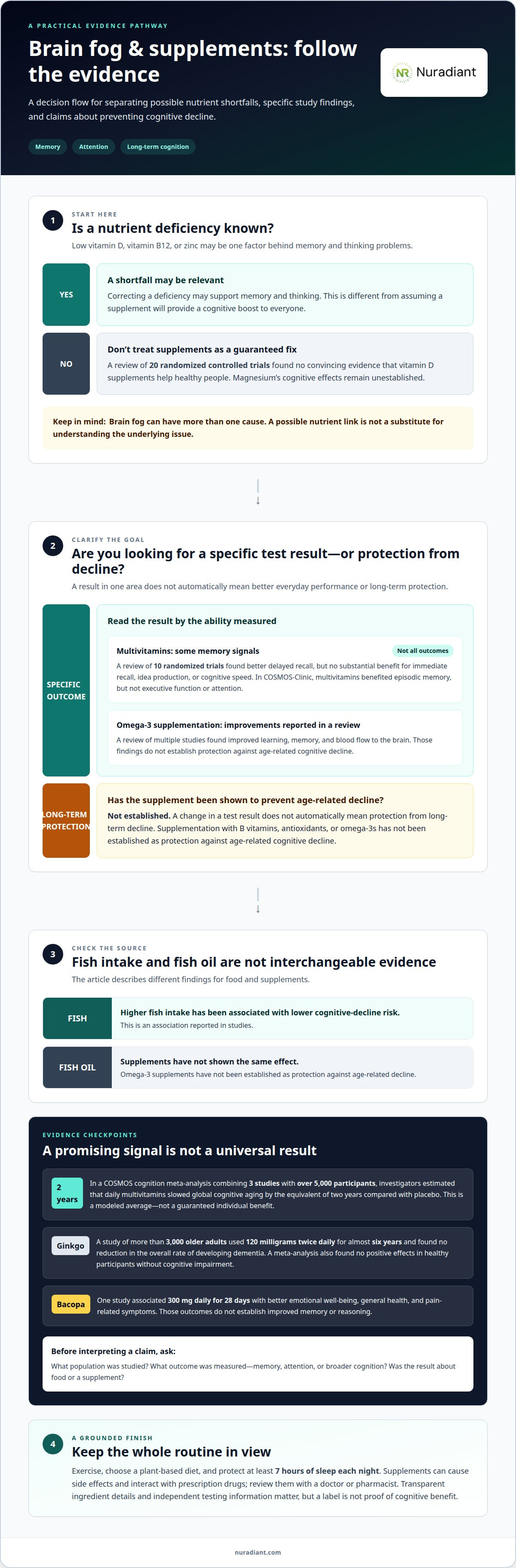
Low levels of vitamin D, vitamin B12, or zinc may be one factor behind memory and thinking problems, and correcting a deficiency may help. But cognitive function supplements for adults over 40 aren't a guaranteed defense against age-related decline. The key is separating a real nutrient shortfall from the promise of a quick cognitive boost.
Noticing more brain fog or missed details can be frustrating, and it makes sense to look for something you can act on. The evidence points to a sharper approach: supplements may matter when nutrient levels are low, while results for attention, memory, and long-term cognitive health vary by ingredient and study. This article examines what research says about omega-3s, multivitamins, and other supplements, where findings are promising, and where they fall short. You’ll get a clear basis for weighing supplements alongside habits that support brain health, without confusing a possible benefit with a proven way to prevent cognitive decline.
Key Takeaways
- Brain fog can have more than one cause. Learn why a nutrient deficiency may matter, and why supplements are not a substitute for understanding the underlying issue.
- Omega-3 research points to potential benefits for brain function, but findings differ between eating fish and taking fish oil.
- Memory and attention don’t always respond the same way to supplements. See which outcomes multivitamin studies have improved, and which remain uncertain.
- Separate evidence for supporting cognitive function from claims about preventing age-related decline before choosing what to add to your routine.
Omega-3 fatty acids and brain function
Omega-3 fatty acids are linked to several measures of brain function. A review of multiple studies found improved learning, memory, and blood flow to the brain with omega-3 supplementation. But studies have not established that supplements protect against age-related cognitive decline. That distinction matters: a change in a test result does not automatically mean protection from long-term decline.
Can B vitamins, vitamin D, or magnesium improve cognitive function in adults over 40? Correcting nutrient deficiencies may support memory and thinking, but supplements are not likely to help everyone. A review of 20 randomized controlled trials found no convincing evidence that vitamin D supplements help healthy people; magnesium’s cognitive effects remain unestablished.
Food sources and capsules don’t show identical patterns. Studies have associated higher fish intake with lower cognitive-decline risk, but fish oil supplements have not shown the same effect. For brain health, make the overall routine count: exercise, choose a plant-based diet, and protect at least 7 hours of sleep each night. These habits support brain health without treating any single supplement as a fix for cognitive impairment.
Vitamin B6 offers one example of how nutrients connect to mental function. Its active form, pyridoxal 5'-phosphate, is required to produce GABA, dopamine, norepinephrine, and serotonin. Multivitamin findings also deserve a precise read. The COSMOS cognition meta-analysis combined three studies with over 5,000 participants, and investigators estimated that daily multivitamins slowed global cognitive aging by the equivalent of two years compared with placebo. A separate review of ten randomized trials found better delayed recall, but no substantial benefit for immediate recall, idea production, or cognitive speed. That is a signal worth understanding, not a universal result.
Supplementation effects on attention and memory
Supplement findings depend on the skill measured and the population studied. A memory signal doesn’t automatically mean sharper attention or protection from dementia.
Attention, Memory, Learning, and Reasoning
Attention means focusing; memory involves storing and retrieving information, while learning and reasoning involve acquiring and applying it. These distinctions matter because a supplement may affect one test result without improving everyday mental performance. In the COSMOS-Clinic study, multivitamins benefited episodic memory, but not executive function or attention. Consider each outcome separately instead of treating “cognition” as a single measure.
Ginkgo and Bacopa Findings
Ginkgo biloba and Bacopa monnieri have different evidence profiles, and traditional use alone doesn’t prove cognitive benefit. The Gingko Evaluation of Memory study enrolled more than 3,000 older adults, according to Gingko Evaluation of Memory study investigators. Participants took 120 milligrams of gingko or placebo twice daily for almost six years; the study found no reduction in the overall rate of developing dementia. A meta-analysis also found no positive effects from Ginkgo biloba in healthy participants without cognitive impairment.
Bacopa findings need the same careful reading: one study associated 300 mg daily for 28 days with better emotional well-being, general health, and pain-related symptoms. Those outcomes don’t establish improved memory or reasoning. The evidence supports judging each supplement by the outcome actually tested, not its reputation.
Studied Supplement Dosages
Studies have used 500 mg to 3,000 mg of lion’s mane daily. Bacopa research included 300 mg daily for 28 days; the gingko trial used 120 milligrams twice daily. These are studied amounts, not personalized directions, and formulations can differ. Don’t assume that matching a study dose guarantees the same effect.
Supplements can cause side effects and interact with prescription drugs, so review them with a doctor or pharmacist. Supplement labels and health claims may not provide a complete picture of a product’s testing, ingredients, or effectiveness. Look for transparent ingredient details and independent testing information; don’t treat a label as proof of cognitive benefit. Explore brain health supplements as one category to consider alongside the evidence.
Evidence on supplements and age-related cognitive decline
Supplement trials measure distinct outcomes, from a memory task to global cognition. Those results don’t establish that a product prevents age-related cognitive decline. The COSMOS-Mind clinical trial enrolled 2,262 older adults, according to COSMOS-Mind study investigators. Its scale provides useful context, but study findings still depend on the participants, nutrients tested, comparison group, and outcome measured.
COSMOS-Mind participants had a mean age of 73 years. In the broader COSMOS cognition research, investigators compared multivitamins with placebo across controlled studies. The meta-analysis estimated that daily multivitamins slowed global cognitive aging by the equivalent of two years compared with placebo, according to COSMOS cognition study investigators. That estimate describes a modeled average across study results. It isn’t evidence that every individual gains the same benefit or avoids cognitive decline.
Omega-3 fatty acids illustrate why the evidence needs careful interpretation. Studies have associated higher fish intake with lower cognitive-decline risk, while fish oil supplements haven’t shown the same effect. Supplementation with B vitamins, antioxidants, or omega-3s has not been established as protection against age-related decline. Ask what the study measured: a specific memory score, attention, or broader cognition. A result in one area doesn’t automatically transfer to another.
What do cognitive supplements typically cost in the United States? Prices vary with the formula, ingredient amounts, servings per container, and product format. Compare the full ingredient panel and serving details rather than judging value by package size alone. For questions about safety, side effects, or interactions with prescription drugs, review supplements with a doctor or pharmacist. To assess the evidence, ask three practical questions: which outcome was measured, who took part, and whether the study used a controlled comparison. This helps distinguish a promising finding from proof of prevention.
Omega-3 fatty acids and cognitive health
Omega-3 research offers a useful distinction: measurable cognitive outcomes aren’t the same as preventing Alzheimer’s disease. A review of multiple studies found improvements in learning, memory, and blood flow to the brain. Those findings suggest potential effects on specific functions, not proof that supplements stop long-term cognitive decline. For adults weighing an omega-3, the outcome tested matters as much as the ingredient.
Evidence about eating fish differs from evidence about taking fish oil supplements. Studies have associated higher fish intake with lower risk of cognitive decline, but fish oil supplements haven’t shown the same effect. An association does not establish that fish itself caused the difference. Broader dietary patterns and participants’ health may also matter, so food findings are not direct evidence for a capsule.
Omega-3 fatty acids may support brain health even when a person’s levels aren’t low. That possibility doesn’t settle whether supplementation prevents age-related decline. Current evidence leaves that protection question unresolved for omega-3s, B vitamins, and antioxidants. Separate three claims: support for brain health, improvement on a particular cognitive measure, and prevention of disease. A result supporting one claim doesn’t automatically establish the others.
Use a practical evidence check before choosing a supplement: identify whether a study tested dietary intake or capsules, note the cognitive outcome, and distinguish association from demonstrated effect. Then consider how closely the study participants match your situation, including their age and baseline nutrient status. For example, a memory finding cannot by itself establish better attention or lower dementia risk. If you’re ready to explore options, review ways to support brain health with the evidence in mind.
Nuradiant: CBD Products
Nuradiant offers CBD products, nootropics, joint health supplements, and premium gummies for adults choosing products that fit their broader wellness priorities. The evidence reviewed here doesn’t establish CBD products as a way to prevent cognitive decline, so keep that distinction clear. For a brain-health-focused option, explore nootropics as a supplement category, then assess its ingredients and claims against the evidence and your own needs. Joint support or gummies may suit different wellness preferences, but they aren’t substitutes for addressing a nutrient deficiency or evaluating persistent memory changes. Make the decision with a clear goal, not a broad promise of sharper thinking. Visit Nuradiant to explore its offerings.
Choose your next step with intention
Better decisions start with a clear target. Identify the change you want to address, note when it happens, and consider whether it affects daily tasks, sleep, or focus. That context gives you a stronger basis for discussing supplements than choosing an ingredient because it’s popular. For cognitive function supplements for adults over 40, the goal isn’t to add more products. It’s to make a deliberate choice that fits your needs and the evidence.
Take a careful approach: read ingredient labels, consider how a supplement fits into your routine, and ask a doctor or pharmacist about medication interactions. If memory changes persist or worsen, seek clinical evaluation rather than relying on supplements alone. This keeps a wellness product in perspective and avoids treating it as medical care.
Nuradiant’s men’s health supplements offer another category to explore as you refine your broader wellness priorities. Contact Nuradiant to discuss your needs, then move forward with a plan grounded in clear goals and informed choices.
Frequently Asked Questions
Can vitamin deficiencies cause brain fog or memory loss?
Yes. Low levels of vitamin B12, vitamin D, or zinc can contribute to problems with memory and thinking, and correcting a deficiency may help. Brain fog alone doesn’t reveal which nutrient, if any, is low. Track when symptoms occur and discuss persistent or worsening changes with a healthcare professional instead of starting several supplements at once.
Which supplements have evidence for supporting cognitive function in adults over 40?
Evidence for cognitive function supplements for adults over 40 depends on the ingredient and the outcome measured. COSMOS cognition study investigators estimated that daily multivitamins slowed global cognitive aging by the equivalent of two years compared with placebo. Supplements are most relevant when they address a low nutrient level, such as B12 or vitamin D. Match ingredients to your goal, not a broad promise of sharper thinking.
What does research say about omega-3 supplements and cognition in adults over 40?
Research on cognitive function supplements for adults over 40 that contain omega-3s reports potential benefits for learning, memory, and blood flow to the brain. But evidence doesn’t establish that omega-3 capsules prevent age-related decline. Keep the source of omega-3s clear: findings about eating fish can’t automatically be applied to fish oil. Compare studies by the cognitive outcome measured, not general brain-health language.
What evidence supports creatine, ginkgo biloba, or other nootropic supplements for cognition?
Evidence differs by ingredient. Ginkgo biloba didn’t reduce dementia incidence in a large older-adult trial, and a meta-analysis found no positive effect among healthy people without cognitive impairment. Bacopa studies include outcomes beyond cognition, so general wellness findings don’t necessarily demonstrate memory gains. For creatine or any nootropic, look for evidence about cognition specifically, not results from another use.
How effective are cognitive supplements compared with diet, exercise, sleep, and other lifestyle changes?
Supplements are an add-on, not a replacement for brain-supportive habits. Regular exercise, a plant-based diet, and at least seven hours of sleep nightly are practical foundations for long-term brain health. Establish a routine around movement, nourishing meals, and consistent sleep before judging whether a supplement changes your focus. Track one clear, everyday outcome at a time.
Can cognitive supplements prevent or treat dementia, Alzheimer’s disease, or age-related memory loss?
No supplement is established as a way to prevent or treat dementia or Alzheimer’s disease. In the United States, supplement makers may claim a product supports mental alertness or memory, but they can’t claim it protects against or improves Alzheimer’s disease or another form of dementia. Persistent memory changes call for medical assessment, not reliance on a supplement label.