

Cholesterol support supplements for seniors: uses and risks
A supplement can target one blood fat without treating high cholesterol overall. Cholesterol is a waxy substance in the blood, and cholesterol support supplements for seniors may work in different ways: psyllium provides soluble fiber that can help lower LDL, while omega-3 fish oil may lower triglycerides rather than high cholesterol. That distinction matters when deciding what to discuss and what to expect.
It makes sense to look for practical ways to support heart health, especially when cholesterol readings can be difficult to interpret. But “natural” does not mean risk-free. Supplements can interact with medicines, and fish oil may cause digestive side effects. A health professional can review your medications and cholesterol results before you start.
This guide explains what cholesterol is, how LDL, HDL and triglycerides differ, and what psyllium and omega-3 supplements may do. You’ll also learn the key risks to weigh and what to raise with a health professional. Make your next move informed, not guesswork.
Key Takeaways
- Separate cholesterol from triglycerides when weighing supplement claims: omega-3s may affect triglycerides, while psyllium’s soluble fiber may help lower LDL.
- Understand the treatment threshold: according to the U.S. Food and Drug Administration, prescription omega-3 therapy for severe triglyceride disorders is used at 500 mg/dL or more.
- Before adding a supplement, share your full supplement and medication list with a health professional so they can assess potential interactions.
- Use your cholesterol results and overall health needs to guide the next step, rather than treating supplements as a substitute for prescribed care.
1. Omega-3 fatty acids and triglycerides
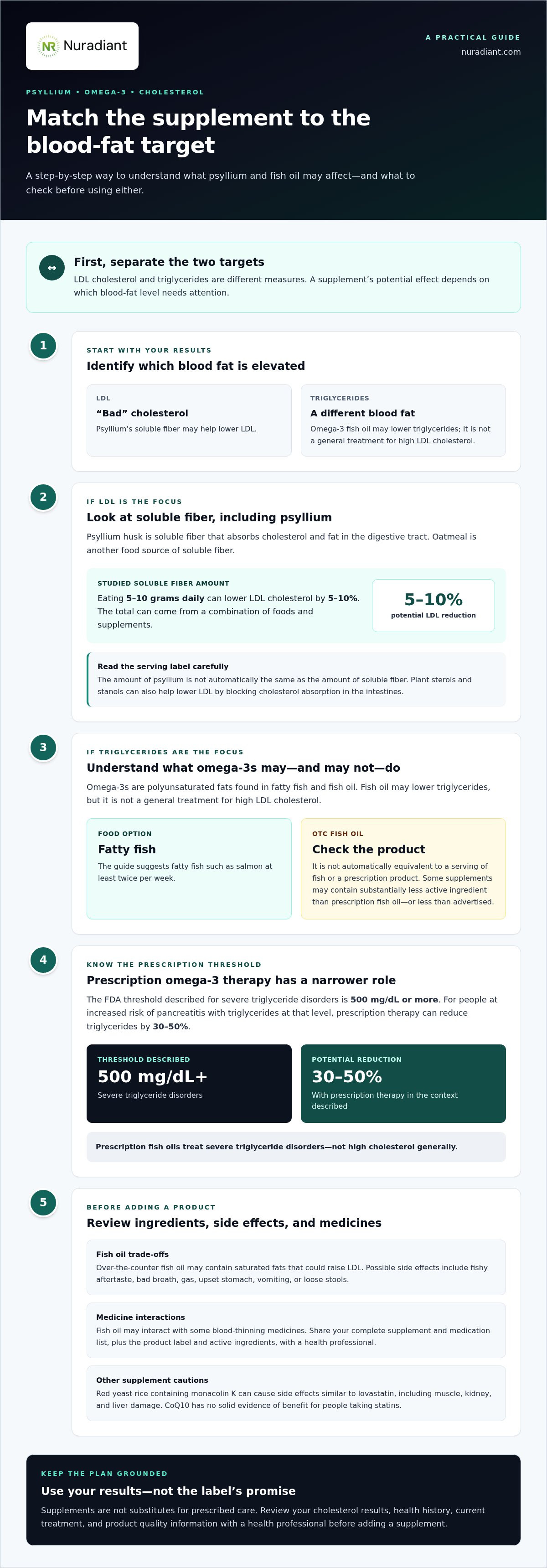
Omega-3s are polyunsaturated fats found in fatty fish and fish oil. Their cholesterol story needs precision: fish oil may lower triglycerides, a different type of blood fat, but it isn’t a general treatment for high LDL cholesterol. For seniors weighing omega-3 supplements, the first step is to identify which blood-fat levels need attention.
Food is one practical source. Aim to eat fatty fish, such as salmon, at least twice per week. An over-the-counter fish oil capsule isn’t automatically equivalent to a serving of fish or a prescription product. Some supplements may contain substantially less active ingredient than prescription fish oil, and some may contain less than advertised.
Check the label and the product’s purpose before choosing a supplement. Over-the-counter fish oil may contain saturated fats, which could raise LDL cholesterol. That trade-off matters if LDL is your concern. Fish oil can also cause a fishy aftertaste, bad breath, gas, an upset stomach, vomiting, or loose stools. It may interact with some blood-thinning medicines.
Prescription omega-3 therapy serves a narrower role. According to the U.S. Food and Drug Administration, the threshold described for severe triglyceride disorders is 500 mg/dL or more. In people at increased risk of pancreatitis with triglycerides at that level, prescription therapy can reduce triglycerides by 30 to 50 percent. Prescription fish oils treat severe triglyceride disorders, rather than high cholesterol.
Keep the distinction clear: triglycerides and LDL are different measures, and a supplement’s effects depend on which one is elevated. Evidence does not show that over-the-counter fish oil substantially prevents heart attacks, strokes, heart failure, or coronary heart disease. Before adding fish oil, review its ingredients and your medicines with a health professional, especially if you take a blood thinner. Choose based on your goal, not just the word “heart” on the label.
2. Consulting a medical professional before using supplements
Before starting cholesterol support supplements for seniors, discuss your cholesterol levels and medication list with a health professional. Supplements can interact with medicines, and the right approach depends on your results, health history, and current treatment. Bring the product label, including its active ingredients, so you can discuss the specific product.
There is no universal cost comparison between supplements and generic statins. Supplement prices vary by product, while prescription costs depend on your coverage. Medicare and private insurance benefits also vary, so review your plan’s terms for the specific supplement rather than assuming it is covered like prescription medicine.
Diet and activity can support cholesterol management, but they are not automatic substitutes for medication. A practical plan can address food choices, smoking, exercise, and weight alongside prescribed treatment. Ask your doctor how these steps fit your cholesterol results and current medicines.
Red yeast rice containing monacolin K can cause side effects similar to lovastatin, including muscle, kidney, and liver damage. Tell your doctor if you use it, especially if you take a statin or other medication. A thorough review of cholesterol support supplements for seniors includes every product you use, not only those marketed for cholesterol.
CoQ10 has no solid evidence of benefit for people taking statins. If muscle aches develop while taking a statin, discuss the symptoms and prescription with your doctor rather than changing treatment yourself.
Studied amounts differ by supplement: 5-10 grams of soluble fiber daily can lower LDL by 5-10%, while phytosterols are used at about 2 grams per day. These figures don’t establish a dose specifically for every senior. Read ingredient and serving labels, and look for clear information about independent quality testing. Share those details with your health professional before adding a product to your routine.
3. Psyllium as a soluble fiber supplement
Psyllium husk is a soluble fiber that absorbs cholesterol and fat in the digestive tract. That gives it a different role from omega-3 fatty acids, which relate more directly to triglycerides. For seniors focused on LDL, psyllium offers a targeted fiber option, while whole foods such as oatmeal can contribute soluble fiber through the diet.
Soluble fiber can support lower LDL levels. Eating 5-10 grams of soluble fiber daily can lower LDL cholesterol by 5-10%. That total can come from a combination of foods and fiber supplements, rather than relying on one source. Read product labels carefully: the amount of psyllium is not automatically the same as the amount of soluble fiber.
How effective are plant sterols, soluble fiber, and psyllium for cholesterol? Soluble fiber can lower LDL, and psyllium provides this type of fiber. Plant sterols and stanols can also help lower LDL by blocking cholesterol absorption in the intestines. These effects relate to LDL, not every cholesterol measure or heart disease risk on its own.
Build a dietary pattern around more than one nutrient. Oatmeal is a practical whole-grain option, and meals can also include protein and sources of fatty acids. Psyllium is a supplement option, not a replacement for dietary changes or physical activity. Exercise supports overall health, but it does not change the fiber content of a meal.
Use a clear plan. Check the product’s serving information, note how much soluble fiber it provides, and track it alongside food sources such as oatmeal. If you already take other supplements or prescription medicines, discuss adding psyllium with a health professional. This helps place the fiber in your full routine and cholesterol-management plan.
4. Consulting a health care provider before starting supplements
Before adding a supplement, bring its label and your medication list to a health care provider. A physician can use a blood test to measure cholesterol and assess the results alongside your health history. Mention planned surgery, blood-thinning medicines, and any symptoms, not just the supplement you are considering.
That review matters for specific products. Garlic can prolong bleeding and blood-clotting time, so avoid taking it before surgery or with blood-thinning drugs such as Coumadin. Red yeast rice products containing monacolin K can cause muscle, kidney, and liver damage. Share the exact product name and ingredients so your provider can assess potential risks.
Build heart-healthy habits around repeatable food choices, too. Oatmeal and ground flaxseed are examples of foods associated with cholesterol support, while a heart-healthy eating pattern also considers saturated and trans fats. The U.S. Food and Drug Administration says partially hydrogenated oils are no longer generally recognized as safe. Read ingredient labels and choose foods without these oils.
Sodium deserves attention as part of that plan. The recommended limit in the cited guidance is less than 2,300 mg a day. Check serving sizes and sodium amounts on packaged foods, then compare options before buying. For alcohol, men are advised to limit intake to no more than two drinks per day, and women to no more than one drink per day.
Alcohol isn’t a cholesterol treatment: the American Heart Association doesn’t recommend wine or other alcoholic beverages specifically to lower cholesterol or improve heart health. If you want to strengthen your routine with supplements, explore heart health supplements as one part of an informed plan, not a replacement for prescribed medications or provider-guided care.
Nuradiant: CBD Products
Nuradiant offers CBD products for adults exploring options beyond cholesterol-focused supplements. These products are not a treatment for high cholesterol and do not replace prescribed medication or a cholesterol-management plan. Keep those goals distinct.
If you are exploring wellness products alongside your existing routine, Nuradiant also offers nootropics, joint health supplements, and premium gummies. Choose products based on the need you are addressing, and keep your clinician informed about supplements you take, especially if you use prescription medicines. A clear inventory helps ensure products for separate goals are not mistaken for cholesterol care.
For cholesterol management, focus on your blood test results, prescribed care, and choices that address LDL or triglycerides. Consider other supplement categories for their intended purpose, not as a shortcut to changing cholesterol. Visit Nuradiant to explore its CBD products and other wellness offerings.
Make Your Next Health Decision Deliberate
Define what you want to improve, and keep each decision connected to professional guidance. Cholesterol support supplements for seniors belong in a broader health plan, not in competition with prescribed care. Let your priorities, health history, and treatment plan guide what you add or leave out.
Before changing your routine, write down the goal you want to discuss and the questions that will help you decide. Ask how progress will be assessed and what would prompt a review. This turns a broad concern into a focused conversation, without treating a supplement label as a personal plan.
Keep the standard high: choose products for a defined purpose, track what you use, and make changes with informed oversight. For wellness products beyond cholesterol management, explore Nuradiant’s supplement offerings. Stay intentional, stay informed, and make your next step count.
Frequently Asked Questions
What is cholesterol?
Cholesterol is a waxy substance your body uses to build cells and make certain hormones. It travels through your bloodstream in particles called lipoproteins, including LDL and HDL. A blood test measures these types and helps show your overall profile. Food contributes some cholesterol, but most cholesterol in the blood is produced by the body.
Which cholesterol supplements have evidence for lowering LDL in older adults?
Soluble fiber and plant sterols or stanols have evidence for lowering LDL. An important distinction: 5-10 grams daily refers to total soluble fiber, which can come from food and supplements, not necessarily psyllium alone. Plant sterol or stanol supplements at about 2 grams per day can lower LDL by 5% to 15%. These effects don’t establish a personal dose.
Can omega-3 supplements lower LDL cholesterol, and what are their risks?
Omega-3 fish oil may lower triglycerides, but it isn’t a dependable way to lower LDL. Some over-the-counter fish oil may contain saturated fats that could raise LDL. Potential downsides include fishy aftertaste, bad breath, gas, stomach upset, vomiting, and loose stools. Fish oil may also affect some blood-thinning medicines, so include it on your medication and supplement list.
When should seniors consult a doctor before taking cholesterol supplements?
Talk with a doctor before starting any cholesterol supplement, especially if you take prescription medicines, use a blood thinner, or have surgery planned. Share the supplement label and your complete medication list, including products you take occasionally. If statins cause muscle aches, discuss the symptoms and prescription with your doctor instead of stopping or changing the medicine on your own.
How can seniors check supplement quality and third-party testing in the United States?
Check ingredient and serving labels, and look for clear information about independent quality testing. Share the product label with a health professional before adding it to your routine.