

Bloating Relief Supplements for Women Over 40: How to Choose
Bloating relief supplements for women over 40 may include digestive enzymes, psyllium, ginger, peppermint oil, or specific probiotics, but the evidence varies by ingredient and symptom. Small studies and reviews suggest some options can ease bloating or related digestive symptoms; no single supplement suits everyone. Choose based on what you’re experiencing, not the boldest label claim.
Bloating can disrupt your day, and menopause-related changes may make it harder to know what’s driving it. Want relief? Start with the evidence and the details that matter: the ingredient, the symptom it may target, and how to use it thoughtfully.
This guide explains which supplements may help, what research says about probiotics and other options, and how to compare products without getting drawn in by hype. You’ll also learn when persistent or concerning symptoms call for medical advice, helping you make a more informed decision.
Key Takeaways
- Match a supplement to the pattern behind your bloating; the ingredient and symptom target matter more than a bold label claim.
- If constipation may be contributing, learn how to introduce psyllium gradually and pair it with enough water.
- Probiotic evidence points to specific strains, not a one-size-fits-all solution. See what the research can and can’t tell you.
- Recognize when bloating calls for medical advice instead of another supplement trial.
Supplements for Menopause Bloating: Which Ones Work?
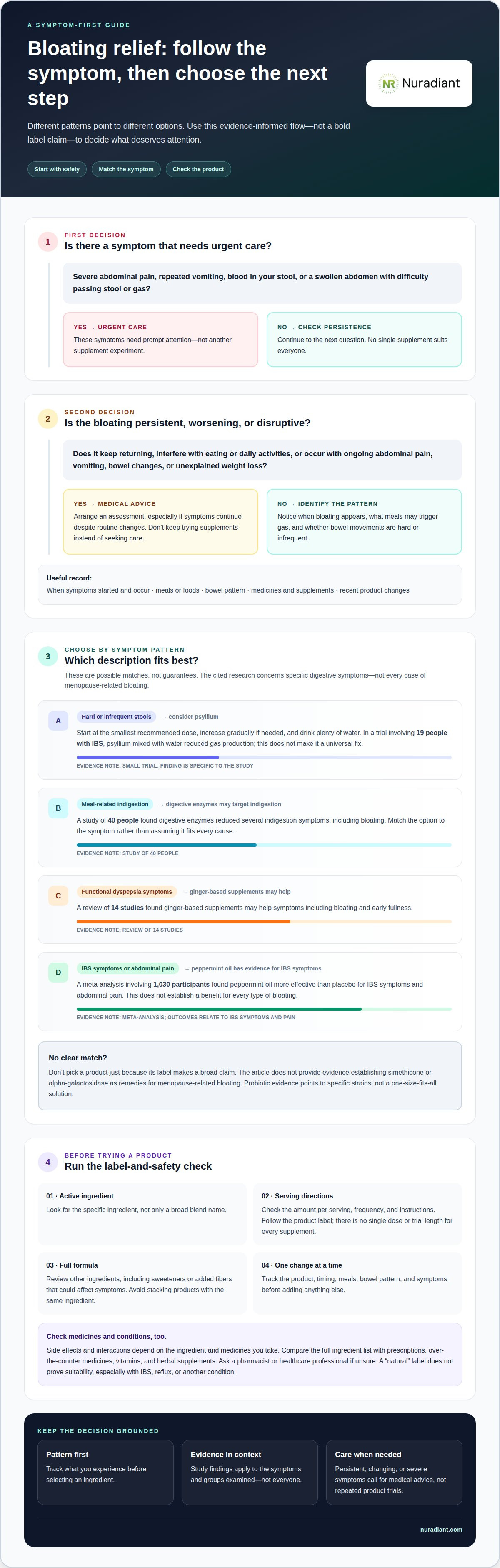
The best bloating relief supplements for women over 40 depend on the symptom being targeted. Menopause-related bloating can have different drivers, so match an ingredient to your pattern. Psyllium may fit constipation-related bloating, while digestive enzymes may target indigestion. Track when bloating appears, whether stools are hard or infrequent, and which meals trigger gas. Those details help narrow your next step.
For constipation, start psyllium at the smallest recommended dose, increase gradually if needed, and drink plenty of water. A trial involving 19 people with IBS found that psyllium mixed with water reduced gas production. That finding is relevant, but it doesn’t make psyllium a universal fix. A study of 40 people also found digestive enzymes reduced several indigestion symptoms, including bloating. Match the option to the symptom.
Other ingredients have different evidence. A review of 14 studies found ginger-based supplements may help functional dyspepsia symptoms, including bloating and early fullness. A meta-analysis involving 1,030 participants found peppermint oil more effective than placebo for IBS symptoms and abdominal pain. These results concern specific digestive symptoms, not every case of menopause-related bloating.
Evidence establishing simethicone or alpha-galactosidase as remedies for menopause-related bloating isn’t provided here. Don’t treat either as a proven solution based only on a general claim about gas relief.
Choosing bloating relief supplements for women over 40 also means checking safety. Side effects and medication interactions depend on the ingredient and medicines you take. Read the label, note each active ingredient, and compare it with your medication list before combining supplements. For example, psyllium requires adequate fluid, while a multi-ingredient formula may duplicate substances you already use. Keep the choice focused: identify the symptom, select a matching ingredient, and follow label directions. If bloating persists or changes, use the medical-advice guidance elsewhere in this article instead of adding another product.
When to seek medical advice
Don’t assume new or persistent bloating is caused by menopause. Track when it started, how often it occurs, and whether meals, bowel changes, or supplements affect it. Share the pattern with a healthcare professional, especially if bloating continues despite changes to your routine. A symptom log gives that discussion specifics rather than guesses.
Seek medical advice if bloating keeps returning, worsens, or disrupts eating and daily activities. Arrange an assessment if it occurs with ongoing abdominal pain, vomiting, changes in bowel habits, or unexplained weight loss. These symptoms need attention, not repeated experiments with supplements. Note when each symptom began and any recent changes to medicines or supplements.
- Seek urgent care for severe abdominal pain, repeated vomiting, blood in your stool, or a swollen abdomen with difficulty passing stool or gas.
- Contact a healthcare professional about persistent symptoms, new bowel changes, or bloating that repeatedly interferes with meals.
- Bring a record of symptoms, bowel patterns, foods, medicines, and supplements to help explain what changed.
Before adding a product, review its ingredients with a pharmacist or healthcare professional. Include prescriptions, over-the-counter medicines, vitamins, and herbal supplements. For example, a new capsule may contain an ingredient already present in your multivitamin. Keep the packaging or a clear ingredient list handy, and note when you started each product. This can help identify timing patterns and support a discussion about safer next steps.
Don’t use a supplement trial to delay care for severe or changing symptoms. If bloating began after you started a product, pause and record the timing, dose, and symptoms before discussing them with a professional. Bring those details to your appointment. They can help distinguish a digestive pattern from a reaction or another problem, supporting a more focused plan than repeatedly switching products.
Choosing a supplement
Choosing bloating relief supplements for women over 40 starts with matching the ingredient to your symptoms. Constipation-related bloating points to a different option than meal-related indigestion or gas. Record the pattern, such as symptoms after certain foods or alongside hard stools. Then compare that pattern with the supplement’s intended use and active ingredients.
There isn’t one dose or trial length that suits every supplement. Follow the product label. For psyllium, start with the smallest recommended dose, increase gradually if needed, and drink plenty of water. Use the label to guide a focused trial and track symptoms consistently. Don’t increase the dose simply because relief hasn’t come quickly.
For bloating relief supplements for women over 40, safety depends on the ingredient, health conditions, and medicines you use. With IBS, reflux, or another condition, a “natural” label doesn’t prove a product is suitable. Compare active ingredients with your medication list and known restrictions. Avoid stacking products that contain the same ingredient.
- Check the ingredient: Look for the specific active ingredient, not only a broad blend name.
- Read serving directions: Note the amount per serving, frequency, and any instructions for use.
- Scan the full formula: Review other ingredients, including sweeteners or added fibers that could affect symptoms.
- Track one change: Record the product, timing, meals, bowel pattern, and symptoms before adding anything else.
Apply the same care when considering probiotics or digestive enzymes. A blend may contain several strains or enzymes, making it harder to identify what matches your symptoms. If a label lists a proprietary blend without clear amounts, you can’t compare its components. Prioritize a clear ingredient list and a specific purpose over a long formula.
Reassess as you go. If symptoms worsen, new symptoms appear, or the product causes an unwanted reaction, stop the trial and follow the medical-advice guidance in this article. Changing one product at a time gives you clearer feedback than switching several supplements at once.
Do probiotics help bloating, and which strains have evidence?
Probiotics may reduce bloating for some people, particularly those with irritable bowel syndrome (IBS). A review of 70 studies found moderate evidence for some specific probiotic strains reducing bloating or stomach distension in some people with IBS. The takeaway is precise: evidence applies to certain strains and symptoms, not every probiotic product.
A clinical trial involving 125 people with abdominal bloating reported that probiotics may reduce how often bloating occurs and how severe it feels. That finding supports considering probiotics, but it doesn’t establish one universal formula. Results from one product can’t automatically be applied to another with different strains.
Which strains have evidence? Evidence for probiotics is strain-specific, so a broad product label may not be enough to guide a choice. Avoid choosing a product based only on a broad label such as “probiotic blend.” Compare the strain details on the label with evidence relevant to your symptom, especially if you have a history of IBS.
- Look for strain-level detail: Check whether the label names the strains, rather than listing only “probiotics.”
- Match the evidence: Prioritize findings about IBS-related bloating or distension if those describe your symptoms.
- Keep the trial focused: Record bloating frequency and severity before changing products, then track the same symptoms during use.
- Don’t generalize: Evidence for one strain doesn’t prove that every strain or blend works the same way.
Keep expectations tied to the actual outcome measured. The 125-person trial reported changes in bloating frequency and severity, while the review focused on specific strains and people with IBS. Neither finding establishes that probiotics address every cause of bloating, including constipation or meal-related symptoms. If you’re comparing options, use the strain name and the symptom target as your decision points. A label that doesn’t let you identify its strains makes that comparison harder.
Nuradiant: CBD Products
Nuradiant offers CBD products for readers exploring supplements beyond the ingredients discussed for bloating. Keep the distinction clear: CBD isn’t a substitute for psyllium, probiotics, or medical advice, and this article doesn’t establish it as a bloating treatment. Choose according to your goal, and keep digestive symptoms separate from other wellness priorities.
Nuradiant also offers nootropics, joint health supplements, and premium gummies for readers exploring a broader supplement range. These categories serve different purposes, so match any product choice to the need you’re addressing rather than expecting one supplement to do everything. For ongoing or worsening bloating, follow the medical-care guidance above instead of relying on a general supplement.
Visit Nuradiant to explore its supplement offerings, or contact Nuradiant with questions.
Make your next step deliberate
Use your symptom pattern to guide your next move, not a promise on a label. For women over 40, choosing bloating relief supplements starts with a clear goal and a careful look at how a product fits your needs. Keep a record of changes, and don’t let supplement experiments delay medical advice when symptoms persist or worsen.
Nuradiant offers men’s health supplements, CBD products, and nootropics. These are distinct product categories, not interchangeable solutions for bloating. If you’re exploring Nuradiant’s products for a separate wellness goal, focus on the category that matches that goal and make an informed choice.
Contact Nuradiant for support as you explore its offerings. Stay focused, choose with purpose, and keep moving toward better-informed decisions for your health.
Frequently Asked Questions
What is the best anti-bloating remedy for menopause?
There isn’t one best remedy for every menopause-related bloating pattern. First identify whether constipation, gas, or indigestion seems most relevant, then match your next step to that symptom. For example, constipation-related bloating calls for a different approach than discomfort after a meal. If symptoms are new, persistent, or worsening, prioritize medical assessment over trying another remedy.
What causes bloating in women over 40, including menopause and hormonal changes?
Bloating can have several causes, and menopause isn’t the only possible explanation. Hormonal changes during this transition may coincide with shifts in digestion and bowel habits, while constipation, swallowed air, or gas after particular foods can also contribute. Notice the timing: symptoms after meals suggest a different pattern from bloating alongside bowel changes. Tracking these details can help focus your next step.
Which supplements may help relieve bloating in women over 40?
Potential options depend on the symptom: psyllium may be considered when constipation contributes, digestive enzymes for indigestion, and probiotics for some IBS-related bloating. Peppermint oil may also help with IBS symptoms. These options aren’t interchangeable. Before choosing one, identify the main pattern and compare it with the ingredient’s intended use. Persistent symptoms call for medical advice, not an expanding supplement routine.
Can magnesium, digestive enzymes, or peppermint oil help with bloating?
Digestive enzymes may help with indigestion-related symptoms, and peppermint oil may help with IBS symptoms. Magnesium isn’t a universal bloating remedy; its relevance depends on why you’re considering it and your health circumstances. Don’t add several products at once, since that makes it harder to tell what affects your symptoms. Review the ingredient list and your current medicines before starting a supplement.
When should persistent bloating be evaluated by a doctor, and what symptoms are warning signs?
Arrange a medical evaluation if bloating persists, keeps returning, worsens, or interferes with eating and daily activities. Seek urgent care for severe abdominal pain, repeated vomiting, blood in your stool, or abdominal swelling with difficulty passing stool or gas. Make your appointment more useful by recording when symptoms began, bowel changes, and any new medicines or supplements. Don’t let repeated product trials postpone care.
What are the recommended doses and how long should bloating supplements be tried?
Follow the product label; there is no single dose or trial length for all supplements. For psyllium, start with the smallest recommended dose, increase gradually if needed, and drink plenty of water.