

What Vitamins Should Not Be Taken Together? A Science-Based Guide
What vitamins should not be taken together? There isn’t a universal blacklist. The effects of a combination can depend on the dose, timing, your health, and any medications you take. Some nutrients may compete for absorption, while other combinations are mainly a concern at high doses or alongside certain medicines.
If conflicting advice has left you second-guessing every capsule, focus on what actually changes the risk. Calcium and iron may need to be taken at different times, for example, while high-dose minerals can interfere with one another. That doesn’t make every pairing a problem, or mean a more complicated schedule is automatically better.
This guide explains supplement combinations that may affect absorption, nutrient levels, or medication safety. You’ll learn when spacing doses may help, why complete product labels matter when combining supplements, and when to get advice from a healthcare professional before changing your routine. The goal is a simpler plan built around your needs, not another pile of rules.
Key Takeaways
- Learn which nutrient pairings may affect absorption and when spacing doses could matter.
- Find out what vitamins should not be taken together, and why a possible absorption issue isn’t automatically a dangerous reaction.
- Recognize when supplement and medication combinations need professional guidance, especially before changing vitamin K intake while taking anticoagulants.
- Build a practical routine by listing products and doses, spotting duplicate ingredients, checking medications, and following label and clinician instructions.
- Choose supplements for a clear purpose, and review the full formula so a multivitamin or targeted product doesn’t unintentionally add to your daily intake.
What Vitamins Should Not Be Taken Together? Start With the Type of Interaction
The question what vitamins should not be taken together sounds as if it should have a simple list for an answer. It doesn’t. A supplement interaction can affect how another nutrient is absorbed or maintained in the body, or change how a medicine works. Those are different concerns, and they don’t all carry the same level of risk.
A possible decrease in absorption isn’t automatically a dangerous reaction, proof that a nutrient is useless, or a reason to stop taking it. The practical question is what the interaction changes for you. Dose, formulation, timing, diet, health conditions, and medicines can all affect the answer. A pairing worth reviewing at high supplemental doses may not require the same response when the nutrients come from food or a balanced multivitamin.
Absorption competition is not the same as a dangerous reaction
Some minerals use overlapping pathways in the digestive system, so a large supplemental dose of one may reduce how much of another is absorbed at the same time. That’s a potential absorption issue, not necessarily a toxic reaction. The distinction matters: “may compete” doesn’t mean “never combine.” It means the dose and circumstances deserve a closer look.
Amounts found in food or a balanced multivitamin aren’t automatically equivalent to taking separate, high-dose mineral products together. Meals contain nutrients in a broader mix, while concentrated supplements can deliver a much larger amount at once. Don’t turn a possible interaction into a universal ban. Check the specific products, serving sizes, and instructions before changing your routine.
Why dose and personal context change the answer
Strength matters, but so does the pattern of use. Taking a product once is different from using overlapping products every day, especially if a multivitamin and a separate supplement contain the same nutrient. Formulation and timing may also affect how much is absorbed together. Review the full label, not just the headline ingredient, and add up repeated ingredients across products.
Your personal context matters too. Age, health conditions, diet, and prescribed medicines can change whether a combination is relevant or risky. Medication interactions may affect how a drug works, not just how a nutrient is absorbed. Don’t stop a prescribed medicine or make a major supplement change based on a generic online list. If you manage a complex medication routine, get individual guidance from a clinician or pharmacist.
Use this quick screen before deciding a pairing is a problem:
- Check the dose: Compare each serving with your total daily intake from all products.
- Check the formula: Look for repeated nutrients in multivitamins and targeted supplements.
- Check the purpose: Identify whether the concern is absorption, excess intake, or a medication effect.
- Check your context: Factor in health conditions and medicines before changing timing or stopping a product.
Not every supplement interaction means two nutrients cannot be used together. First identify the type of concern, then consider the details instead of following a blanket rule.
Which Vitamin and Mineral Combinations May Need Separation?
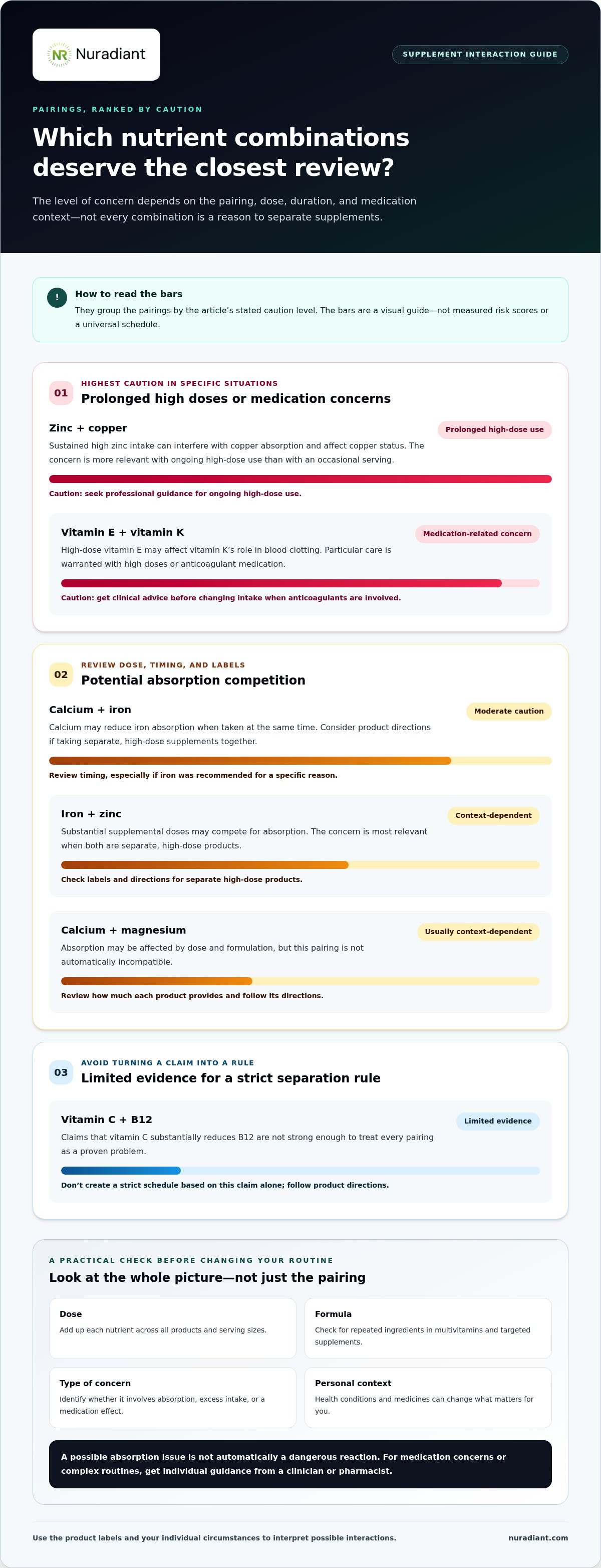
Some pairings deserve a closer look, but a long list of “never combine” rules can overstate the risk. Separate well-recognized concerns, especially those involving substantial supplemental doses, from combinations where evidence is limited or the effect depends heavily on context. Use the table to review your routine, not as a diagnosis or a universal schedule.
| Pairing | Possible issue | When timing may matter | Caution level |
|---|---|---|---|
| Calcium and iron | Calcium may reduce iron absorption when taken at the same time. | Consider the products’ directions if taking separate, high-dose supplements together. | Moderate: review timing, especially if iron was recommended for a specific reason. |
| Iron and zinc | Substantial supplemental doses may compete for absorption. | Pay attention when both are taken as separate, high-dose products. | Context-dependent: check labels and directions. |
| Zinc and copper | Sustained high zinc intake can interfere with copper absorption and affect copper status. | More relevant with ongoing high-dose zinc use than with an occasional serving. | Higher with prolonged high-dose use: seek professional guidance. |
| Calcium and magnesium | Absorption may be affected by dose and formulation; the pairing isn’t automatically incompatible. | Review how much each product provides and its directions. | Usually context-dependent, not a blanket reason to separate. |
| Vitamin E and K | High-dose vitamin E may affect vitamin K’s role in blood clotting. | Particular care is warranted with high doses or anticoagulant medication. | Medication-related concern: get clinical advice before changing intake. |
| Vitamin C and B12 | Claims that vitamin C substantially reduces B12 are not strong enough to treat every pairing as a proven problem. | Don’t create a strict schedule based on this claim alone. | Limited evidence: follow product directions and ask a clinician if concerned. |
Calcium, iron, and zinc: the mineral pairings to understand
Calcium and iron are the clearest reason to consider timing: taking substantial amounts together may lower iron absorption. That doesn’t make calcium and iron universally incompatible or mean you should stop either one. High supplemental doses of iron and zinc may also compete. Mineral competition depends on dose and context, not simply on taking both during the same day. Follow product directions or ask a clinician about timing. There isn’t one separation interval that fits every product and person.
Zinc, copper, magnesium, and vitamin pairings
Prolonged high-dose zinc deserves particular attention because it can disrupt copper status. Don’t add copper automatically to “balance” zinc; get advice on the right response. Calcium and magnesium aren’t a forbidden pair by default. Dose and formulation matter. Treat vitamin E and K or vitamin C and B12 claims with care too: the evidence and practical significance differ, so don’t assign every pairing the same caution level.
Use the full formula, not just the front label, to spot overlapping nutrients before adding a product. Reviewing targeted vitamin and supplement formulas with that habit can help you avoid stacking ingredients without a clear purpose.
When Supplements Interact With Medications or Create Too Much Intake
Vitamin pairings are only one part of supplement safety. An absorption issue between nutrients is different from a supplement changing how a medicine works, and both are different from taking too much of a nutrient overall. A supplement can interact with a medicine even when two vitamins do not. So the question of what vitamins should not be taken together is only part of the check: review your medications and total intake too.
Vitamin K and blood-thinning medication require consistent guidance
Vitamin K is relevant to warfarin, an anticoagulant, because changes in vitamin K intake can affect how treatment is managed. If you take warfarin, keep your intake consistent and speak with your clinician before starting, stopping, or changing a vitamin K supplement. Don’t adjust your medicine or vitamin routine on your own. This medication interaction is not the same as a blanket rule that vitamin K and vitamin E must never be combined.
Duplicate ingredients and excessive doses can raise risk
Totals can climb without being obvious. A multivitamin, a targeted product, and a fortified food or drink may each contribute the same nutrient. Check serving sizes and full ingredient panels, then add the amounts you use in a typical day. Pay attention to vitamins A, D, E, and K, which are fat-soluble and can build up in the body. High doses of some water-soluble vitamins can also cause harm, so “water-soluble” doesn’t mean unlimited.
Use reliable intake guidance rather than guessing from the number of products. The NIH Office of Dietary Supplements provides nutrient fact sheets, including information on recommended intake and tolerable upper intake levels. Compare your daily total with guidance relevant to your age and circumstances, and follow product directions. An upper limit isn’t a target. If a clinician has recommended a dose for you, ask before changing it based on general guidance.
Run this quick audit before adding another supplement:
- List every source: Include multivitamins, standalone products, fortified foods, and drinks.
- Compare nutrient amounts: Check the serving size and daily directions on each label.
- Review medicines: Note prescriptions and over-the-counter drugs, especially if you take an anticoagulant.
- Get individual guidance: Ask a clinician or pharmacist about potential medication interactions or high combined doses.
A targeted supplement can have a clear purpose, but stacking products without checking their complete formulas can quietly duplicate ingredients. Review the labels and totals first. Then make changes with guidance that accounts for your medicines and health needs.
How to Build a Safer Vitamin Schedule: A Practical Checklist
A safer routine starts with a full inventory, not a generic online timetable. The question of what vitamins should not be taken together can’t be answered accurately without knowing your doses, products, and medications. Use this five-step audit to spot overlaps first, then set timing based on labels and individual guidance.
- List every product. Include multivitamins, standalone vitamins and minerals, powders, gummies, and fortified foods or drinks you use regularly. Add prescription and over-the-counter medicines to the same list.
- Record the dose and directions. Note each product’s serving size, amount per serving, how often you take it, and whether its label says to take it with food or at a particular time.
- Identify duplicates. Compare complete ingredient panels. A multivitamin and a targeted supplement may both contain the same nutrient, so count the amount from each source rather than looking only at the product name.
- Flag potential concerns. Mark high-dose products, unclear directions, overlapping ingredients, and any supplement taken alongside medication. A men’s multivitamin guide can help you understand why checking a multivitamin’s full formula matters before adding another product.
- Set timing last. Follow product labels and clinician instructions. Separate products only when the label, reliable evidence, or a health professional supports that change.
Audit every label before adding another supplement
Read the facts panel and directions on each product, including the amount per serving and the number of servings you take. Check fortified foods and drinks too. If a dose is high, the instructions are unclear, or the total is difficult to calculate, pause before adding another product and bring the labels to a pharmacist or clinician for review.
For example, if a multivitamin and a separate mineral product both list zinc, record both amounts and how often you take them. Don’t assume that different product formats mean different ingredients. This audit is especially useful before adding a targeted supplement to an existing multivitamin routine.
Set timing around instructions, meals, and medications
Timing should solve a specific issue, not add needless complexity. Start with label directions about food and frequency. Separate nutrients only when evidence or professional advice supports it, and don’t copy a schedule designed for someone else. A pharmacist can check timing against prescription and over-the-counter medicines. Ask a clinician or pharmacist to review the whole list if you have a health condition or a complex medication routine.
Keep the final schedule simple enough to follow, and revisit it whenever a product or medicine changes. For a closer look at overlapping ingredients in a multivitamin routine, read this men’s multivitamin guide. Then explore supplement options with a clear purpose and check each complete formula before combining products.
Choose Supplements With a Clear Purpose, Not a Bigger Stack
A strong supplement routine isn’t the longest one. Start with a specific need, choose a product that fits it, and check the complete formula before adding anything else. This keeps the focus on useful choices rather than overlapping ingredients. The question of what vitamins should not be taken together matters, but so does a more basic one: do you need each product in your routine?
Before buying, identify what you want the supplement to address and consider your diet, existing products, and health circumstances. Then review the label for active ingredients, amounts per serving, and directions. A targeted product should have a clear role. If you can’t explain why it’s in your routine, pause and reassess instead of adding another bottle by default.
When a multivitamin can simplify a routine
A multivitamin may reduce the number of separate products you take, depending on your needs. But it still contributes to your total daily intake. Check its nutrient amounts against standalone vitamins or minerals, fortified foods, and other supplements before combining them. For women considering options related to menopause, life-stage context can guide the questions to ask and the formula details to review. This menopause supplement guide offers a starting point for considering that context.
Keep the choice deliberate. A multivitamin isn’t automatically the right fit for everyone, and it doesn’t make duplicate ingredients irrelevant. Compare the full formula with your actual routine. If a clinician has recommended a specific nutrient or dose, make sure a new product doesn’t unintentionally change your total.
When to pause and get individualized advice
Some situations call for tailored guidance before starting or changing supplements. That includes taking prescription medication, pregnancy, chronic health conditions, or an upcoming procedure. Bring the complete product list, labels, and doses to a clinician or pharmacist so they can assess the combination in context. Don’t stop prescribed treatment or change a recommended supplement dose on your own.
If you suspect an adverse effect or realize you’ve taken an excessive amount, seek professional advice promptly. Don’t try to solve a possible interaction by adding another supplement or copying someone else’s schedule. Your full routine, health history, and medicines all matter.
Choose products that serve a defined purpose, then review their complete formulas and directions before adding them to your day. A simpler routine is easier to understand and assess. Explore Nuradiant’s science-backed supplement range as you consider targeted options. The goal is a purposeful, well-reviewed routine, not more supplements.
Make Your Next Supplement Choice Count
Your next step isn’t to build a more complicated schedule. Choose with purpose: identify what you need, review the full formula, and make sure the product fits your existing routine. The question of what vitamins should not be taken together becomes easier to manage when you focus on relevant interactions, total intake, and your own health context instead of blanket rules.
For adults over 40 and 50, Nuradiant offers science-backed vitamins and supplements, including multivitamins and a medical-grade supplement line. Treat any product as one part of a considered routine, not a substitute for guidance tailored to your health or medications. Read the label, understand why you’re choosing a product, and keep your plan clear.
Explore Nuradiant’s science-backed supplement range and take your next step with intention. A smarter routine starts with informed choices.
Frequently Asked Questions
Can I take all my vitamins at the same time?
Many people can take several supplements together, but there isn’t one schedule that fits everyone. A morning routine may be convenient, yet a product’s formulation or food directions can affect that choice. Check each label and consider how your medicines and health conditions affect the plan. If you take prescription drugs, use high-dose products, or manage a complex routine, ask a pharmacist or clinician to review the full list before rearranging doses.
Should calcium and iron be taken together?
They can be taken on the same day, but calcium may interfere with iron absorption if both are taken together, particularly as separate supplements or in substantial doses. That doesn’t mean the combination is always dangerous or that everyone needs to separate them. Follow the product directions. If iron was prescribed or you’re being treated for iron deficiency, ask your clinician whether timing changes make sense for your specific plan.
Can I take zinc and copper together?
Both nutrients can be part of a routine, but sustained high supplemental zinc can affect copper status. Ordinary dietary intake isn’t, by itself, a reason to worry or add a copper supplement. Check how much zinc you take and for how long, including amounts in combination products. Before using high-dose zinc regularly, ask a clinician to review the dose and duration rather than relying on a universal zinc-to-copper ratio.
Does vitamin K interact with blood thinners?
Vitamin K can affect warfarin management, so consistency and professional guidance matter. Don’t stop vitamin K foods, supplements, or warfarin on your own. Contact the clinician who manages your treatment before starting, stopping, or changing a vitamin K supplement, or making a major dietary change. Tell them about the specific product and dose so they can consider it alongside your current treatment plan.
Is it safe to take a multivitamin with other supplements?
It can be appropriate, but overlapping ingredients may raise your total intake beyond what you intended. Compare each product’s serving size and nutrient amounts, including fortified foods when relevant. For example, check whether a separate vitamin or mineral is already present in your multivitamin. Ask a clinician or pharmacist to review the combination if you use high-dose products, take medication, have a health condition, or can’t confidently calculate your daily total.
Can vitamins cause problems if I take too much?
Yes. Excessive intake can cause adverse effects, and the risk depends on the nutrient, dose, duration, and person. Fat-soluble vitamins can accumulate, while some water-soluble vitamins can also cause harm at high doses. Follow label directions or your clinician’s instructions, and don’t assume that taking more will help. If you may have accidentally taken a harmful amount, seek medical or poison-control advice promptly.
Should I separate vitamins from prescription medications?
Sometimes, but the right timing depends on the specific supplement and medication. Some supplements can change how a medicine is absorbed or works, and there’s no universal spacing interval for every combination. Share a complete list of prescription and over-the-counter medicines, vitamins, and supplements with your pharmacist or prescriber. Follow the specific timing instructions they provide, and don’t change a prescribed medication schedule based on a general online rule.