

Weight Loss & Detox: What Works, What Doesn’t, and Why in 2026
What if the “detox” you’re counting on has nothing to do with lasting fat loss? The truth about weight loss & detox is simpler, and more useful, than the marketing suggests: your liver and kidneys already handle the body’s normal detoxification, while sustainable fat loss depends on habits you can repeat.
It’s understandable to want a fast reset when diets, cleanses, and supplements promise quick results. If progress feels harder with age, conflicting advice can make it tough to know what’s safe or worth your effort. A short-term drop on the scale isn’t automatically fat loss, and a product marketed as a detox isn’t proof that it removes toxins.
This guide separates detox claims from evidence, explains what supports realistic fat loss, and shows how to assess supplement claims without gambling with your health. You’ll learn how nutrition, movement, and consistency fit together, why restrictive cleanses can disappoint, and how to build a practical plan that supports your health at any age. No miracle reset, just clear facts and repeatable steps.
Key Takeaways
- Your liver and kidneys handle the body’s normal detoxification; learn why cleanses aren’t required to remove toxins.
- Understand how energy balance, satisfying meals, movement, sleep, and stress management work together to support sustainable fat loss.
- Separate weight loss & detox claims from what evidence can show, and identify trade-offs and safety questions before considering a supplement.
- Build momentum with one or two observable habits, then review your progress over a realistic period instead of relying on a cleanse calendar.
- See where supplements may fit as optional support, and what to consider about product labels, evidence, health context, and medications.
Weight Loss and Detox: What People Mean, and What the Body Actually Does
A quick reset sounds appealing: cut a few foods, try a cleanse, watch the scale drop. But a fast change in weight doesn’t prove that a detox has removed toxins or reduced body fat. To make sense of weight loss & detox claims, separate the body’s ongoing biology from commercial cleanse language.
In wellness marketing, “detox” often refers to diets, drinks, or supplements promoted as ways to remove unwanted substances. That’s different from the body’s normal processing and elimination of waste, and from medical detoxification, which refers to care for specific substance-related situations. A product using the word “detox” doesn’t, by itself, establish that it removes toxins.
What does detox mean in the body?
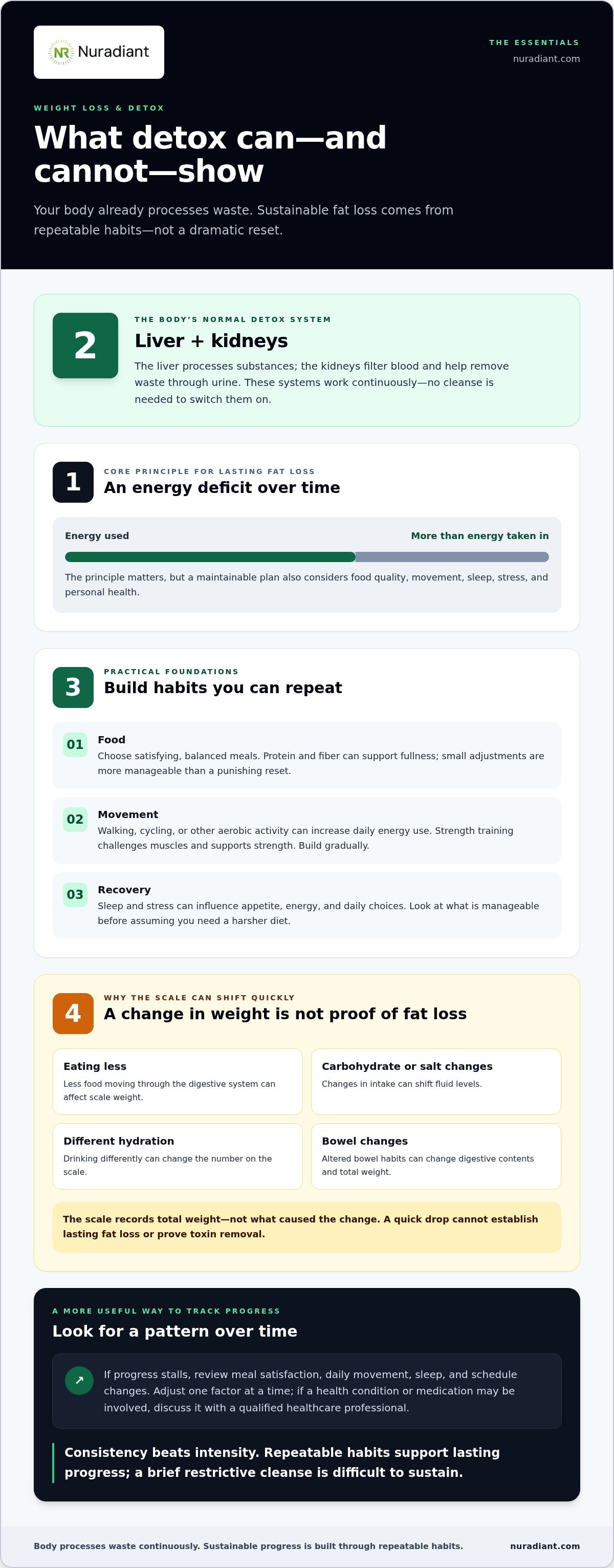
Your body doesn’t need a cleanse to switch on its detox systems. The liver processes substances, including waste products and compounds from food or medicines, while the kidneys filter blood and help remove waste through urine. These systems work continuously as part of normal physiology. They aren’t waiting for a special drink, restricted menu, or supplement to activate them.
The term is also used in alternative medicine to describe claims that cleanses remove unspecified toxins. The overview of Detoxification (alternative medicine) distinguishes this popular concept from medical detoxification and discusses the evidence behind such claims. A commercial “detox” program isn’t the same thing as the body’s routine waste processing.
Why can the scale change quickly during a cleanse?
A sharp scale drop can feel like proof that a cleanse is working. But body weight includes more than body fat. Eating less, changing carbohydrate or salt intake, drinking differently, or having altered bowel habits can shift fluid levels and digestive contents. Those changes can move the scale without showing that a lasting amount of fat has been lost.
For example, eating much less than usual may leave less food moving through the digestive system. A restrictive plan may also change hydration or cause more frequent bowel movements. The scale records total weight, not what caused the change. A quick rise after returning to usual eating can reflect fluid and digestive contents returning, not necessarily a sudden gain in body fat.
Judge progress by the pattern over time, not one dramatic weigh-in. A rapid scale shift alone can’t establish lasting fat loss, and it isn’t evidence of toxin removal. Your liver and kidneys handle normal detoxification; commercial detox programs make claims that the scale alone cannot verify.
How Sustainable Weight Loss Works: Energy Balance, Food, and Daily Movement
Lasting fat loss requires an energy deficit: over time, your body uses more energy than it takes in. That principle matters, but health doesn’t come down to one calorie number. Food quality, muscle, sleep, stress, activity, and personal health all shape how a plan feels and whether you can maintain it. Mayo Clinic explains how you burn calories, including energy used at rest and through movement.
Build a manageable deficit through small adjustments, not a punishing reset. You might serve a slightly smaller portion of a calorie-dense food, swap a sugary drink for water, or add vegetables and a protein source to a meal that leaves you hungry soon after eating. Meals with protein and fiber can support fullness; regular, balanced eating can make consistency easier. Hydration matters too, but drinking extra water isn’t a shortcut to fat loss.
Movement is part of the system. Walking, cycling, or other aerobic activity can increase daily energy use, while strength training challenges muscles and supports strength. Choose options that suit your ability and health, then build gradually. You don’t need an all-or-nothing workout plan. A routine you can repeat beats an intense burst followed by weeks of inactivity.
How do sleep, stress, and age affect progress?
They can influence how manageable your habits feel. Poor sleep or ongoing stress may affect appetite, energy, and the choices you make during the day. With age, changes in activity and muscle mass can matter, but metabolism isn’t “broken” by default. Health conditions, medications, work patterns, and daily routines also affect individual experience. Adults over 40 can review practical context in this metabolism guide for women over 50.
If progress stalls, don’t assume you need a harsher diet. Look at the pattern: Are meals satisfying? Has daily movement dropped? Are sleep or schedule changes getting in the way? Adjust one factor at a time. If a health condition or medication may be affecting weight, discuss that context with a qualified healthcare professional rather than changing medication on your own.
Consistency beats intensity: repeatable habits can support lasting progress, while a brief restrictive cleanse is difficult to sustain. For a grounded approach to weight loss & detox, focus first on food, movement, and recovery. Supplements, if considered, belong in a supporting role, not as replacements for those foundations. Explore Nuradiant’s weight-management and detox category with realistic expectations.
Detox Diets and Weight-Loss Supplements: Claims, Evidence, and Trade-Offs
Not every approach sold for weight loss has the same goal or evidence. A restrictive cleanse may sharply limit food choices. A supplement may claim to curb appetite or “detox.” Habit-based weight management focuses on changes a person can maintain. Compare what a claim actually demonstrates with what it promises, and keep safety in view.
| Claimed benefit | What evidence can establish | Likely limitation | Safety question |
|---|---|---|---|
| A cleanse “resets” the body or speeds weight loss | A short-term scale change may occur during a restrictive plan | That change doesn’t establish lasting fat loss or toxin removal | Does the plan restrict food or fluids, or cause digestive symptoms? |
| A detox supplement removes toxins or burns fat | Evidence must relate to the specific ingredient, dose, and finished product | Evidence about one ingredient can’t validate every product or broad detox claim | Could the ingredients interact with medicines or affect a health condition? |
| Repeatable eating and activity habits support weight management | Changes that create a sustainable energy deficit can support fat loss over time | Progress varies, and habits require ongoing adjustment | Does the approach fit your health needs and daily routine? |
Do detox products cause lasting fat loss?
A testimonial or quick drop on the scale isn’t proof of long-term results. Restricting food, changing fluid intake, or altering bowel habits can shift weight temporarily, but that doesn’t show a sustained reduction in body fat. Research about a specific ingredient also can’t automatically be applied to an unspecified supplement blend. Look for evidence that matches the actual product, not just a persuasive label or before-and-after story.
Habit-based weight management is less dramatic, but it targets repeatable choices rather than a short-lived cleanse. Dietary supplements can’t replace a balanced diet or medical care, and detox products aren’t necessary for the body’s normal waste processing.
How can you assess supplement claims and risks?
The FDA doesn’t approve dietary supplements for safety and effectiveness before they’re marketed, unlike prescription drugs. The NIH Office of Dietary Supplements advises consumers to consider evidence and discuss supplements with a healthcare professional, particularly when medicines or health conditions are involved. Read the full label, cautions, and ingredient list.
- Scrutinize promises of guaranteed results, rapid weight loss, or disease treatment.
- Review the complete label and warnings, not just the front-of-package claim.
- Discuss possible interactions with a qualified healthcare professional if you take medication or have a health condition.
For weight loss & detox, judge a supplement as a possible addition to foundational habits, not a shortcut or substitute for care. Clear claims, relevant evidence, and a safety check matter more than dramatic marketing.
Build a Practical Weight-Loss Plan Without a Detox Reset
A plan you can repeat is stronger than a cleanse calendar. Start with one or two behaviors you can observe, then build from there. For example, plan a balanced lunch on workdays and schedule regular walks that fit your current fitness and health. Keep each target specific enough to track, but realistic enough to sustain when life gets busy.
What are the first steps for a sustainable reset?
Choose habits that support your routine rather than demanding a total overhaul. Prioritize satisfying meals, steady hydration, and a consistent sleep schedule. If you’re considering a major dietary change, or you have a health condition or other concern that could affect your nutrition, discuss the plan with a qualified healthcare professional first.
Nutrient adequacy is one part of a balanced approach, but a multivitamin isn’t a weight-loss treatment. For more on that topic, see this men’s multivitamin guide for adults over 40. Keep the focus on your overall eating pattern, not on using supplements to compensate for restrictive habits.
Make the first stage straightforward:
- Pick one food habit, such as adding a fruit or vegetable to a meal you already eat.
- Choose a movement goal, such as a regular walk or strength activity suited to your ability.
- Protect a consistent bedtime or build a simple evening routine that supports sleep.
Once these actions feel manageable, decide whether to maintain them or add another. That’s a practical reset: a repeatable structure, not extreme restriction.
How can you review progress without chasing daily scale changes?
Track behaviors and well-being alongside weight, if weighing yourself feels useful. A brief weekly note can record how often you followed your meal and movement goals, along with your energy, sleep, and strength. If you choose to weigh yourself, use consistent conditions and look for a longer-term pattern rather than treating each reading as a verdict. You can also skip the scale if it causes distress or pushes you toward obsessive monitoring.
Review after a realistic period of following the plan. Ask what worked, what got in the way, and which small adjustment would make the next stretch more achievable. Progress isn’t only a number. Better consistency, improved stamina, or greater strength can show that your routine is becoming more sustainable.
Pause a plan and seek medical guidance if it causes concerning symptoms, worsens a health condition, or conflicts with medication instructions. That’s a better move than forcing your way through a routine that may not suit you. For a grounded approach to weight loss & detox, keep the foundation practical and make supplements optional support, not the plan itself. Explore Nuradiant’s weight-management and detox category with that standard in mind.
Weight-Loss and Detox Supplements: Where They Fit
Supplements are an option, not a requirement. They shouldn’t replace balanced meals, movement, sleep, or medical care, and a product marketed for “detox” isn’t necessary for the body’s normal waste processing. Treat any supplement as a possible addition to a broader wellness plan, not the engine of your results.
When might a supplement be worth considering?
Start with a clear personal goal and realistic expectations. Ask what you hope a supplement will support, and whether there’s evidence for the specific product and its intended use. Don’t assume a category-wide claim applies to every formula, or that a supplement will produce rapid or guaranteed weight changes.
Suitability depends on more than the label. Your health conditions, medications, and individual needs all matter. A qualified healthcare professional can help you assess potential interactions and whether a product is appropriate for your circumstances, especially if you take medication or manage an ongoing health concern. Not everyone needs a weight-loss or detox supplement. Choosing not to take one is a valid decision.
What should you review before choosing a product?
Read the full label before deciding. Check the intended use, listed ingredients, directions, and cautions. Then look for evidence relevant to those specific ingredients and the product’s actual claims. Evidence about an ingredient in a particular study doesn’t automatically establish that a different product delivers the same effect.
Be skeptical of promises that sound certain or extreme. Guaranteed outcomes, claims to treat disease, and rapid weight-loss assurances deserve close scrutiny. A sound decision starts with understanding what the product claims, what evidence supports that claim, and what limitations remain. If the label or safety information raises questions, pause and seek qualified guidance rather than guessing.
Keep expectations anchored to your habits and overall health, not a promised number on the scale. For adults over 40 and 50, individual needs and medication context can make that careful review especially relevant. A supplement may fit some wellness plans, but it can’t replace the fundamentals or stand in for medical advice.
Nuradiant offers weight-loss and detox supplements as an optional form of support. Explore the category with a clear goal, realistic expectations, and the product label in view. Explore Nuradiant’s weight-loss and detox supplements as one possible part of an informed wellness plan.
Make Your Next Step Sustainable
The real answer to weight loss & detox isn’t a dramatic cleanse. Your body’s systems handle normal detoxification, while lasting fat loss depends on repeatable choices around food, movement, sleep, and recovery. Focus on steady behaviors and longer-term patterns, not a sudden scale change or a promise of guaranteed results.
Supplements are optional support, not a substitute for those foundations or for medical care. Consider your personal goal, the product label and evidence, your health context, and possible medication interactions before choosing one. That standard matters at every age, including for adults over 40 and 50.
Nuradiant offers weight-loss and detox supplements as part of a broader range for adults over 40 and 50. Explore them with clear expectations and a health-first mindset: explore Nuradiant’s weight-loss and detox supplements.
Build the habits you can sustain. Progress starts with the next informed choice.
Frequently Asked Questions
Is detox necessary for weight loss?
No special cleanse is required to lose body fat. Your liver and kidneys continuously process and eliminate waste as part of normal physiology. A restrictive plan may change scale weight temporarily through shifts in food, fluid, or bowel contents, but that doesn’t establish lasting fat loss. Focus on sustainable habits instead. If you’re considering significant dietary changes, discuss them with a qualified healthcare professional, especially if you have health concerns.
Can a detox help you lose weight permanently?
A detox program may cause short-term scale changes, but those changes don’t necessarily represent lasting fat loss. Long-term progress depends on habits you can maintain, including food choices, activity, sleep, and your health context. Be cautious of promises of rapid or guaranteed results. Before considering a product with strong claims, look for evidence that applies to that specific product and review its safety information.
How do you lose weight safely without a detox?
Start with manageable changes to meals, movement, sleep, and daily routines rather than extreme restriction. Choose actions you can repeat, such as planning balanced meals or scheduling regular walks, and assess patterns over time instead of reacting to daily scale fluctuations. Individual needs vary, especially when health conditions or medicines are involved. A qualified healthcare professional can help tailor an approach and identify risks before you make major changes.
Do detox supplements actually remove toxins?
Not necessarily. “Detox” is used broadly in marketing, so examine what a specific product claims and what evidence supports that claim. Your liver and kidneys already perform essential processing and elimination functions. Don’t assume a supplement removes unspecified toxins or improves health simply because it carries a detox label. Read its ingredients and warnings, and consider possible interactions before use, particularly if you take medication or have a health condition.
Are weight-loss and detox supplements safe to take with medication?
Not always. Supplement ingredients can interact with medicines or be unsuitable for some health conditions, and risks depend on both the product and the person. Read the full label, including cautions, and consult a qualified healthcare professional who understands your medication and health history before starting a supplement. Don’t stop or change prescribed treatment because of a supplement or detox program. Supplements aren’t a replacement for medical care.
What should I look for in a weight-loss supplement?
Look for a transparent label, clear ingredient information, realistic claims, and relevant safety cautions. Check whether the evidence applies to the specific ingredient, dose, and outcome being discussed; evidence about one ingredient doesn’t automatically prove a finished product works. Avoid guarantees and claims of effortless or rapid fat loss. If you take medication or manage a health condition, discuss potential interactions and suitability with a qualified healthcare professional before use.