

Prebiotic Supplements for Gut Microbiome: How to Choose in 2026
A bigger scoop of fiber isn’t automatically better for your gut. The right prebiotic supplements for gut microbiome goals depend on the specific ingredient, what research says about it, and how your digestive system responds.
Crowded labels and broad claims can make products difficult to compare. Fermentable fibers may cause gas or bloating for some people, especially when they add too much too quickly. Prebiotics aren’t probiotics: prebiotics provide material certain gut microbes can use, while probiotics contain live microorganisms. Understanding the difference is a better starting point than chasing a “gut reset” promise.
This guide explains how to assess common prebiotic fibers, compare serving amounts and label details, and distinguish ingredient-specific evidence from marketing. You’ll also learn how to consider your tolerance and when digestive symptoms, health conditions, or medications make professional guidance a sensible first step. Choose based on your goal, the ingredient, the label, and your own response, not hype.
Key Takeaways
- Prebiotics are substrates used by microorganisms, but different fibers may have different effects.
- Fermentation alone doesn’t show that a supplement delivers a particular clinical benefit. Look for evidence on the specific ingredient and outcome.
- Compare prebiotic supplements for gut microbiome goals by the named ingredient and amount, not broad category claims.
- Use the label, your existing fiber intake, and your digestive response to guide a cautious trial.
- Make your choice with four checks: goal, ingredient evidence, label transparency, and personal tolerance.
What Are Prebiotic Supplements for the Gut Microbiome?
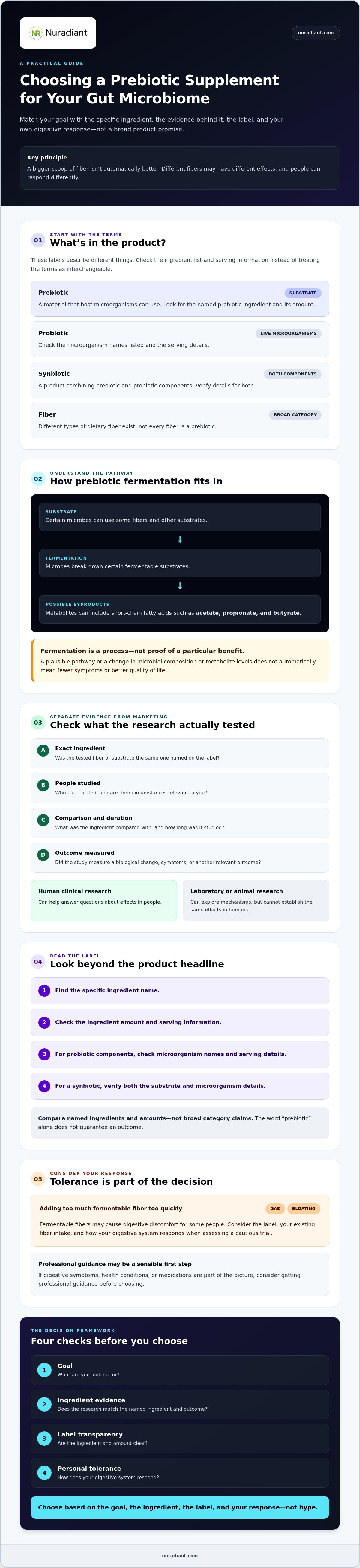
Prebiotics are substrates that microorganisms in the host can use. In plain terms, they’re materials certain microbes can use. The gut microbiome is a community of microorganisms, not a single organism or a guaranteed health outcome. Some dietary fibers can act as prebiotics, but fiber is a broad category, and different fibers don’t necessarily have the same effects.
A prebiotic is a substrate that host microorganisms selectively use. This definition is more precise than treating every fiber supplement as a microbiome support product. For a foundational overview of the term and examples of food sources, see Prebiotic (nutrition).
Microbes can ferment certain substrates, meaning they break them down and produce byproducts. Fermentation is a biological process, not proof that a specific supplement will cause a particular change in the microbiome or deliver a clinical benefit. Effects may depend on the ingredient, amount, overall diet, and individual response. The word “prebiotic” alone doesn’t guarantee an outcome.
How prebiotics relate to the gut microbiome
The phrase prebiotic supplements for gut microbiome describes products intended to provide substrates that microbes can use within this wider community. It doesn’t point to one universal ingredient or effect. Look for the ingredient’s specific name on the label so you can assess what the product contains rather than relying on a broad category claim.
Prebiotics, probiotics, and fiber: what is the difference?
These terms describe different things. Prebiotics are substrates; probiotics are live microorganisms. Synbiotics combine prebiotic and probiotic components. Fiber is a wider group of carbohydrate compounds, some of which can act as prebiotics. Check the ingredient list and serving information rather than assuming the terms are interchangeable.
| Term | Plain-language definition | Label examples to verify |
|---|---|---|
| Prebiotic | A substrate used by host microorganisms. | Look for the named prebiotic ingredient and its amount. |
| Probiotic | Live microorganisms in a product. | Check the listed microorganism names and serving details. |
| Synbiotic | A product combining prebiotic and probiotic components. | Verify both the substrate and microorganism details. |
| Fiber | A broad category that includes different types of dietary fiber. | Check the specific fiber source; not every fiber is a prebiotic. |
Use the label, not the product headline, to identify what a supplement contains. The ingredient, amount, diet, and your response all matter when deciding whether it may fit your needs.
How Prebiotic Ingredients Work, and What the Evidence Can Tell You
Fermentation helps explain how some prebiotic ingredients interact with gut microbes. It doesn’t prove that taking a supplement will improve symptoms or produce a meaningful health outcome. Keep the mechanism and evidence of benefit separate. A plausible biological process is one part of the picture, not the final answer.
Fermentation, gut microbes, and short-chain fatty acids
Some microbes break down fermentable substrates in the gut. This process can produce metabolites, including short-chain fatty acids such as acetate, propionate, and butyrate. The types and amounts produced can vary with the substrate and the gut environment. A plausible fermentation pathway doesn’t establish that a specific supplement improves health. Assessing effectiveness requires evidence that measures relevant outcomes in people.
That distinction matters when reviewing prebiotic supplements for gut microbiome claims. A study may measure microbial composition or metabolite levels, but those results don’t automatically show fewer symptoms or better quality of life. A change in a biological measure and a meaningful benefit to a person are different endpoints.
How to read prebiotic research without overgeneralizing
Don’t apply a finding from one ingredient to every product described as prebiotic. Check what the study tested and who took part. Human clinical research can help answer questions about people. Laboratory and animal research can explore mechanisms, but it can’t establish the same effects in humans.
Before accepting a claim, look for these details:
- Ingredient: Was the exact fiber or substrate in the study the one named on the supplement label?
- Population: Who participated, and are their circumstances relevant to you?
- Comparison and duration: What was the ingredient compared with, and how long was it studied?
- Outcome: Did researchers measure symptoms, a microbiome marker, or another result?
Evidence varies by ingredient and intended outcome. A result for one fiber, amount, population, or product doesn’t automatically apply to another. Check the publication date and study details before relying on a research summary. Look for current human evidence that relates to the ingredient and outcome you care about. Harvard T.H. Chan School of Public Health’s The Nutrition Source offers context on prebiotics, food sources, and supplementation evidence.
If you’re comparing options, you can explore Nuradiant’s gut health supplements, then verify each product’s current ingredients and claims against its label. A category name alone doesn’t support a specific effect.
How to Compare Prebiotic Supplements for Your Gut Microbiome
Compare what’s in the container, not the promise on the front. A useful label identifies the ingredient and its amount per serving. “Fiber blend” or “microbiome support” alone doesn’t tell you which substrate is included or how much. Start with the ingredient name, then check whether the available evidence studied that ingredient for your intended outcome.
Common prebiotic ingredients and what labels should clarify
Inulin and fructooligosaccharides (FOS) are related fermentable carbohydrates, but they aren’t interchangeable by default. Galactooligosaccharides (GOS) are another ingredient class. Resistant starch refers to starch that resists digestion in the small intestine. These examples aren’t recommendations or a ranking, and their effects shouldn’t be assumed equal.
For each prebiotic supplement for gut microbiome you compare, check the ingredient’s name, amount per serving, and full ingredient list. The table highlights what you can confirm from the package and the research questions that require a separate check.
| Ingredient example | Label facts to confirm | Evidence question to investigate |
|---|---|---|
| Inulin | Is inulin named? Is its amount per serving stated, and is its source identified? | What outcome was studied for this ingredient, amount, and population? |
| Fructooligosaccharides (FOS) | Does the label specify FOS rather than a general fiber blend? What amount is provided? | Does the research match the product’s ingredient and intended use? |
| Galactooligosaccharides (GOS) | Is GOS clearly listed, with the amount and other ingredients disclosed? | Was the relevant evidence conducted in people, and what did it measure? |
| Resistant starch | Does the label identify resistant starch and its serving amount? | Do the form and amount studied match the product being considered? |
How to assess quality and claims before buying
Read the entire label. Look for clear serving directions, manufacturer details, allergen information, and accessible quality documentation. Note other ingredients that could affect your choice. If a proprietary blend doesn’t disclose individual amounts, or a product promises sweeping microbiome changes, look for details about what specifically supports the claim.
Testing and certification statements also need context. Verify what was tested, who conducted the testing, and whether the documentation applies to the product you’re considering. A certification or test result may provide information about a defined quality measure, but it doesn’t prove every advertised health benefit. Prioritize specific labels and substantiated claims over bold packaging.
How to Try a Prebiotic Supplement and Assess Your Tolerance
A useful trial starts with a clear baseline, not several new products at once. Review the full label, including the ingredient, serving directions, other ingredients, and allergen information. Consider how much fiber you already get from foods such as beans, oats, fruits, and vegetables. Your existing intake matters when deciding how a supplement fits your routine.
A cautious way to evaluate personal fit
Change one factor at a time. If you start a supplement while also changing your diet or adding another product, it’s harder to tell what may be affecting you. Follow the product’s label and any clinician advice. Don’t exceed the labeled directions or assume that one starting amount or schedule suits everyone.
Keep a brief record of what you take and what you notice. Note the product and serving used as directed, relevant diet changes, and digestive responses such as gas, bloating, discomfort, or changes in bowel habits. These effects aren’t inevitable, and they shouldn’t automatically be dismissed as harmless. If symptoms are severe or persist, stop relying on guesswork and contact a qualified healthcare professional.
When food, supplements, or professional advice may fit better
Fiber-containing foods can be part of a varied eating pattern, depending on your needs and tolerance. A supplement isn’t mandatory for everyone, and it can’t replace a balanced diet. Account for fiber from food and any other supplements so you can consider your overall intake rather than stacking products without a plan.
Get professional guidance before starting if you have a relevant health condition, take medication and are unsure about possible concerns, have ongoing digestive symptoms, or don’t know whether a supplement is appropriate for you. Seek prompt care for severe symptoms. Personal context matters, and a product label can’t assess it for you.
Use the same careful approach with prebiotic supplements for gut microbiome goals: read the current label, follow its directions, introduce only one new factor at a time, and track your response. If you’re comparing options, explore Nuradiant’s gut health supplements and check each product’s current ingredients and directions before deciding whether it fits.
Choosing a Gut Microbiome Supplement: A Clear Next-Step Framework
Use four checks to guide your decision: your goal, ingredient evidence, label transparency, and personal tolerance. This framework keeps the choice grounded in what a product contains and what the evidence supports, rather than what a broad category name implies.
A quick checklist before you choose
- Goal: What are you hoping to address? Define it clearly instead of choosing a supplement based on a general “gut health” promise.
- Ingredient evidence: Can you identify the specific prebiotic ingredient and find research relevant to it and your intended outcome?
- Label transparency: Does the label clearly state the ingredient amount, directions, other ingredients, and allergen information?
- Personal tolerance: Does the product fit your current diet and health needs? Can you assess your response without introducing several new supplements at once?
If you can’t answer one of these questions, pause and look for more information. A category description or broad microbiome claim can’t replace a clear ingredient list and evidence relevant to the product and intended outcome. Verify the current formula, serving directions, and claims before buying, since product details can change.
Where Nuradiant fits in a careful supplement search
Nuradiant’s catalog includes gut health supplements, but the available information doesn’t confirm a specific prebiotic product or ingredient. Don’t assume every product in a gut health category contains prebiotics. Check the current catalog and product label, and rely only on ingredient details and claims you can verify for that product.
Nuradiant’s gut health supplement category can be one place to continue your search. Confirm whether a listed product contains the prebiotic ingredient you’re considering, then review its label and available substantiation before deciding whether it fits. A category label can’t guarantee a particular microbiome change or personal result.
The strongest choice is one you can explain: why the ingredient matches your goal, what evidence supports the intended use, what the label discloses, and how you’ll assess your tolerance. If you have persistent or severe digestive symptoms, a relevant health condition, medication concerns, or uncertainty about whether to start, ask a qualified healthcare professional for guidance. That’s more useful than relying on claims for prebiotic supplements for gut microbiome without checking the details.
Make Your Next Gut Health Choice With Confidence
Prebiotics aren’t one-size-fits-all. The ingredient matters, and evidence for one fiber or outcome doesn’t automatically apply to another. Before choosing prebiotic supplements for gut microbiome goals, check the specific ingredient and amount, look for evidence relevant to your intended use, and consider how the product fits your diet and tolerance.
Keep the process simple: define your goal, read the full label, and verify the formula and claims for the product you’re considering. If digestive symptoms persist, you have a relevant health condition, or medication raises questions, seek guidance from a qualified healthcare professional before starting a supplement.
Nuradiant’s catalog includes gut health supplements, and the brand describes its range as science-backed. That description isn’t a substitute for checking the substantiation for an individual product. Confirm its current ingredients and claims before deciding whether it fits your needs.
Explore Nuradiant gut health supplements and compare current product labels for ingredients, directions, and claims before choosing.
Frequently Asked Questions
Are prebiotics the same as probiotics?
No. Prebiotics are substrates that microorganisms can use; probiotics are live microorganisms. A synbiotic product combines prebiotic and probiotic components. These terms describe different things, so check the ingredient list rather than treating them as interchangeable. A combination label alone doesn’t establish that a product will deliver a particular outcome. Look for clear ingredient and serving details, then assess whether the evidence applies to the specific ingredients and intended use.
Which prebiotic ingredients are commonly used in supplements?
Examples include inulin, fructooligosaccharides (FOS), galactooligosaccharides (GOS), and resistant starch. They aren’t automatic recommendations, and their effects shouldn’t be assumed equal. Check whether the label names the specific ingredient, identifies its source where available, and states the amount per serving. Then look for research on that ingredient and the outcome you care about. A general “fiber blend” description may not provide enough detail to compare products.
Can prebiotic supplements cause gas or bloating?
They can cause digestive changes, including gas or bloating, for some people, but these effects aren’t inevitable. Response may vary with the ingredient, amount, overall diet, and individual tolerance. Follow the product’s serving directions and avoid adding several new supplements at once, which can make your response harder to interpret. Contact a qualified healthcare professional if symptoms are severe or persistent, or if you have a relevant health condition.
How do I choose a prebiotic supplement?
Start with your goal, then check the exact ingredient, amount per serving, and evidence relevant to that ingredient and intended outcome. Review directions, other ingredients, allergen information, manufacturer details, and available quality documentation. Treat broad microbiome promises or undisclosed blend amounts as reasons to seek more information. Verify the current formula and claims against the product label. If you’re unsure whether a supplement fits your health needs or medications, ask a qualified healthcare professional.
Should I get prebiotics from food or supplements?
Fiber-containing foods can contribute to a varied eating pattern, depending on your needs and tolerance. Supplements aren’t necessary for everyone and can’t replace a balanced diet. Consider your current food intake before adding a product, since your overall fiber intake matters. If you have digestive symptoms, dietary restrictions, or a health condition that affects what you eat, a qualified healthcare professional can help you decide what approach may suit your circumstances.
How long does it take for a prebiotic supplement to work?
There’s no single timeline that applies to every ingredient, product, person, or intended outcome. Research may measure changes in microbiome markers, digestive symptoms, or other outcomes, and these measures aren’t interchangeable. Follow the label rather than increasing the serving to try to speed up an effect. Track what you take and any changes you notice. If symptoms persist or worsen, stop guessing and seek guidance from a qualified healthcare professional.