

Multivitamin for Men With High Cortisol Levels: A Practical Guide
Imagine you’re at a gym after work. You lift, you run, you feel the burn. But by 9 p.m. you’re still tired. Your mood is flat. You wonder why the extra effort feels so hard. You’re not alone. Men over 40 often hit a wall where stress, low energy, and slow recovery meet. The hidden culprit is often cortisol – the stress hormone – and a set of nutrient gaps that grow with age. When cortisol stays high, it steals sleep, burns muscle, and spikes fat. The good news? A well‑chosen multivitamin for men with high cortisol levels can plug those gaps, calm the HPA axis, and help you get back to feeling strong. In this guide we walk step‑by‑step through what cortisol does, which nutrients you’re likely missing, how to pick the right formula, when to take it, and how to track progress. By the end you’ll know exactly how to use a science‑backed multivitamin to support stress, energy, and long‑term health.
Table of Contents
- Step 1: Understand Cortisol and Your Nutrient Gaps
- Step 2: Choose the Right Multivitamin Ingredients and Formulation
- Step 3: Dosing, Timing, and Daily Routine
- Step 4: Monitoring Progress, Safety, and When to Adjust
- FAQ
- Conclusion
Step 1: Understand Cortisol and Your Nutrient Gaps
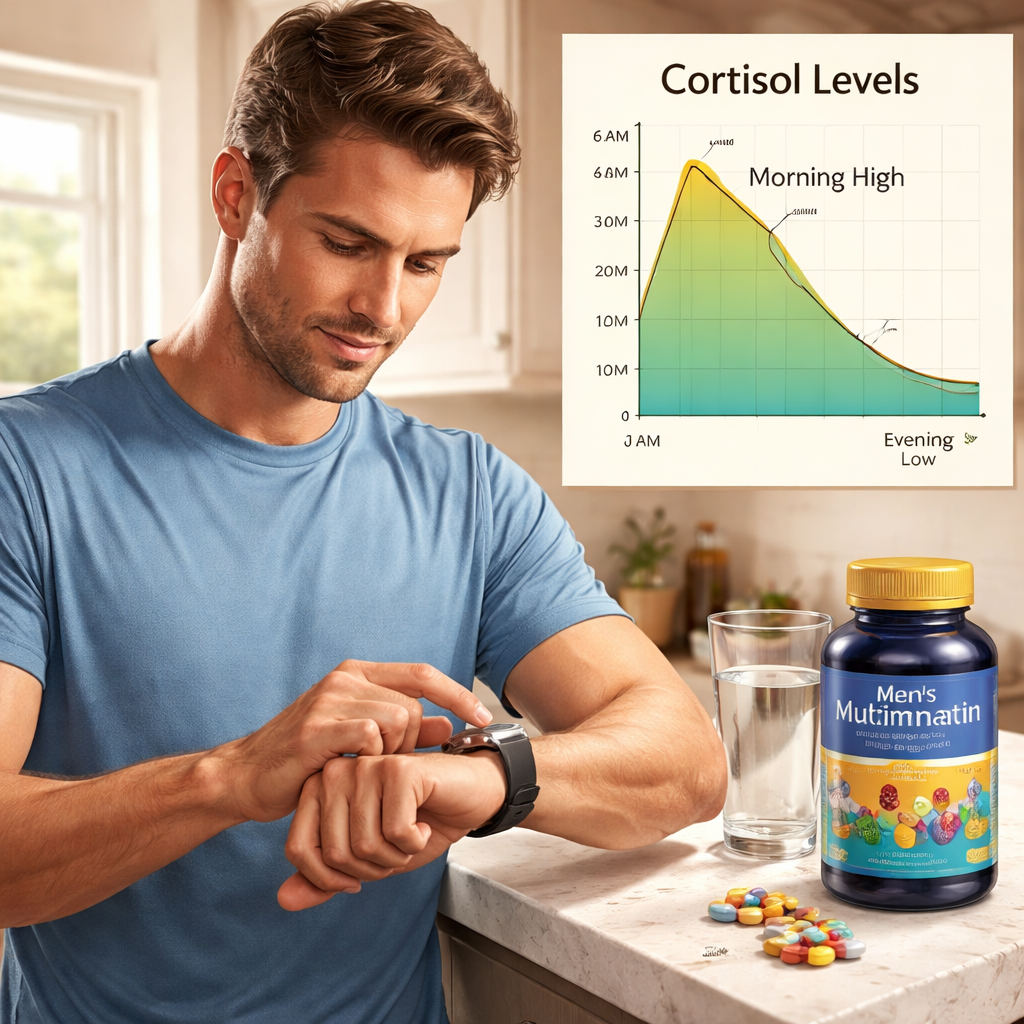
First, let’s get clear on cortisol. It’s the final hormone of the HPA axis and follows a daily rhythm. It spikes when you wake, then drops by night. When stress keeps it high, the pattern flattens. A flat pattern links to sleep loss, weight gain, and chronic illness. Studies show that B‑vitamins (B6, B9, B12) can shift the cortisol awakening response (CAR) back toward a healthy rise (research). The same trial found that higher red cell folate correlated with a stronger CAR after 16 weeks of multivitamin use.
Why does this matter for men over 40? As we age, stomach acid drops, making it harder to absorb B12, magnesium, and zinc. Stress also drains vitamin C from the adrenal glands. The result? A perfect storm where cortisol stays up and key nutrients run low.
Here are three common gaps you’ll see:
- Vitamin D – low levels are linked to higher cortisol and weaker testosterone.
- Magnesium – helps calm the nervous system and supports a normal cortisol drop at night.
- Vitamin B12 – fuels nerve health and helps the body process stress.
Imagine a 45‑year‑old office manager named Mark. He drinks coffee, skips breakfast, and feels “wired” even after a full night’s sleep. Blood work shows low B12 and low magnesium. His cortisol stays high, and he gains belly fat. By adding a multivitamin for men with high cortisol levels that includes these nutrients, Mark can restore a healthier cortisol curve and feel more balanced.
To spot gaps, try a simple self‑check:
- Do you feel tired even after rest?
- Do you gain weight around the mid‑section?
- Is your mood swingy or irritable?
If you answered yes to two or more, you likely have a cortisol‑related nutrient gap. A blood test can confirm, but even without one, a targeted multivitamin can help. For more on how to choose the right formula, read Best Multivitamin for Men Over 40: Key Benefits & Guide.
Key takeaways:
- High cortisol flattens the daily cortisol curve.
- B‑vitamins, vitamin D, magnesium, and B12 are the most needed nutrients.
- Spotting symptoms early lets you act before fatigue and weight gain get worse.
 Step 2: Choose the Right Multivitamin Ingredients and Formulation
Now that you know the gaps, let’s pick the right blend. Not all multivitamins are created equal. Look for a formula that hits the main nutrients we just listed and adds a few extras that support stress resilience.
Key ingredients for a multivitamin for men with high cortisol levels include:
- Vitamin D3 (2000‑4000 IU) – boosts testosterone and helps lower cortisol.
- Magnesium glycinate (300‑400 mg) – calm at night, supports muscle.
- Methylated B‑complex (B6, B9 as methylfolate, B12 as methylcobalamin) – improves CAR and energy.
- Vitamin C (500‑1000 mg) – adrenal support, antioxidant.
- Zinc (15‑30 mg) – hormone balance, immune health.
- Omega‑3 EPA/DHA (500‑1000 mg) – reduces inflammation, aids brain.
Why these forms? Methylated B‑vitamins bypass the conversion step that slows with age, so you get the benefit faster. Magnesium glycinate is gentle on the stomach, unlike magnesium oxide which can cause diarrhea.
Here’s a quick comparison of two popular formulations:
| Feature | Standard Multivitamin | Targeted High‑Cortisol Formula |
| Vitamin D | 800 IU | 3000 IU |
| Magnesium | 150 mg (oxide) | 350 mg (glycinate) |
| B‑Complex | Non‑methylated | Methylfolate + methylcobalamin |
| Vitamin C | 60 mg | 800 mg |
| Omega‑3 | None | EPA/DHA blend |
Notice the higher doses and better forms in the targeted formula. That’s why a multivitamin for men with high cortisol levels can make a real difference.
When you shop, check the label for these red flags:
- “Proprietary blend” without amounts – avoid.
- Excess iron – men over 40 usually don’t need it.
- Artificial colors or fillers – look for “no unnecessary additives.”
Nuradiant’s product hits all the marks: it includes methylated B‑vitamins, high‑dose vitamin D, magnesium glycinate, zinc, and a fish‑oil concentrate. You can read more about the science behind the blend in Best Supplements for Men Over 40: Vitality & Balance.
Watch this short video to see how each ingredient works together to calm cortisol and boost energy:
Action steps:
- Pick a multivitamin that lists exact amounts for vitamin D, magnesium, and methylated B‑vitamins.
- Make sure it also contains vitamin C and zinc for adrenal support.
- Read third‑party testing info to ensure purity.
Step 3: Dosing, Timing, and Daily Routine
Even the best formula won’t work if you take it wrong. Timing matters because cortisol follows a circadian rhythm.
Here’s a simple daily plan for a multivitamin for men with high cortisol levels:
- Morning (within 30 min of waking) – Take the multivitamin with a glass of water and a light breakfast that has some healthy fat (e.g., avocado toast). The morning dose supports the cortisol awakening response.
- Mid‑day (optional) – If you feel a dip after lunch, add 200 mg of magnesium glycinate to help keep the afternoon slump at bay.
- Evening (30 min before bed) – Take a second dose of magnesium if you have trouble sleeping, but keep the multivitamin to the morning only to avoid interfering with sleep.
Why not split the multivitamin? Vitamin D and B‑vitamins work best with food in the morning, while magnesium can be calming at night.
Let’s say you’re a 48‑year‑old who works from home. You start the day at 7 a.m., have coffee, then a quick egg‑and‑spinach scramble. Pop the multivitamin now. At 1 p.m. you notice a slump; you sip a magnesium‑rich almond milk. At 9 p.m., after dinner, you take a small magnesium tablet to aid sleep.
Research on high‑cortisol nutrition notes that vitamin C at 1000‑2000 mg can blunt cortisol spikes during stress (study). If you prefer a single pill, choose a formula that already includes 500‑1000 mg vitamin C.
Practical tips:
- Take the pill with food to improve absorption of fat‑soluble vitamins.
- Avoid caffeine within 30 min of the multivitamin if you notice stomach upset.
- Track how you feel for the first two weeks – note energy, mood, and sleep quality.
For a deeper dive on why timing matters, see Men Over 40: Essential Nutrient Deficiencies & Fixes.
 Step 4: Monitoring Progress, Safety, and When to Adjust
Starting a multivitamin for men with high cortisol levels is just the first step. You need to watch how your body reacts and know when to tweak the plan.
Key markers to track:
- Cortisol pattern – use a home saliva test kit in the morning and evening.
- Energy levels – rate your daily vigor on a 1‑10 scale.
- Sleep quality – note how many hours you sleep and how rested you feel.
- Weight and waist – measure monthly; high cortisol often adds belly fat.
A study that gave 138 adults a B‑vitamin rich multivitamin showed a near‑significant rise in the cortisol awakening response after 16 weeks (source). The same study found no change in perceived stress scores, suggesting the hormone pattern improved even if you still feel stressed.
When should you adjust?
- If morning cortisol stays low after 8 weeks, consider adding a small dose of vitamin C or a dedicated adaptogen like ashwagandha.
- If you notice digestive upset, switch to a chelated mineral form (e.g., magnesium bisglycinate).
- If blood work shows excess vitamin D, lower the dose to avoid toxicity.
Safety note: High doses of certain nutrients can interact with meds. Vitamin C can boost iron absorption – avoid if you have hemochromatosis. Magnesium can affect certain heart meds. Always talk to a health provider before changing doses.
Here’s a simple monitoring table you can print:
| Week | Morning Cortisol (nmol/L) | Energy (1‑10) | Sleep (hrs) | Notes |
| 0 | — | — | — | Start baseline. |
| 4 | — | — | — | Check for any stomach issues. |
| 8 | — | — | — | Review cortisol trend. |
| 12 | — | — | — | Adjust dose if needed. |
Remember, a multivitamin is a support tool, not a cure. Pair it with sleep hygiene, regular exercise, and stress‑reduction practices like deep breathing. If after 12 weeks you still see a flat cortisol curve, you may need a higher‑dose B‑complex or a targeted adaptogen.
For more on safe supplement use, see the Siphox Health article on vitamins for high cortisol.
FAQ
How does a multivitamin help lower high cortisol?
A multivitamin that includes B‑vitamins, vitamin D, magnesium, and vitamin C supports the adrenal glands and helps reset the cortisol awakening response. Research shows B‑vitamin rich formulas can boost the morning cortisol spike, which signals a healthier daily rhythm. By providing the nutrients the body needs to manage stress, the supplement helps keep cortisol from staying high throughout the day.
Can I take the multivitamin with other supplements?
Yes, but keep an eye on overlap. If you already take a separate vitamin D or magnesium pill, add the multivitamin at a lower dose to avoid excess. Check the label for total amounts of zinc, iron, and B‑vitamins. When in doubt, talk to a health professional. Stacking too many high‑dose nutrients can cause stomach upset or interact with meds.
What time of day is best for taking the multivitamin?
Take it in the morning with food. This aligns with the natural cortisol peak and helps B‑vitamins convert to usable energy. If you need extra magnesium for sleep, you can add a small evening dose, but keep the main multivitamin in the AM to avoid any calming effect that might blunt the morning cortisol surge.
How long before I see results?
Most men notice a change in energy and mood within 2‑4 weeks. Hormonal shifts, like a steadier cortisol pattern, may take 8‑12 weeks. Track your sleep, energy scores, and, if possible, a saliva cortisol test to see the trend. Consistency is key – skip days and the benefits fade.
Is the multivitamin safe if I have high blood pressure?
Generally yes, because the core nutrients (magnesium, vitamin D, B‑complex) can actually support healthy blood pressure. However, some formulas include high‑dose vitamin C, which can affect iron absorption. If you’re on blood pressure meds, check with your doctor, especially if the product contains potassium or high levels of calcium.
Should I test my cortisol levels before starting?
Testing isn’t required, but it gives a clear baseline. A simple saliva kit can measure waking and evening cortisol. Knowing your starting point lets you see if the multivitamin is making a real difference after a few weeks. If testing feels costly, start with the supplement and monitor symptoms; many men see improvement without a formal test.
Can diet alone fix these deficiencies?
Diet helps, but absorption drops after 40. Foods like fatty fish, fortified dairy, leafy greens, and nuts provide many of the needed nutrients, yet most men still miss the target amounts. A targeted multivitamin fills the gaps, especially for vitamin D (which many get little of from food) and magnesium (often lost in modern processed diets).
What if I’m already taking a testosterone booster?
A testosterone booster can work alongside a multivitamin for high cortisol. Look for boosters that contain zinc, vitamin D, and magnesium – these nutrients are already in the multivitamin, so you may want to adjust doses to avoid excess. Keep the multivitamin as your daily foundation, and use the booster only as directed by a health professional.
Conclusion
Men over 40 face a perfect storm of stress, hormone shifts, and nutrient loss. High cortisol can sap energy, add belly fat, and make recovery hard. By understanding the hormone’s pattern, spotting the common gaps, and choosing a multivitamin for men with high cortisol levels that hits vitamin D, magnesium, B‑vitamins, zinc, and omega‑3s, you give your body the tools it needs to reset. Take the pill each morning, add magnesium at night if sleep is a problem, and watch your cortisol curve improve over weeks. Keep an eye on energy, sleep, and waistline, and adjust if needed. Pair the supplement with solid sleep, regular movement, and stress‑busting habits, and you’ll feel more vibrant, focused, and ready for the next challenge. Ready to close the nutrient gap? Start today, track your progress, and let science‑backed nutrition bring your energy back.