

Men's multivitamin vs generic multivitamin: Which One Is Right for You?
Most men over 40 think any multivitamin will do. That's a risky shortcut.
Age brings hidden nutrient gaps – lower zinc, vitamin D, and magnesium that generic blends often miss. Those gaps can sap energy, blur focus, and even tip hormone balance. When you compare a men's multivitamin vs generic multivitamin, the difference shows up in how each formula targets those age‑specific needs.
Imagine you hit the gym at 6 am, then face a midday slump. A generic pill might give you a quick vitamin C boost, but it won’t address the drop in testosterone support or bone‑protecting calcium that you need after 40. A formula built for men fills those gaps with higher zinc, vitamin K2, and magnesium glycinate, turning that slump into steady fuel.
We’ve seen the science point to tighter dosing of antioxidants like lutein and l‑glutathione for heart and immune health. That’s why we recommend checking out how to choose a quality multivitamin for men over 40. It walks you through the key ingredients that generic products often skim.
Practical step: write down your top three concerns – energy, joint comfort, or testosterone support. Then match each concern to an ingredient list. If a product lists only 5‑10 vitamins, it’s probably under‑dosed for your stage.
Don’t forget the rest of your health routine. Strong teeth need calcium and vitamin D, but they also benefit from good oral hygiene. A quick read of the seaweed toothpaste guide shows how a natural formula can complement your multivitamin for overall wellness.
Bottom line: generic multivitamins fill a gap, but a men’s specific blend bridges the gap that matters most as you age.
Table of Contents
- What Is a Men’s Multivitamin?
- What Is a Generic Multivitamin?
- Key Differences at a Glance
- How to Choose the Right Multivitamin for You
- Conclusion
- FAQ
What Is a Men’s Multivitamin?
A men’s multivitamin is a blend of vitamins and minerals that’s built for the unique needs of adult men. It zeroes in on the nutrients that drop as you hit 40, like zinc, vitamin D, magnesium, and vitamin K2.
Generic formulas treat everyone the same, so they often miss those age‑specific gaps. That’s why a men’s multivitamin can feel like a targeted boost compared to a one‑size‑fits‑all pill.
Key ingredients such as higher zinc support healthy testosterone, while extra calcium and vitamin D keep bones strong. Magnesium glycinate helps muscle recovery and steadies sleep, and antioxidants like lutein protect eye health.
When you compare a men’s multivitamin vs generic multivitamin, the difference shows up in dosage and form. A higher dose of zinc isn’t just a number; it helps keep cortisol in check and supports immune health.
If you’re thinking about the packaging side of things, sites like Jiffy Print Online make custom bottle labels easy to order, so you can keep your supplement routine looking sharp.
Watch this quick rundown to see how the formulas differ.
Seeing the comparison in action helps you decide which path fits your health goals.
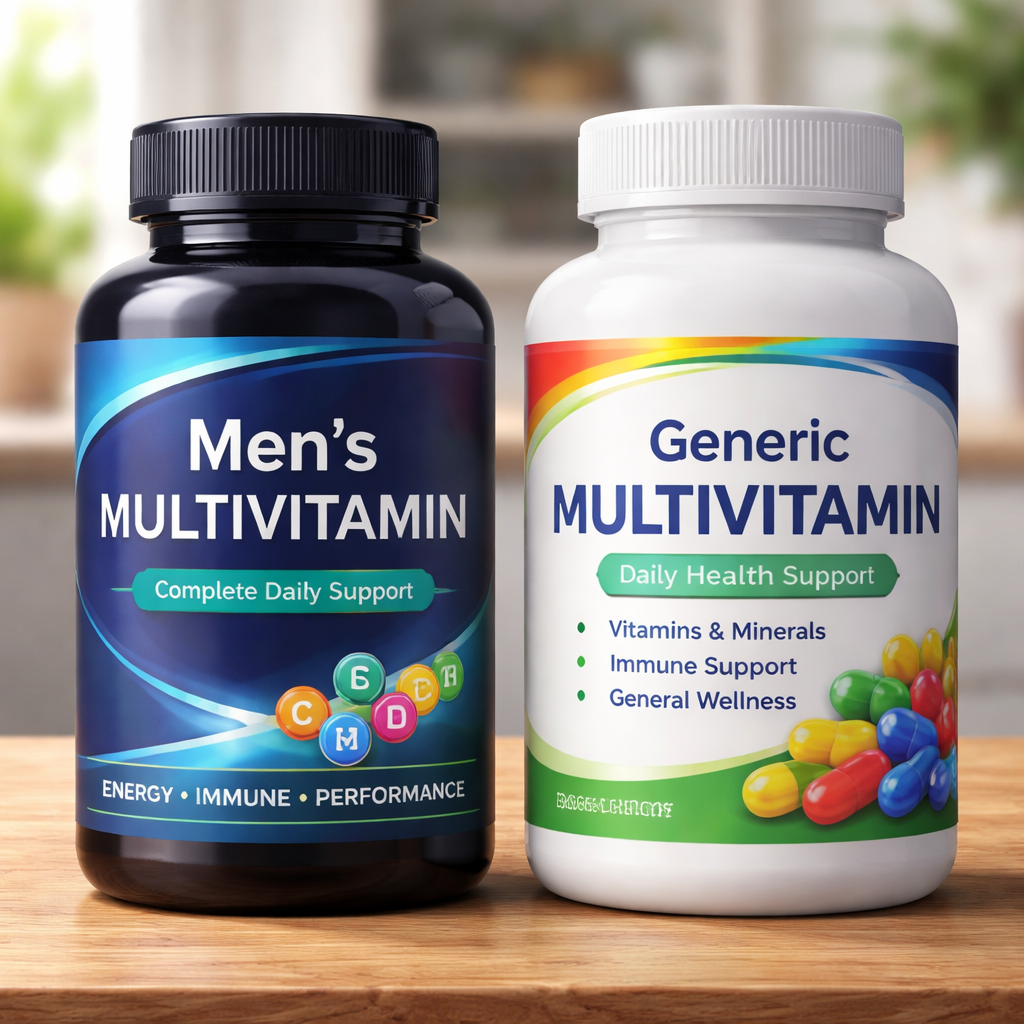 Bottom line: a men’s multivitamin fills the nutritional gaps that generic blends leave behind. Pick a formula that lists each nutrient and its amount, and you’ll give your body the precise support it needs to stay strong and focused.
What Is a Generic Multivitamin?
When you grab a bottle that just says “multivitamin,” you get a one-size-fits-all mix. It covers basics like vitamin C and a B-complex, but it doesn’t address the changes your body faces after 40.
Most generic blends use the cheapest forms - zinc oxide, magnesium oxide, synthetic vitamin E. Those versions are harder for your gut to absorb.
Because of the low-cost ingredients, the doses often fall short. A typical label might list 5 mg of zinc, while men over 40 benefit from at least 15 mg for hormone support.
That gap shows up in daily life. You finish a morning workout, feel a quick boost from vitamin C, then hit a slump an hour later. The generic pill didn’t give your nerves enough magnesium or your bones enough vitamin D.
How to spot a generic product? Scan the label for “oxide” or “sulfate” - those are low-absorption forms. Count the total vitamins; a solid blend usually lists 12+ items.
Quick checklist:
- Chelated minerals (glycinate, malate).
- Zinc ≥ 15 mg, vitamin D ≥ 200 IU.
- At least 12 different nutrients.
If a bottle fails two points, it’s likely under-dosed for a man in his 40s. That’s why many health writers push for a targeted formula that fills age-specific gaps.
Research from the Office of Dietary Supplements shows about 30 % of U.S. adults take a multivitamin, yet most generic products don’t meet the higher needs of older men (supplement usage stats).
A recent comparison notes that generic pills often use low-bioavailability forms, meaning your body discards most of what you pay for (bioavailability differences).
So what’s the next step? Write down your top three goals - energy, joint comfort, hormone balance - and match each to a nutrient on the label. If the match feels weak, consider a men’s-specific multivitamin that boosts those gaps.
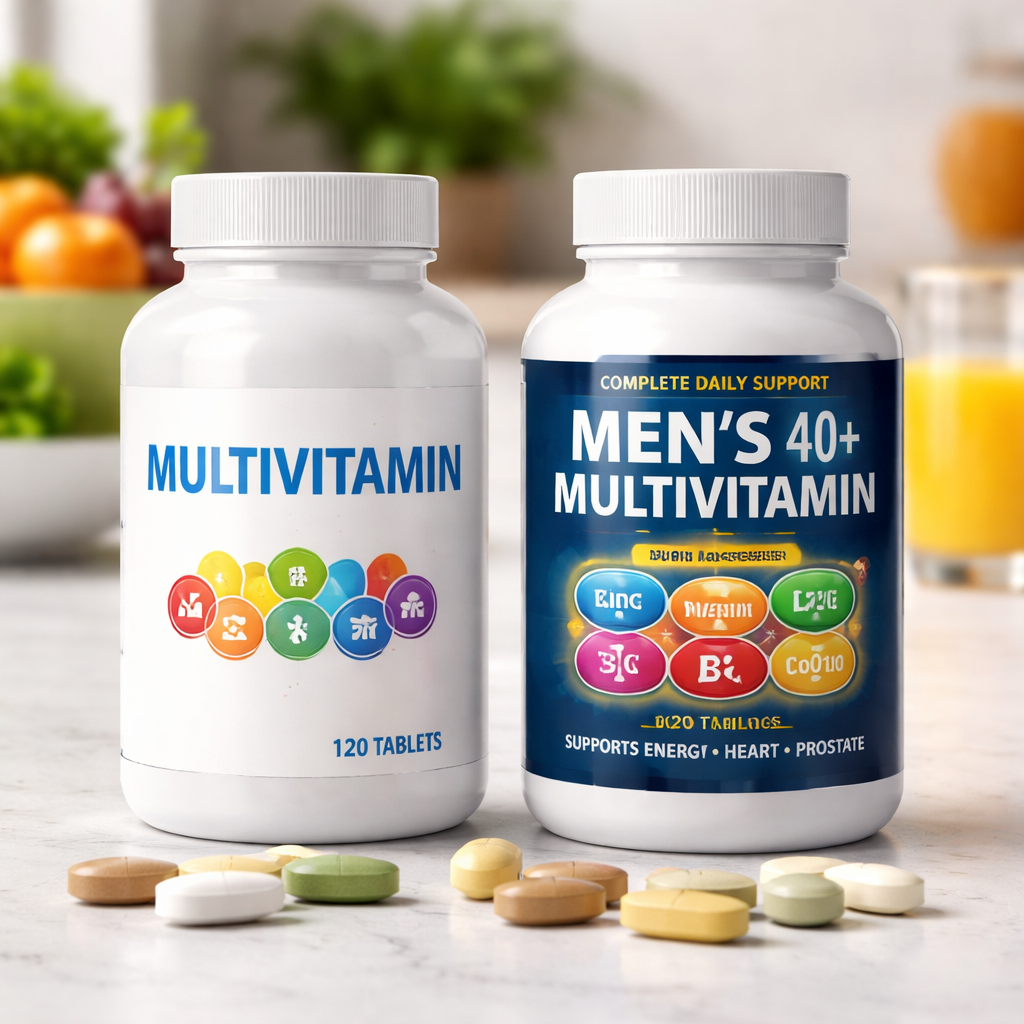 Key Differences at a Glance
When you line up a men's multivitamin next to a generic one, the gaps pop out fast. The men’s formula packs the nutrients that age‑specific changes demand, while the generic blend sticks to a one‑size‑fits‑all approach.
Here’s a quick visual cheat‑sheet. Look for the bolded numbers – they tell you what matters most for a man in his 40s or 50s.
| Feature | Men's Multivitamin | Generic Multivitamin |
| Zinc (for testosterone support) | 15 mg or more, chelated | 5 mg, often zinc oxide |
| Vitamin D (bone & immune) | ≥ 200 IU, D3 form | ≤ 100 IU, mixed D2/D3 |
| Magnesium (calm nerves) | Glycinate or malate, 100 mg+ | Oxide, 50 mg or less |
| Vitamin K2 (calcium placement) | MK‑7, 45 µg | Rarely present |
| Number of distinct nutrients | 15 + | 8‑10 |
Practical tip: grab a label and tick off each row. If two or more boxes are empty, you’re looking at an under‑dosed product.
Imagine you’re a fitness‑focused dad who hits the gym at 6 am. You need steady energy, joint comfort, and hormone balance. A men’s blend gives you zinc, magnesium glycinate, and vitamin K2 in the right forms, so you stay powered through the day. A generic pill might give you a burst of vitamin C, but it won’t keep your testosterone support steady.
We often hear men ask, “Do I need a multivitamin at all?” The answer depends on diet quality and age. If you eat whole foods most days but still miss the key minerals, the men’s formula fills the holes without extra pills.
Want a deeper dive into how a testosterone‑focused blend can boost vitality? Check out Men's Multivitamin for Testosterone Support: A Practical Guide to Boosting Vitality for expert tips.
Beyond pills, building a sober lifestyle can amplify results. A quick read on a sober‑t‑shirt story shows how small habit changes add up: How to create a custom 7‑year sober t‑shirt that inspires.
How to Choose the Right Multivitamin for You
First, write down the three things you care about most – maybe energy, joint comfort, or hormone balance. Those goals become your filter.
Next, grab the bottle and scan the label. Look for at least 15 mg of zinc, 200 IU of vitamin D, and a chelated form of magnesium (glycinate or malate). If the label shows zinc oxide or magnesium oxide, the pill probably won’t absorb well.
Then, count the distinct nutrients. A solid men’s blend lists 12 + ingredients, while a generic one often stops at 8‑10. More nutrients usually mean fewer gaps in your diet.
Step three: match each concern to an ingredient. Energy needs B‑vitamins and magnesium. Joint comfort likes vitamin K2 and calcium. Hormone support leans on zinc and vitamin D. If a product misses two of those, it’s a sign to keep looking.
Finally, check the source. A reputable brand will note third‑party testing or USP verification. That extra trust factor helps you avoid under‑dosed pills.
Need a deeper dive on how the right formula can lift your testosterone and stamina? Check out Men's Multivitamin for Testosterone Support: A Practical Guide to Boosting Vitality for expert tips.
Clear labeling matters, too. When a supplement’s label is messy, it can hide low‑dose minerals. Brands often work with printing partners to get crisp, compliant labels – a service you can see at JiffyPrintOnline.
Put these steps together, and you’ll have a quick checklist that turns the confusing "men's multivitamin vs generic multivitamin" debate into a simple decision you can act on today.
Conclusion
When you compare a men's multivitamin vs generic multivitamin, the difference is clear: age‑specific nutrients, proper forms, and enough dose matter.
If you skip those details, you risk low energy, weak joints, and hormone dips. A simple checklist: zinc ≥15 mg, vitamin D ≥200 IU, chelated magnesium, and at least a dozen ingredients, which keeps you on track.
Imagine you grab a bottle tomorrow, scan the label, and see the numbers line up. You feel confident you’re filling the gaps that generic pills miss.
Next step: write down your top three health goals, match them to the checklist, and pick a formula that meets every point. For a deeper look at picking the right product, see how to choose a quality multivitamin for men over 40.
We’re here to help you stay strong, focused, and ready for whatever comes next. Stick with a proven blend and watch your day feel smoother.
FAQ
How does a men's multivitamin differ from a generic multivitamin for men over 40?
We see the gap right away. A men’s formula packs at least 15 mg of zinc, 200 IU of vitamin D, and a chelated magnesium that your gut can use. A generic blend often stops at 5 mg of zinc, uses zinc oxide, and offers low‑dose vitamin D. Those differences show up as steadier energy, stronger bones, and better hormone balance for men in their 40s and 50s.
What key nutrients should I look for in a men’s multivitamin?
Focus on three things: zinc ≥ 15 mg for testosterone support, vitamin D ≥ 200 IU for bone and immune health, and magnesium in glycinate or malate form for calm nerves. Add vitamin K2 (MK‑7) to move calcium where it belongs, and a mix of 12‑plus vitamins and minerals. When you see those numbers, you’re close to a formula that fills age‑specific gaps.
Can a generic multivitamin meet my testosterone support needs?
Most generic pills fall short. They usually have zinc oxide at 5 mg or less, which the body absorbs poorly. Without enough zinc, testosterone can dip and you may feel less drive. A men’s blend gives the right form and dose, so you get a steady hormone base without hunting for extra supplements.
How often should I take a men’s multivitamin?
Take it once a day with food. The minerals need stomach acid to absorb, and a meal helps. If you skip meals, you might miss the boost. Most men find taking it in the morning works best, so the nutrients are on board for the whole day’s activities.
Is it safe to combine a men’s multivitamin with other supplements?
Yes, as long as you check the totals. Watch for extra calcium, vitamin D, or magnesium in other pills. Too much of any one mineral can cause stomach upset. A quick spreadsheet or a note on your phone can keep the numbers in check and keep you safe.
Where can I find a science‑backed men’s multivitamin?
Look for brands that list third‑party testing, show the exact forms of each mineral, and match the checklist we shared. We recommend reading the label, matching it to the zinc, vitamin D, magnesium, and vitamin K2 numbers, and then choosing a product that meets all those points. That way you know you’re getting a formula built for men over 40.